In the annals of aviation history, the stories of fighter pilots often intertwine tales of triumph with those of tragic oversight. Such was the case for several renowned pilots whose legacies were shaped by their aerial prowess and instructional skills yet marked by moments of fatal misjudgment.
Famed Pilots and Their Tragic Oversights
Notable among these figures was Manfred von Richthofen, the World War I ace known as the “Red Baron,” and World War II’s Thomas B. McGuire Jr., both of whom fell victim to the very mistakes they advised against. Neel Kearby, another celebrated pilot from World War II, offers yet another story of caution.
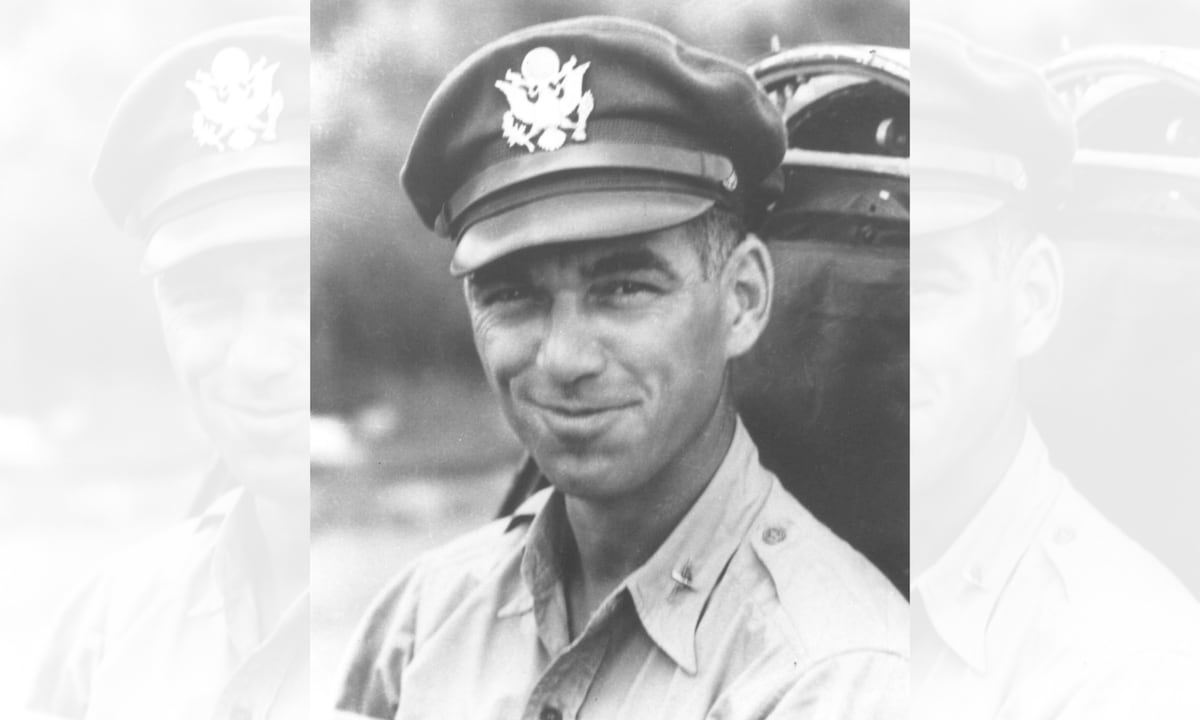
The Rise of Neel Kearby
Neel Kearby, who began his military career as a second lieutenant in the Army Reserves in 1938, swiftly ascended through the ranks following the outbreak of World War II. His rapid promotions saw him become a captain by February 1942, a major by March, and a lieutenant colonel by November of the same year.
In October 1942, Kearby took command of the 348th Fighter Group, the first unit within the V Fighter Command in New Guinea to be outfitted with the Republic P-47D Thunderbolt. This single-engine fighter, robust and heavily armed with eight .50-caliber machine guns, was dismissed by many American pilots in the South Pacific in favor of the more agile Lockheed P-38G Lightning.
Championing the P-47 Thunderbolt
Despite skepticism, Kearby became an ardent advocate for the P-47, developing strategies to leverage its diving speed and counter the agility of Japanese aircraft like the Zero and the Nakajima Ki-43 Hayabusa. Under Kearby’s guidance, the 348th Fighter Group moved to Port Moresby, Papua New Guinea, in July 1943, and soon scored its first victory in combat.
At the relatively advanced age of 32, Kearby led by example, achieving his first victories on September 4, 1943, by taking down a Mitsubishi G4M bomber and its escort. His accomplishments continued to pile up, and on October 11, he famously downed six Japanese planes in just 15 minutes, a feat that earned him the Medal of Honor from Gen. Douglas MacArthur in January 1944.
Final Missions and a Fateful Decision
Throughout early 1944, Kearby and the 348th Fighter Group continued to make their mark over New Guinea. However, his dual role also involved administrative duties with the V Fighter Command while Lt. Col. Robert Richard Rowland assumed the command of the 348th.
Maj. Gen. George C. Kenney of Fifth Air Force capitalized on the rivalry among aces such as Kearby, Richard I. Bong, and Tommy McGuire to boost morale and public interest. This rivalry also helped ensure that the Fifth Air Force remained in the public spotlight, which was crucial for securing resources and support.
On March 5, 1944, during a mission over enemy airfields at Wewak, Kearby led an attack on Japanese bombers. In pursuit of a confirmed kill, he circled back, inadvertently exposing himself to enemy fighters. This decision led to his downfall, as Japanese records credit Warrant Officer Koichi Mitoma and Sgt. Hiroshi Aoyagi with downing his P-47.
Legacy and Honor
In 1947, Australian War Graves personnel discovered Kearby’s remains near his crashed plane, “Fiery Ginger IV,” close to Dagua. The aircraft’s serial number, 42-22668, has since been preserved and displayed at the National Museum of the United States Air Force.
Neel Kearby was interred at Sparkman Hillcrest Memorial Park. His commendations include two Silver Stars, four Distinguished Flying Crosses, five Air Medals, and a Purple Heart. His legacy endures through honors such as a dedicated building at Sheppard Air Force Base and a statue at the Arlington Public Library, unveiled in 2010.