U.S.-Turkey Relations: A New Chapter in the F-35 Program?
ISTANBUL (AP) — Recent developments suggest a potential thaw in U.S.-Turkey relations, particularly concerning Turkey’s re-entry into the F-35 fighter jet program. This shift is largely attributed to the rapport between U.S. President Donald Trump and Turkish President Recep Tayyip Erdogan, according to the U.S. ambassador to Ankara.
Ambassador Tom Barrack highlighted this renewed cooperation in a social media post, stating, “The positive relationship between President Trump and President Erdogan has created a new atmosphere of cooperation, which has led to the most fruitful conversations we have had on this topic in nearly a decade.”
The F-35 program, a collaborative effort among the U.S. and other NATO members, saw Turkey’s exclusion during Trump’s first term. This decision followed Turkey’s acquisition of the Russian S-400 missile defense system, raising U.S. concerns about potential data sharing with Russia that could compromise F-35 capabilities.
Despite its suspension from the program in 2019, Turkey remains keen to rejoin. President Erdogan has emphasized that Turkey invested $1.4 billion before its removal, and in response, the U.S. imposed sanctions under the Countering America’s Adversaries Through Sanctions Act in 2020.
Barrack, who also serves as Trump’s special envoy for Syria, mentioned ongoing discussions about Turkey’s wish to reenter the F-35 fold, alongside its possession of the S-400 system. Using the spelling “Türkiye,” Barrack reiterated that this “positive relationship” had fostered a conducive environment for dialogue, offering hope for a breakthrough that would satisfy both nations’ security needs.
Meanwhile, Turkey has explored alternative options to strengthen its air force, such as Eurofighter Typhoons and U.S.-made F-16s, while also working on its KAAN fighter jet, slated for a 2028 debut.
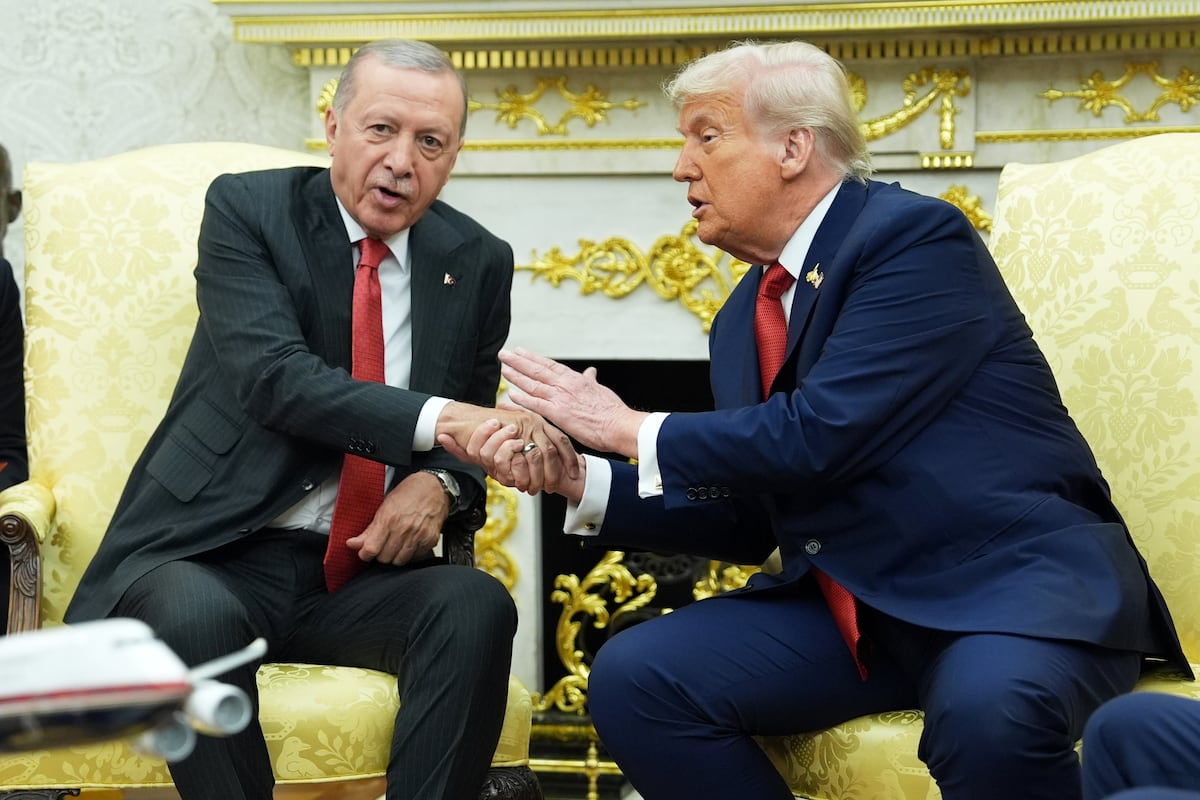
During a September meeting at the White House, Trump hinted at a possible lift of the F-35 sales ban to Ankara, citing a “very good relationship” with Erdogan. This stance contrasts with the previous U.S. administrations under Obama and Biden, which maintained a cautious distance from Erdogan due to human rights concerns and Turkey’s Russian ties.
Additionally, Trump’s view of Erdogan as a potential mediator in conflicts such as those in Ukraine and Gaza illustrates the strategic importance of their relationship. This perspective has seen U.S. and European leaders align with Erdogan in recognizing Syria’s new interim government.
“`