U.S. Army Embraces Silicon Valley Strategies to Streamline Development and Procurement
The U.S. Army is poised to revolutionize its approach to developing, acquiring, and deploying military equipment by adopting a strategy inspired by Silicon Valley. This shift may significantly alter the landscape for traditional defense contractors.
Speaking at the Association of the United States Army’s annual meeting in Washington, Army Secretary Dan Driscoll highlighted imminent changes in military procurement processes. “In just a matter of weeks, we will announce changes to how we buy military equipment,” he stated. “We are going to completely disrupt the system that held the Army back for decades and lined the primes’ pockets for so long.”
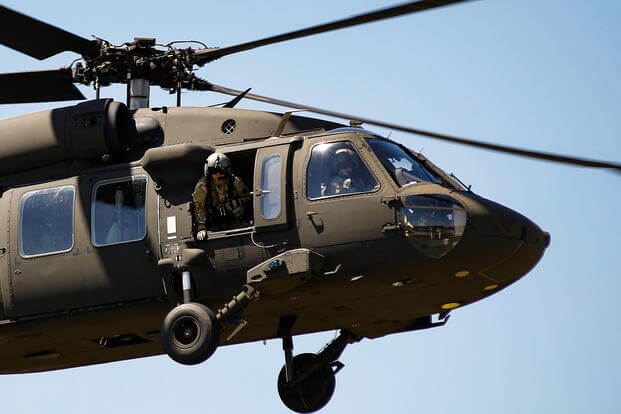
One of the strategic adjustments involves the Army increasing its in-house equipment repairs, a move aimed at reducing dependency on external contractors, which Driscoll noted has been both time-consuming and costly. He cited an example involving a UH-60 Black Hawk component that frequently fails and costs over $14,000 to replace through vendors. The Army’s reverse-engineered, 3-D printed version of this part is reportedly 300% stronger and 78% cheaper, with rapid scalability for mass production.
In a bid to expedite the delivery of new equipment to soldiers, Army leadership plans to scale up initiatives that prioritize speed over comprehensive solutions. President Donald Trump and Defense Secretary Pete Hegseth have provided “unprecedented top cover” to support these efforts, according to Driscoll.
Driscoll emphasized the benefits of integrating venture capital and startup culture, asserting that the Silicon Valley model perfectly aligns with the Army’s goals. “After seeing the power of combining venture capital money and mentorship with startup culture, I can say unequivocally that the Silicon Valley approach is absolutely ideal for the Army,” he remarked.
The Army’s procurement strategy has historically been characterized by risk aversion, a legacy of the post-Cold War era that has resulted in significant financial and temporal losses. As foreign militaries continue to innovate, the need for modernization is evident. Driscoll pointed out the pivotal role of drones in the Ukraine conflict and the continuous software updates by Kyiv, contrasting it with the outdated systems used by U.S. soldiers.
“Before and after work, our soldiers live in the real world,” Driscoll commented. “But, while they’re on duty they time-travel to the early 2000s — at best.”
For more information, visit bloomberg.com.