Efforts Intensify for NATO’s Eastern Defense Against Russian Threats
In a strategic response to potential Russian aggression, the U.S. Army, alongside its NATO allies, is expediting the creation of an “Eastern Flank Deterrence Line.” This initiative is designed to bolster combat capabilities as iterated by European military commanders.
According to Lt. Gen. Charles Costanza, under the direction of U.S. Army Europe and Africa commander Gen. Christopher Donahue, the focus is on swiftly deploying current capabilities to soldiers. “How can you get the capabilities that are available now, get them into the hands of soldiers, to [get a] proof-of-concept and then scope and scale it so we can get what we need,” Costanza explained in an interview with Defense News.
First introduced at the Association of the U.S. Army’s LandEuro conference in Wiesbaden, Germany, the Eastern Flank Deterrence Line (EFDL) aims to enhance ground-based capabilities and foster military-industrial interoperability across NATO. As part of this plan, standardized, data-driven systems, common launchers, and cloud-based coordination are being developed to counter Russian threats effectively.
Costanza highlighted the strategy to integrate counter-drone systems across Eastern Flank nations, linking air defenses and sharing data to boost NATO’s collaborative efforts. A significant step in this direction is the ongoing NATO exercise, Avenger Triad, involving multiple corps, including Poland. This exercise is crucial in advancing the EFDL.
Costanza added, “To help us fight and actually realize the Eastern Flank Deterrence Line — we’ve got a new organization called an Operational Fires Command,” which integrates lethal and non-lethal capabilities to streamline operations.
The exercise also showcases Poland’s new Spike Non-Line-of-Sight missiles, launched from AH-64 Apache helicopters. NATO allies are also using Palantir’s Maven Smart System for AI-driven data management, according to Costanza.
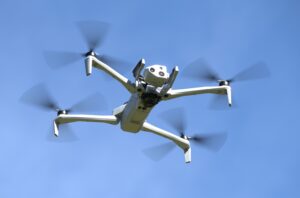
A major component of the EFDL involves deploying unmanned systems to neutralize enemy drones on the Eastern Flank. The U.S. startup Project Eagle’s Merod system, tested in Ukraine, has been successful in this domain. “We’re training our Polish partners how to use them,” Costanza stated, with similar efforts underway in Romania and expansion planned for Denmark.
As incursions over Eastern European airspace increase, the 10th Army Air and Missile Defense Command is emphasizing contributions to the EFDL. Brig. Gen. Curtis King noted that while missile threats remain, the focus is on countering one-way attack drones. The initiative aims to address the cost imbalance of using expensive missiles on inexpensive drones.
King further explained, “We’re training on that to understand how to employ capabilities that allow us to, at a lower cost, build capacity that we would need to defeat the amount of one-way attack drones we’ve seen Russia be very successful at launching on a continual basis.”
Additionally, the production speed of the Army’s drones surpasses traditional missiles, enabling rapid deployment. “We’re moving as fast as we can,” King mentioned, expecting widespread capability deployment within the year.
The Army is exploring various drone-on-drone intercept platforms from multiple companies, including government entities. King highlighted the importance of enhancing sensor coverage and data integration through cloud architecture to ensure effective detection and response.
King emphasized that these capabilities not only secure Europe but also contribute to a global deterrent strategy. “Those capabilities are many of the same capabilities that our leaders have told us to look to develop for the Golden Dome of America,” he concluded, pointing to their relevance for homeland defense.