U.S. Army Seeks Innovative Air Defense Solutions for Light Infantry
The U.S. Army is pioneering a new era of mobility and defense for its light infantry units by seeking adaptable air defense systems. These systems are intended to be easily transported by light manned and unmanned vehicles, making them ideal for airborne assaults and other joint forced entry operations.
According to a recent Request for Information (RFI), the Army is particularly interested in sled- or pallet-mounted weapons. These systems should deliver robust air defense capabilities that are transportable via C-130 aircraft and adaptable to various operational contexts.
This initiative, known as Maneuver-Short Range Air Defense Increment 4, builds upon previous efforts to create mobile defense solutions. The 2026 RFI specifies the use of a Self-Loading Equipment Dock (SLED) or pallet, equipped with both kinetic and non-kinetic defenses, which can be mounted on vehicles like the Infantry Squad Vehicle or the Robotic Combat Vehicle.
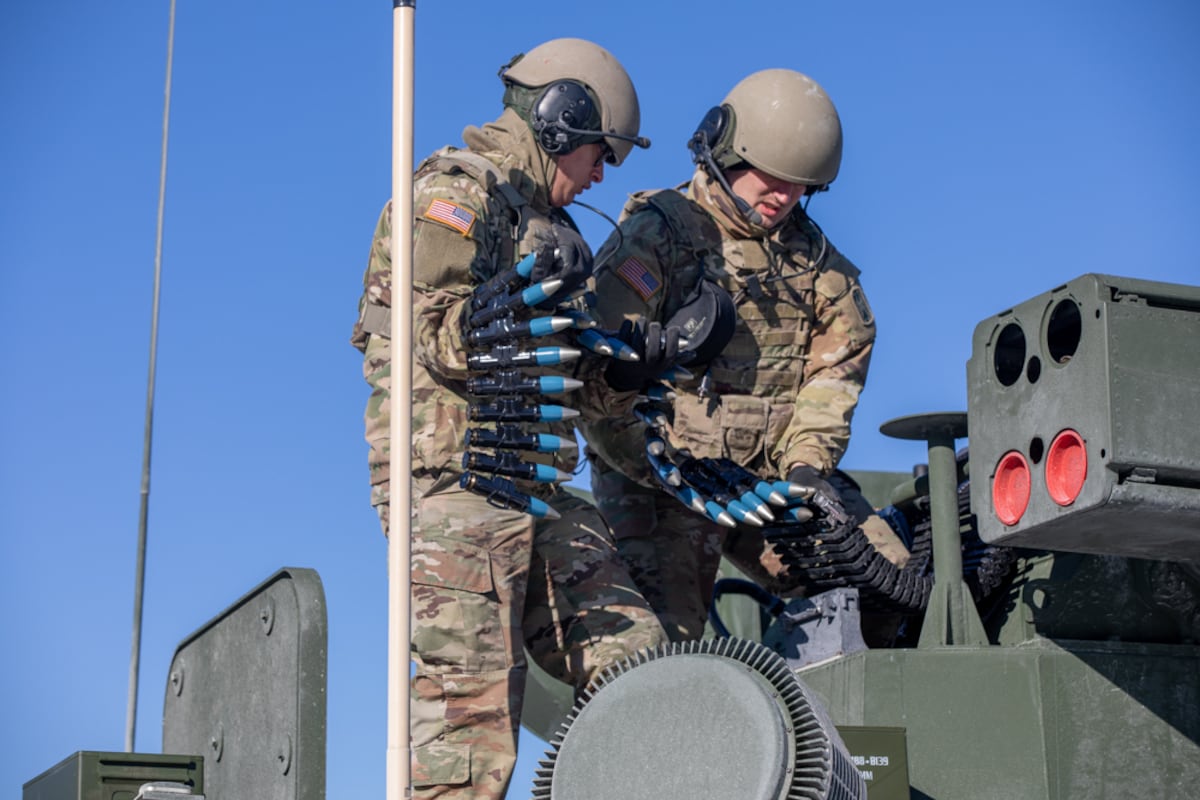
Part of a comprehensive Army strategy to develop mobile short-range air defense systems, Increment 4 addresses threats from small to medium drones, fixed-wing aircraft, and helicopters. The Army envisions using weapons such as the Stinger/Next Generation Short Range Interceptor and the XM914 30mm cannon, supplemented by electronic warfare tools and sensors.
The Army stipulates that the air defense solution must function independently from the transport vehicle, allowing vehicles to revert to full operational capability once the SLED is removed. This requirement highlights the Army’s understanding of the constraints posed by vehicle size, weight, and power.
To accelerate the development process, the Army plans to utilize existing high-TRL components and programs. The target for these systems is a deployment window between 2027 and 2029, with intentions to incorporate modular designs for future adaptability.
The RFI states, “The SLED may be carried by the vehicle, but it must maintain independent functionality,” emphasizing the need for systems that balance capability with the logistical demands of light infantry operations.
With a focus on modularity and open system approaches, the Army aims to create a versatile air defense system that can adapt to various mission requirements, ensuring the safety and effectiveness of its maneuver forces.