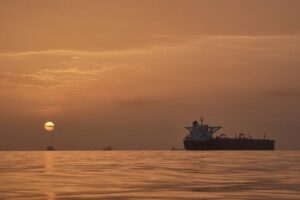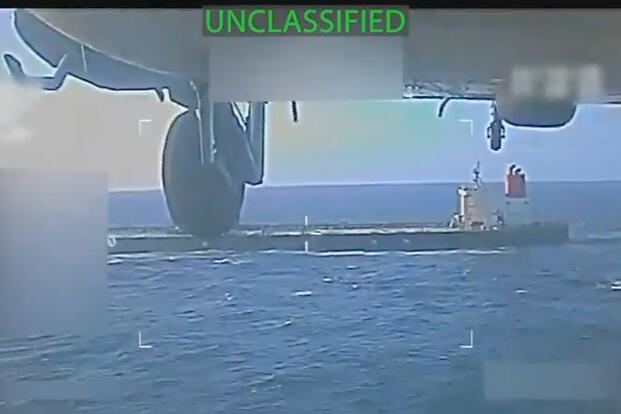
The U.S. Coast Guard, in collaboration with other federal agencies, is intensifying its efforts to intercept a third oil tanker near Venezuela, as part of a rigorous campaign to enforce sanctions on the country’s oil trade. This operation marks a significant escalation in the U.S. strategy to disrupt the flow of oil revenue to the Venezuelan government under President Nicolás Maduro.
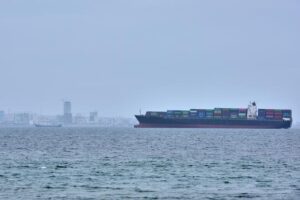
According to officials, the Coast Guard is actively monitoring an oil tanker in international waters within the Caribbean, suspected of transporting crude oil in violation of U.S. sanctions. This pursuit follows the recent seizure of two other tankers and represents a broader U.S. initiative to hinder financial resources linked to Maduro’s administration and caution international buyers against engaging in sanctioned oil transactions.
Details about the current operation remain limited, with the Coast Guard refraining from confirming whether the vessel has been boarded, redirected, or escorted, citing the ongoing nature of the operation and coordination among federal agencies. A Navy spokesperson did not comment on the involvement of naval assets, and the White House has not responded to inquiries from Military.com.
Heightened Enforcement
The U.S. has transitioned from issuing warnings to taking direct action, physically impeding oil shipments alleged to be in breach of sanctions. Reports indicate that sanctioned shipping entities have employed deceptive tactics to avoid detection, such as changing ship flags, utilizing complex ownership structures, and conducting ship-to-ship transfers on the open sea. Earlier this month, U.S. forces intercepted a sanctioned merchant vessel after it voluntarily stopped in international waters.
Shortly thereafter, another tanker was halted, marking the second such incident in under two weeks. The sanctions imposed on Venezuela aim to target the state-owned energy firm PDVSA and individuals connected to Maduro’s regime, restricting most U.S. dealings involving Venezuelan oil. The measures also threaten repercussions for foreign entities facilitating unauthorized oil sales, shipping, or financing, all intended to curb revenue streams supporting the Caracas government.

President Donald Trump confirmed the seizure of a tanker earlier this month, characterizing it as part of a comprehensive effort to block sanctioned oil shipments. He subsequently ordered a blockade of sanctioned oil tankers associated with Venezuela, intensifying pressure on shipping entities. The Treasury Department has not disclosed whether the vessel currently under surveillance is linked to a specific designation by the Office of Foreign Assets Control.
International Repercussions
China has expressed strong opposition to the U.S. maritime enforcement actions, labeling the seizures as breaches of international law, while Venezuelan officials have accused the U.S. of piracy and economic aggression. These developments carry significant implications, as China remains the primary purchaser of Venezuelan crude oil, and continued U.S. interventions could escalate tensions with key trading partners. The State Department has not commented on whether regional governments were informed prior to the latest pursuit.
Energy market analysts indicate that these enforcement actions are already affecting global shipping routes, with tanker operators avoiding the risk of U.S. intervention. Some vessels have changed course, and oil loading activities at Venezuelan ports have slowed as ship owners reassess the legal and financial risks associated with sanctioned oil.
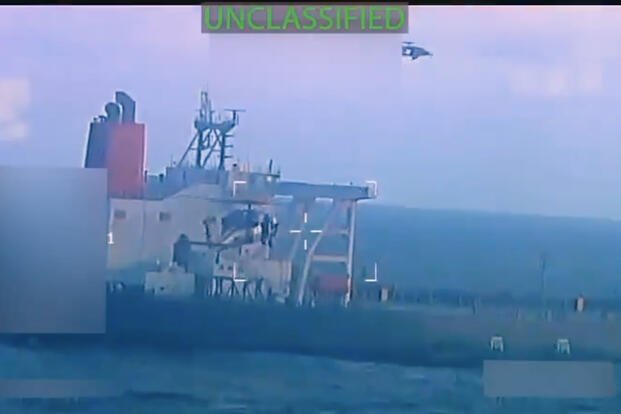
The increased pressure aligns with a notable U.S. military presence near Venezuela, adding visibility and deterrence to the enforcement campaign. U.S. data highlights the ongoing decline in Venezuela’s oil production and export capabilities, making it especially vulnerable to maritime enforcement actions that limit access to international markets.
Officials have not revealed the intended outcome for the third tanker, whether it will be seized, escorted, or released, nor have they specified how long the intensified maritime stance will continue.