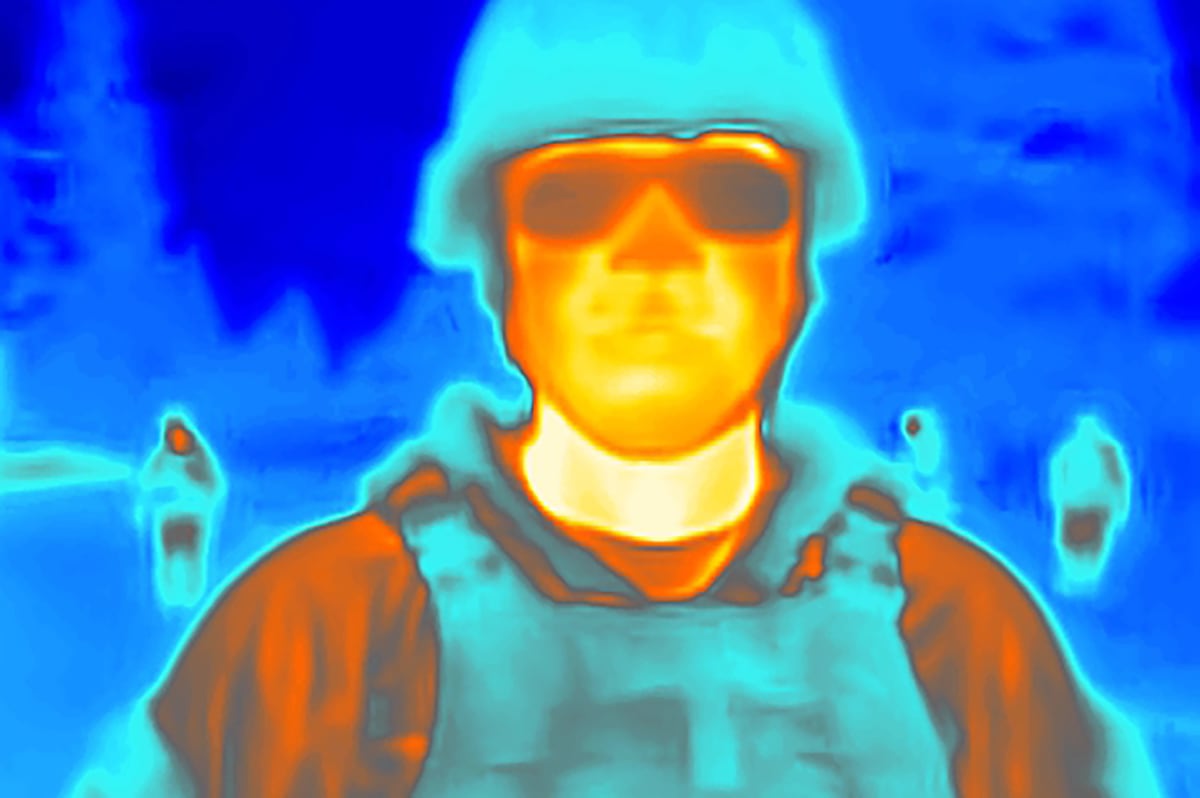
In a bid to bolster stealth capabilities on the battlefield, the U.S. Marine Corps is seeking cutting-edge camouflage technology designed to evade detection by advanced thermal and infrared sensors. This initiative emerges in response to lessons learned from the conflict in Ukraine, where drones with thermal sensors have transformed warfare into a game of hide-and-seek.
The Marine Corps Systems Command has issued a notice requesting proposals for a Multispectral Camouflage Overgarment (MCO). The MCO is designed to provide comprehensive signature management for Marines by disrupting detection across the visual, near infrared, and short-wave infrared spectrums, while also minimizing thermal signatures in the mid-wave and long-wave infrared ranges. Responses to this notice are due by April 22.
The Marine Corps has ambitious plans to acquire 13,000 of these cloaks by 2027, expanding to 61,000 by 2030. According to the notice, the MCO will be used in both training and operational deployments, but not for routine base activities.
The specifications outlined in the notice emphasize the importance of nondetection at varying distances. For example, ground-based sensors should not detect the cloak visually beyond 600 meters, with an optimal range of 50 meters. Aerial sensors on drones should be thwarted at 1,000 meters, with a long-term goal of just 10 meters.
Regarding mid-wave infrared sensors, the cloak should prevent detection from at least 2,000 meters away, ideally improving to 600 meters. Against aerial MWIR sensors, the goal is effective camouflage at a minimum of 5,000 meters, with an ideal range of 2,000 meters.
Described as a “single-piece, generously-sized draped design,” the MCO aims to cover the entire body along with individual gear and equipment. It is engineered for quick application and removal, taking no more than 15 seconds, and designed to withstand 90 days to a year of use while enduring up to 50 laundering cycles. The cloak should weigh no more than 3.5 pounds, with a preferred weight of less than 2 pounds.
While the U.S. is developing its own version, the British Royal Marines have already adopted the Barracuda cloak from Sweden’s Saab. Russian soldiers have also been using thermal cloaks to shield themselves from Ukrainian drones. However, the Russian experience highlights the potential pitfalls of inferior designs, which can inadvertently make wearers stand out as “cold spots” against warmer environments, as reported by Yahoo News.