U.S. Assembles Largest Airpower in Middle East Since 2003
In a significant military buildup, the United States is deploying its largest concentration of airpower in the Middle East since the 2003 Iraq invasion. This force is being assembled as a contingency for potential military action against Iran, while diplomatic efforts continue.
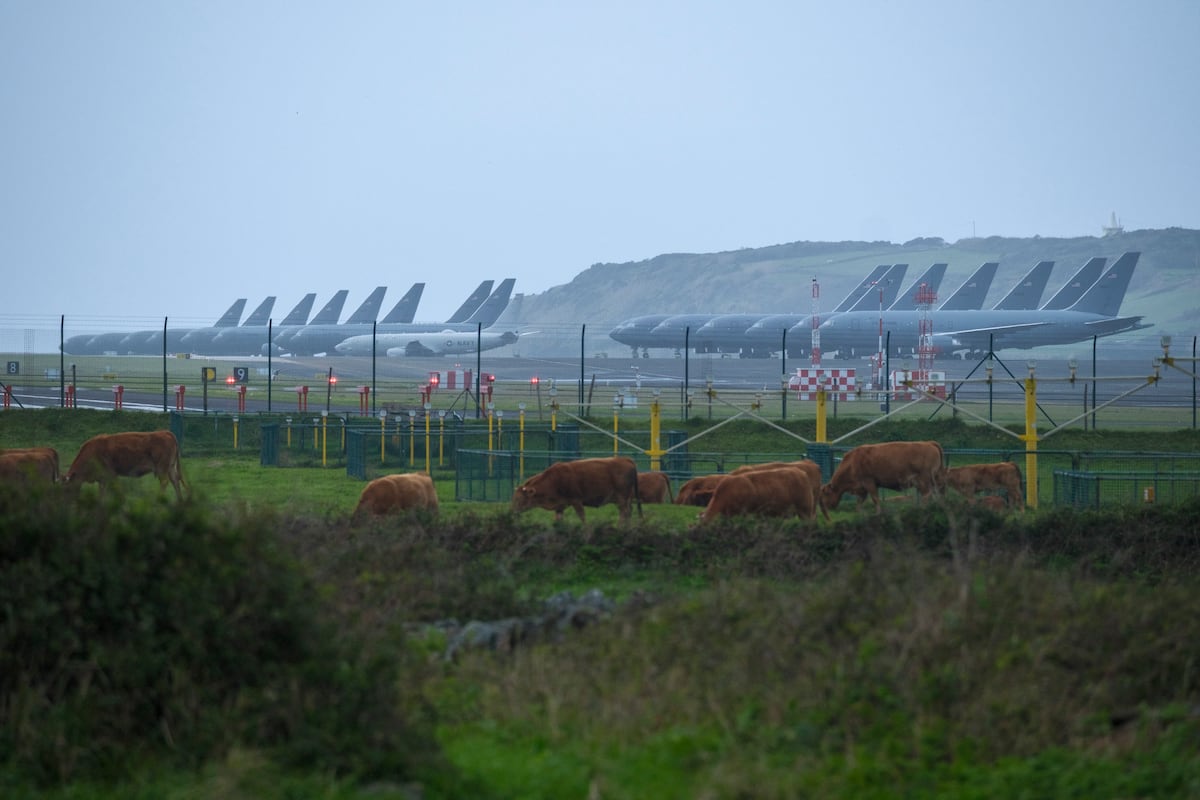
Central to this deployment are two carrier strike groups heading to the region, complemented by fighter squadrons stationed in bases from Jordan to Qatar. These deployments are facilitated by aerial refueling across the Atlantic. Meanwhile, submarines and destroyers equipped with Tomahawk cruise missiles are positioned in nearby waters, with Patriot and THAAD missile defense systems rapidly deployed. B-2 stealth bombers remain on standby in Missouri.
To appreciate the scale of this operation, consider the time it has taken to assemble. The buildup started in late January and will not be complete until mid-March, representing a six to seven-week effort to amass a force capable of imposing significant costs on Iran. This timeline highlights the complexity of mobilizing such a substantial military presence.
Some analysts may interpret this surge as evidence that the U.S. Air Force requires expansion. However, the issue lies not with the Air Force alone. Airpower has become a more collaborative effort, involving various branches, including the Navy and Army.
Each branch contributes to the overarching mission. The Air Force’s primary role of air control is now more of a joint operation. In the event of retaliation from Iran, air control would entail air denial, focusing on neutralizing ballistic missiles, cruise missiles, and drones. The Army’s Patriot and THAAD systems, along with Navy destroyers, are pivotal in this effort, with Air Force fighters acting in a supportive capacity.
Electronic warfare is another collaborative endeavor. The Navy’s EA-18G Growler is the most advanced tactical electronic warfare platform, operating alongside Air Force F-16CJs in Jordan. Despite the Air Force’s historical strength in electronic warfare, the Navy now leads this critical aspect.
The need for sustained airpower is highlighted by past experiences. The U.S. learned from previous strikes on Iran that strategic effects require ongoing pressure and presence, not just a single dramatic strike. This requires mass and persistence, which current procurement strategies do not adequately address.
While the Air Force may need to increase its airpower, the focus should be on acquiring lower-cost drones, ample munitions, and uncrewed aerial refuelers. These assets can provide the sustained presence required for strategic effectiveness at a more affordable cost.
Ultimately, redefining airpower to include contributions from all military branches is crucial. As long as budget priorities remain unchanged, the U.S. will continue to invest in traditional Air Force assets while underfunding the broader airpower needs.
Maximilian K. Bremer is a nonresident fellow with the Reimagining US Grand Strategy Program at the Stimson Center and head of Mission Engineering and Strategy for Atropos Group.
Kelly A. Grieco is a senior fellow with the Reimagining US Grand Strategy Program at the Stimson Center and adjunct professor in the Center for Security Studies at Georgetown University.