The United States is accelerating efforts to strengthen air defenses in the Middle East, with Congress being briefed on potential military sales worth over $16.5 billion. These sales are primarily focused on countering the growing missile and drone threats in the region.
Included in these proposed arms packages are advanced systems for the United Arab Emirates, Kuwait, and Jordan. The packages encompass everything from state-of-the-art radar and air defense sensors to counter-drone technology and aircraft munitions, as detailed in several announcements by the U.S. Department of State on Thursday.
The timing of these notifications follows an increase in missile and drone attacks amid the ongoing conflict with Iran, raising the stakes for air defense systems tasked with shielding U.S. forces and allied nations in the region.
The State Department has indicated that the Secretary of State has declared an emergency situation, justifying the urgent sale and thereby allowing the administration to sidestep the usual congressional review required under the Arms Export Control Act.
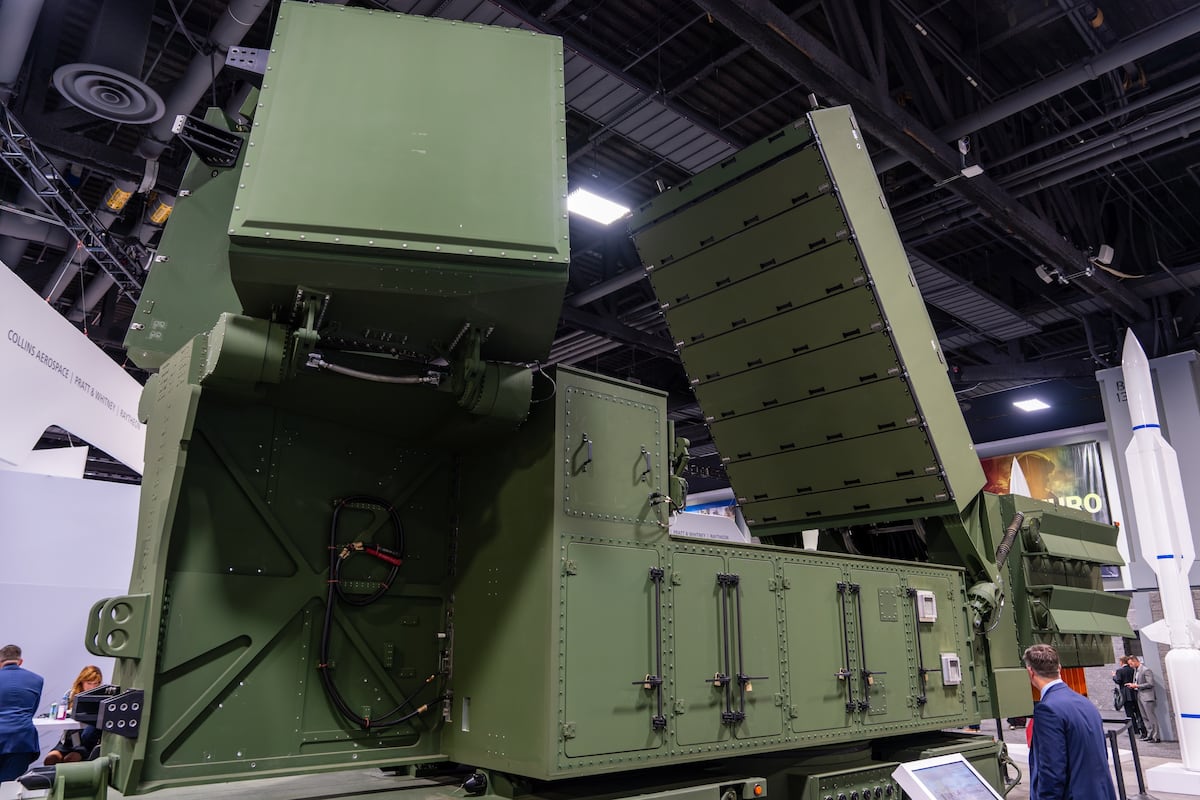
Among the sales being considered is a long-range radar system for the UAE, valued at $4.5 billion, designed to work in tandem with its Terminal High Altitude Area Defense system, or THAAD.
The UAE’s package also includes a $2.1 billion fixed-site system to combat small drones, alongside $1.22 billion in air-to-air missiles and a $644 million upgrade package for F-16 munitions to enhance its fighter jet capabilities.
For Kuwait, the proposal involves $8 billion in low-tier air and missile defense radars aimed at detecting short-range threats. Meanwhile, Jordan is set to receive a $70.5 million package focusing on aircraft repair and parts to maintain its existing fleet.
These proposed sales reflect a broader strategy to develop a multi-layered air defense system capable of identifying and neutralizing threats across various ranges.
This initiative comes at a time when U.S. air defense systems are reportedly being utilized at a rate that might outpace the replenishment of stockpiles, a situation that has raised concerns among analysts. Read more here.