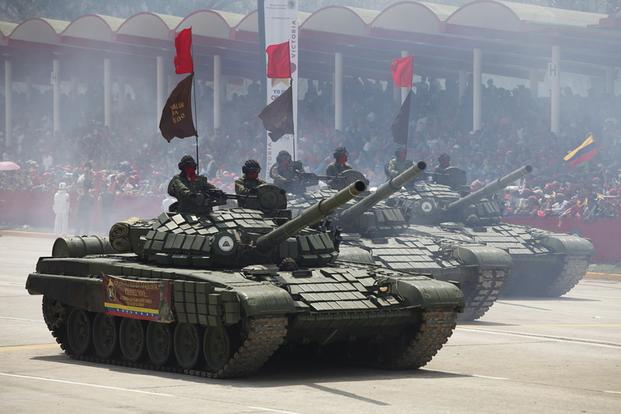
In a rapidly escalating situation, U.S. forces in the Caribbean face significant challenges after Venezuelan President Nicolás Maduro declared a state of external emergency on September 30. This move has transformed the operational environment for the 10,000 U.S. troops initially deployed to deter drug trafficking, as they now encounter a Venezuelan military on high alert, bolstered by Russian-supplied weaponry and a vast militia force.
Venezuelan Military Capabilities and Challenges
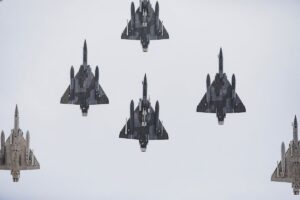
Although Venezuela’s armed forces, comprising 123,000 personnel, are reportedly struggling with maintenance issues, their investment in Russian-made military systems poses a serious threat to U.S. operations. The Venezuelan military operates at least 20 Sukhoi Su-30 MK2 fighters equipped with Kh-31 “Krypton” missiles, which have historically challenged U.S. Navy defenses due to their advanced capabilities.
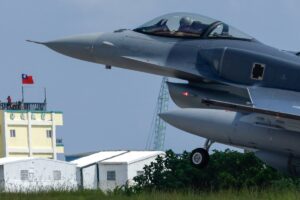
Venezuelan forces have already demonstrated their reach by conducting maneuvers near U.S. naval assets, as evidenced by two Venezuelan F-16s making close passes of the USS Jason Dunham in September. Additionally, Venezuela has stationed various missile systems, including S-125 Pechora-2M and Buk-M2E, to safeguard strategic sites, creating a complex operational environment for U.S. forces.
The Role of the Bolivarian Militia
President Maduro claims that over 8 million militia members have been mobilized, though experts question the accuracy and readiness of these figures. The Bolivarian Militia is designed for territorial defense rather than conventional warfare, employing tactics similar to those used in urban combat scenarios in Iraq and Afghanistan. Recent military exercises in Caracas have showcased these capabilities, highlighting the potential for urban resistance against foreign ground forces.
Limitations of the U.S. Deployment
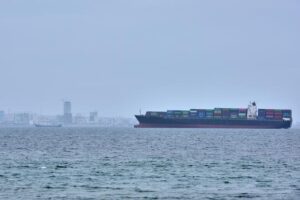
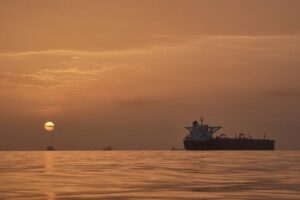
The U.S. deployment in the Caribbean includes a formidable naval presence with eight ships, including destroyers, the cruiser USS Lake Erie, and the amphibious assault ship USS Iwo Jima. Despite this strength, experts from the Center for Strategic and International Studies note that the current force lacks the logistical support for sustained operations across Venezuela’s expansive territory.
Potential for Escalation
Venezuelan military exercises and the militarization of civilian ports have heightened the risk of unintended conflicts. The presence of mobile air defense systems and anti-ship missiles increases the possibility of accidental engagements, which could spiral into broader hostilities. The recent capture of survivors from an alleged drug vessel underscores the complexity and potential legal challenges of these operations.
Amidst these developments, Adm. Alvin Holsey of U.S. Southern Command announced his retirement, revealing internal disagreements over the legality and scope of current operations. Furthermore, President Trump has authorized the CIA to conduct covert missions inside Venezuela, citing national security concerns regarding narcotics and migration flows.
Strategic Uncertainty
The U.S. mission in the Caribbean is officially focused on counternarcotics, yet it now operates under the looming threat of Venezuelan military action. While possessing superior firepower, U.S. forces lack the resources for a prolonged conflict. The situation remains precarious, with both nations engaged in a delicate balancing act that could shift dramatically with any miscalculation.