The geopolitical landscape of Europe is on the brink of subtle transformation as the United States communicates its intent to reduce troop levels stationed along Ukraine’s eastern frontier. This shift comes amidst a broader strategic pivot by the U.S., as confirmed by Romania’s defense ministry on Wednesday.
While the U.S. Army has corroborated the reduction, they have firmly stated that this does not equate to a diminished commitment to NATO. Traditionally, the U.S. maintains a robust presence in Europe, with troop numbers fluctuating between 80,000 and 100,000. Concerns have surfaced among NATO allies regarding potential significant reductions under the Trump administration, particularly in the face of a more assertive Russia.
The U.S. administration continues to evaluate its military “posture” globally, with conclusions expected by the following year. Meanwhile, NATO has been enhancing its defensive capabilities bordering Belarus, Russia, and Ukraine, a response to recent airspace threat incidents involving drones and aircraft.
European Build-up
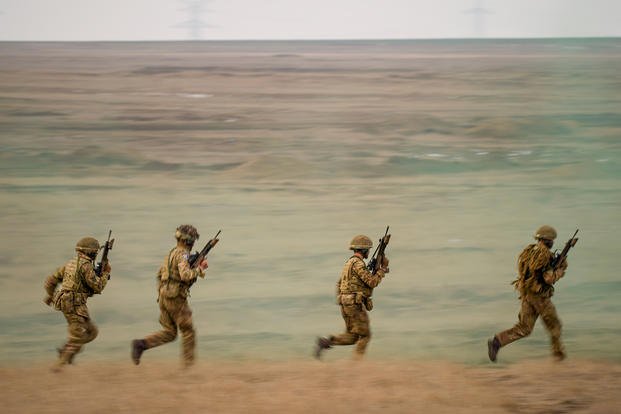
Romania’s defense ministry announced that the U.S. will halt the rotation of a brigade stationed across several NATO nations, including Romania, impacting approximately 1,000 troops who will remain in the country. Previously, over 1,700 U.S. troops were deployed in Romania, with a typical brigade consisting of 1,500 to 3,000 personnel.
Romania’s Defense Minister Ionut Mosteanu noted the U.S. strategic shift towards the Indo-Pacific, assuring that allied forces will remain above pre-invasion levels. He emphasized the strength of the U.S.-Romania partnership, describing it as “solid, predictable, and reliable” during a news conference.
In a social media post, U.S. Ambassador to NATO Matthew Whitaker reassured that the U.S. “remains committed to Romania,” highlighting ongoing support for NATO operations like Eastern Sentry. He did not, however, address the troop reduction directly.
Following the onset of conflict in 2022, NATO increased its military presence along Europe’s eastern boundary, deploying additional troops to Romania, Hungary, Bulgaria, and Slovakia. This bolstering aligns with the U.S.’s decision, which reflects NATO’s strengthened presence in the region.
101st Airborne Troops to Fly Out
U.S. Army Europe and Africa announced that the 2nd Infantry Brigade Combat Team of the 101st Airborne Division will return to Kentucky as planned, with no immediate replacement slated for Europe. The statement emphasized that this does not signal a withdrawal from Europe or reduced NATO commitment, but rather points to enhanced European defense capabilities.
U.S. officials in Poland and Lithuania have not been notified about troop reductions in their regions. A NATO official commented that such adjustments in U.S. force posture are typical, with the current American military presence in Europe exceeding pre-2022 levels.
The official minimized security concerns, ensuring that NATO remains in close coordination with U.S. authorities to preserve a strong deterrent and defense posture.