Venezuela Challenges Trinidad’s Alliance with U.S. Amid Maritime Tensions
In a recent development, Venezuela has signaled its disapproval of Trinidad and Tobago’s collaboration with the United States, particularly regarding a contentious maritime initiative. The Venezuelan vice president has publicly called for the termination of energy agreements with Trinidad, citing the nation’s “hostile” actions.
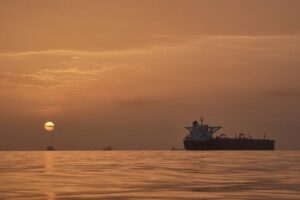
The core of the dispute centers around Trinidad’s decision to host the USS Gravely, a U.S. destroyer equipped with guided missiles, as part of joint military exercises with the country’s navy. This has been perceived by Venezuelan officials as a deliberate provocation. Trinidad, however, maintains that such exercises are routine.
On national television, Venezuela’s Vice President Delcy Rodriguez accused Trinidad’s Prime Minister of aligning with the U.S. military agenda. Rodriguez, who also serves as the minister of hydrocarbons, has proposed withdrawing from a 2015 bilateral agreement that allows for joint natural gas exploration in the waters between the two countries, separated by a mere 7-mile-wide bay.
Trinidad’s Prime Minister Kamla Persad-Bissesar has expressed support for the U.S. campaign against Venezuelan speedboats allegedly involved in drug trafficking. She controversially stated a preference for seeing traffickers “blown to pieces” rather than endangering her nation’s citizens.
With a population of approximately 1.4 million, Trinidad has been identified as a hub for drug storage and distribution by smugglers targeting European and North American markets.
Venezuela, under President Nicolas Maduro, views the U.S. military presence in the Caribbean as an existential threat. The deployment of U.S. warships is seen as part of an alleged plot to destabilize Maduro’s government, which has faced accusations of electoral fraud.
The situation escalated after the Trump administration announced the deployment of its largest aircraft carrier to the southern Caribbean. This move complements an existing U.S. naval presence, including warships, a submarine, drones, and fighter jets.
Since the deployment began in September, the U.S. has conducted 10 strikes on suspected drug vessels, resulting in at least 43 fatalities. The Venezuelan government continues to express grave concerns over these military actions.
For further details, visit the Trinidad and Tobago section or read more about the 2015 natural gas exploration agreement. Additional information on the political climate can be found in the Venezuelan election coverage and updates on U.S. naval operations are available here.