The city of Aachen, once an emblem of imperial grandeur under Charlemagne, faced devastation during World War II’s harshest winter. Amidst the destruction, an American soldier’s efforts ensured the survival of its ancient cathedral. Captain Walter Johan Huchthausen of Perry, Oklahoma, worked alongside German citizens to safeguard this architectural marvel, preserving its legacy for future generations.
Huchthausen, the son of a German immigrant, had established a promising career in architecture. With a Master’s degree from Harvard, his expertise led him to roles in New York, Boston, and as an assistant professor at the University of Minnesota. His strong appreciation for history and design was evident throughout his career.
Becoming a Monuments Man
Huchthausen’s deep connection to his German roots included studying in Germany on a Harvard fellowship, where he achieved native-level proficiency in the language. This cultural insight proved invaluable during his service as a U.S. Army Monuments Man, a role focused on preserving Europe’s historical artifacts during the war.
After volunteering for military service in 1942 at age 38, Huchthausen initially joined the U.S. Army Air Forces. However, after being injured by a V-1 bomb in London, he transferred to the U.S. Army’s European Civil Affairs Division. There, he joined the Monuments, Fine Arts and Archives program, known as “the Monuments Men.” By December 1944, amidst the Battle of the Bulge, he was serving as the Ninth Army’s Monuments officer.
Nicknamed “Hutch” by his peers, Huchthausen leveraged his communication skills with German POWs and locals to uncover 30 hidden art caches concealed by Nazi officials, safeguarding both native and looted artworks. His dedication and attention to detail earned him respect among his colleagues.
In the ruins of a royal city
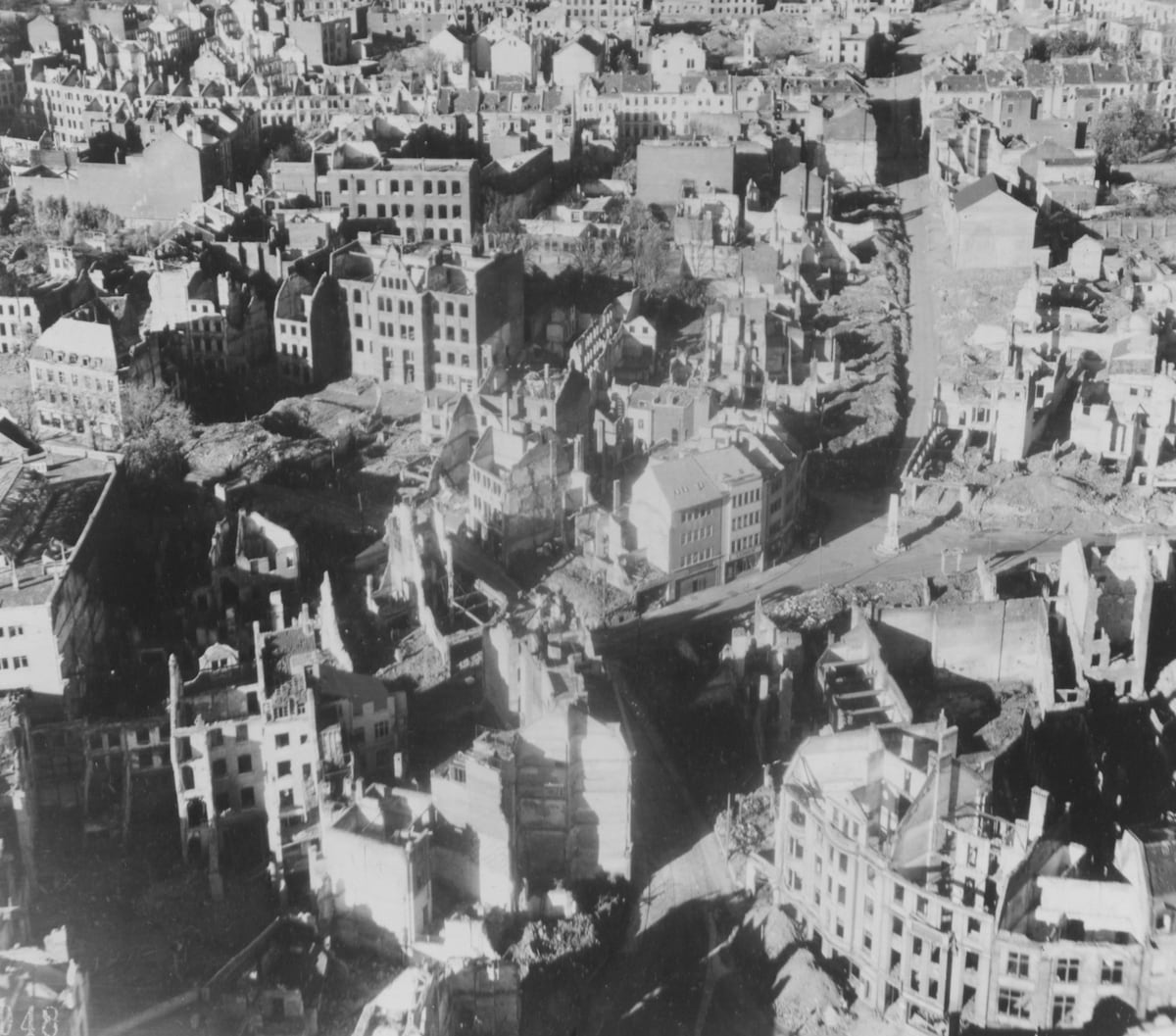
After a stint in France, Huchthausen made his mark in Aachen, a city with historical significance as Charlemagne’s seat of power. Though Adolf Hitler regarded Aachen as a propaganda tool due to its imperial past, the U.S. Army’s advance led to orders for a fierce defense and total annihilation rather than surrender. Amidst this chaos, civilians were initially barred from evacuating by the SS and later forcibly removed as the city prepared for a brutal siege.
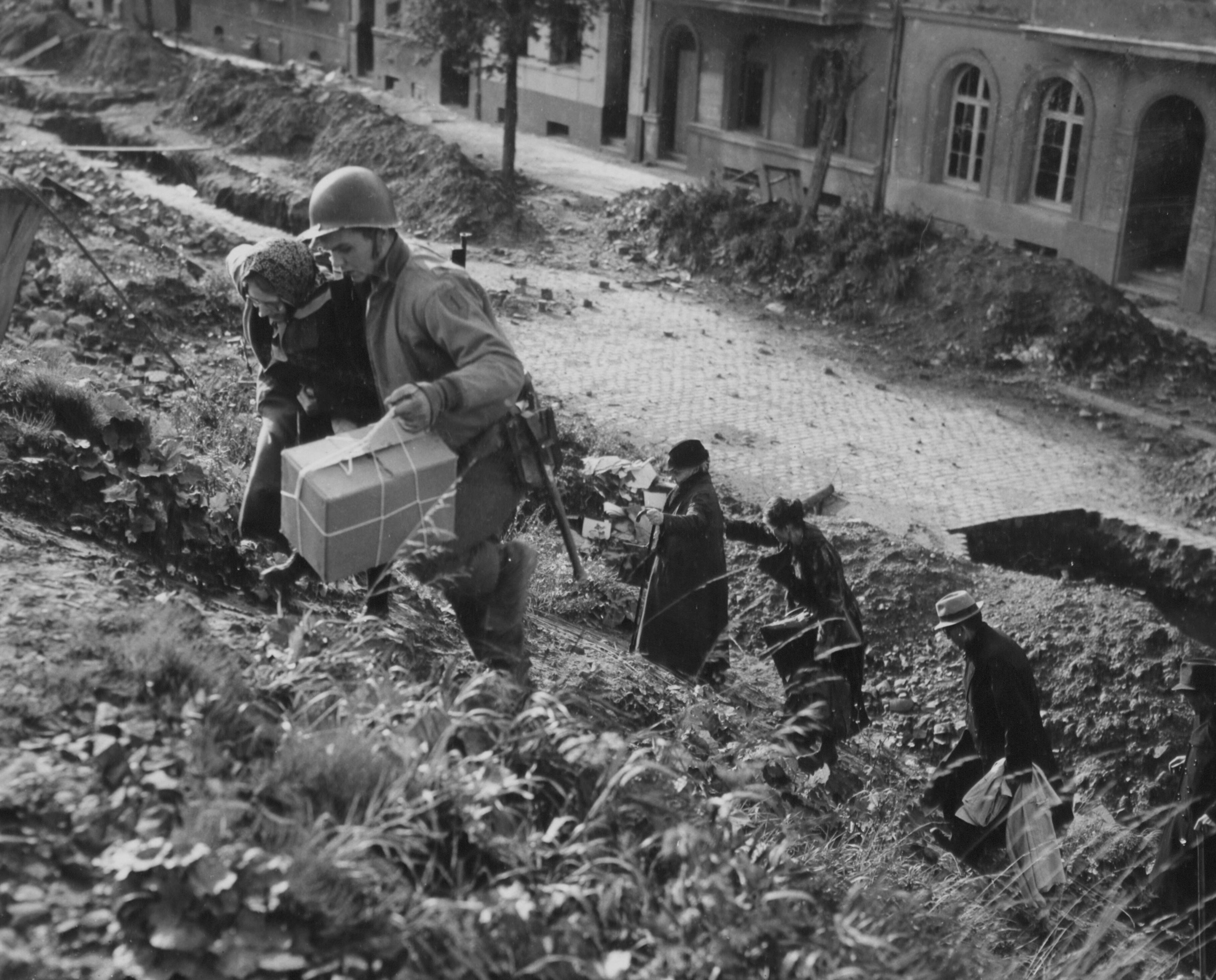
Throughout the battle of Aachen, many civilians attempted to escape the city, often under the threat of being fired upon by Nazi forces. U.S. soldiers would later rescue several elderly residents during these perilous attempts.
Aachen Cathedral, once an architectural marvel with its own treasure chamber, had endured bombing raids throughout the war. Initially protected by local youth volunteers, it faced imminent collapse by the battle’s end on October 21, after intense fighting left the city in ruins.
Saving the cathedral
In January 1945, Huchthausen took charge, establishing his base at the city’s Suermondt-Ludwig-Museum. He mobilized local civilians to retrieve and safeguard the cathedral’s artifacts and oversaw the repair of its structure. Under his guidance, the cathedral’s roof was repaired, paintings preserved, and bomb-damaged windows covered. His architectural acumen helped reinforce the building’s structure, preventing its collapse.
When questioned by a reporter about preserving a site within the Third Reich, Huchthausen responded, “Aachen Cathedral belongs to the world and if we can prevent it from falling in ruins…we are doing a service to the world.” His statement was published shortly before his untimely death.

Killed in action
On April 2, 1945, Huchthausen was tragically killed while searching for a stolen artifact. Traveling with Lt. Sheldon Keck, his vehicle came under machine-gun fire, resulting in Huchthausen’s instant death. Keck survived the attack.
In a heartfelt tribute, fellow Monuments Man Maj. Walker Hancock noted, “The buildings that Hutch hoped, as a young architect, to build will never exist… but the few people who saw him at his job — friend and enemy — must think more of the human race because of him.” Huchthausen’s legacy endures, with his final resting place at the Netherlands American Cemetery in Holland, and posthumous honors including the Bronze Star and Purple Heart with oak leaf cluster.