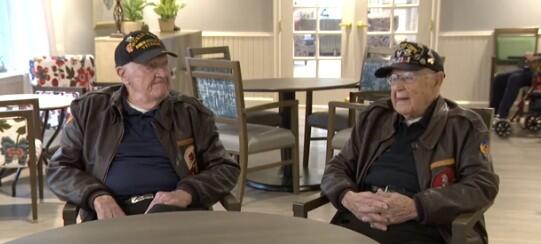
Amid the dwindling numbers of the Greatest Generation, two World War II veterans, Les Schrenk and Casey Bukowski, have discovered a remarkable shared history. When the two centenarians met to celebrate Schrenk’s 102nd birthday, they realized the profound parallels in their wartime experiences.
Their connections are striking: both served as staff sergeants on B17 bombers, both were downed on February 22, 1944, and both endured captivity in the same POW camp.
Organizing a Memorable Reunion
Bringing these veterans together required significant effort, given that Schrenk resides in Bloomington, Minnesota, while Bukowski lives near Buffalo, New York. Friends Mike Johnson and Jared Cummins took the initiative to arrange a meeting at the St. Paul Air Force Museum, recognizing the significance of their similar stories.
Bukowski felt some hesitation about the meeting, uncertain about what to expect from sharing memories with another former POW. However, he found comfort upon meeting Schrenk, stating, “Actually, unbelievable. Because I had doubts about what would occur and how to approach this thing.”
Parallel Paths in History
February 22, 1944, was a pivotal day for both men. Bukowski sustained injuries when his plane was shot down, losing an eye and suffering from shrapnel wounds. “I lost my eye at that time and had a shrapnel wound, and I was knocked out,” he recalled. Despite personal hardships, both men parachuted to safety, only to be captured—Schrenk in Denmark and Bukowski in Germany.
“That’s amazing. We were practically shaking hands, and yet, we didn’t know each other,” Bukowski reflected on their shared experiences. Their ordeal continued in the same POW camp, where they endured harsh conditions and an 86-day forced death march through one of the coldest winters on record.
Schrenk recounted, “We all had very severe dysentery, fleas, lice, and bed bugs. And, of course, the cold.” Bukowski added, “Actually, they told us that it was the worst winter in many years. The coldest winter.”
Freedom and Reflection
Their captivity ended with liberation by Allied forces—American troops for Bukowski and British soldiers for Schrenk. “Finally, for us, the war was over, and we were able to think of going home,” Bukowski recalled.
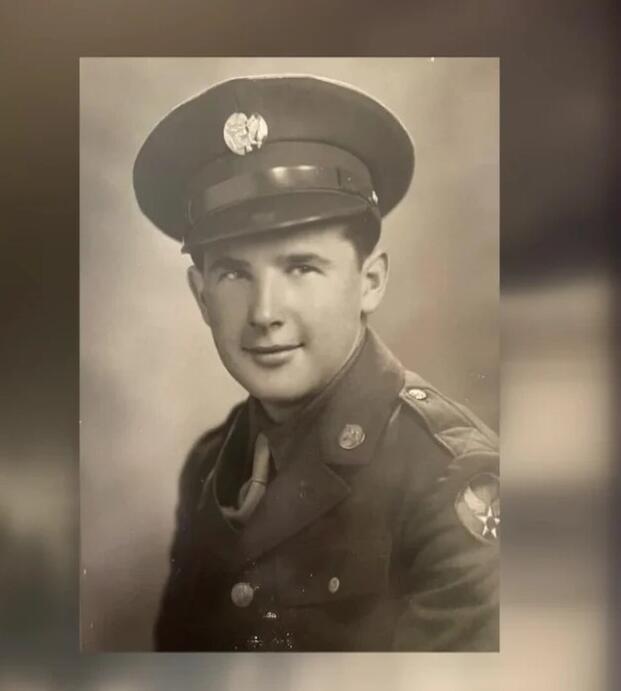
Their meeting revealed another uncanny similarity: in flight crew photos, both men stood in the same position—back row, second from left. “We each brought our own memories back to each other,” Bukowski said. “We were together but didn’t even know it.”
Despite the decades that have passed since World War II, both Schrenk and Bukowski remain in good health and often reflect on their experiences. Schrenk recently revisited World War II sites in Europe and even connected with the German pilot who had shot him down, fostering reconciliation.
“After the war, actually tracking down the German pilot that shot me down, going to visit him, and becoming friends,” Schrenk shared, recounting his journey towards healing and understanding.