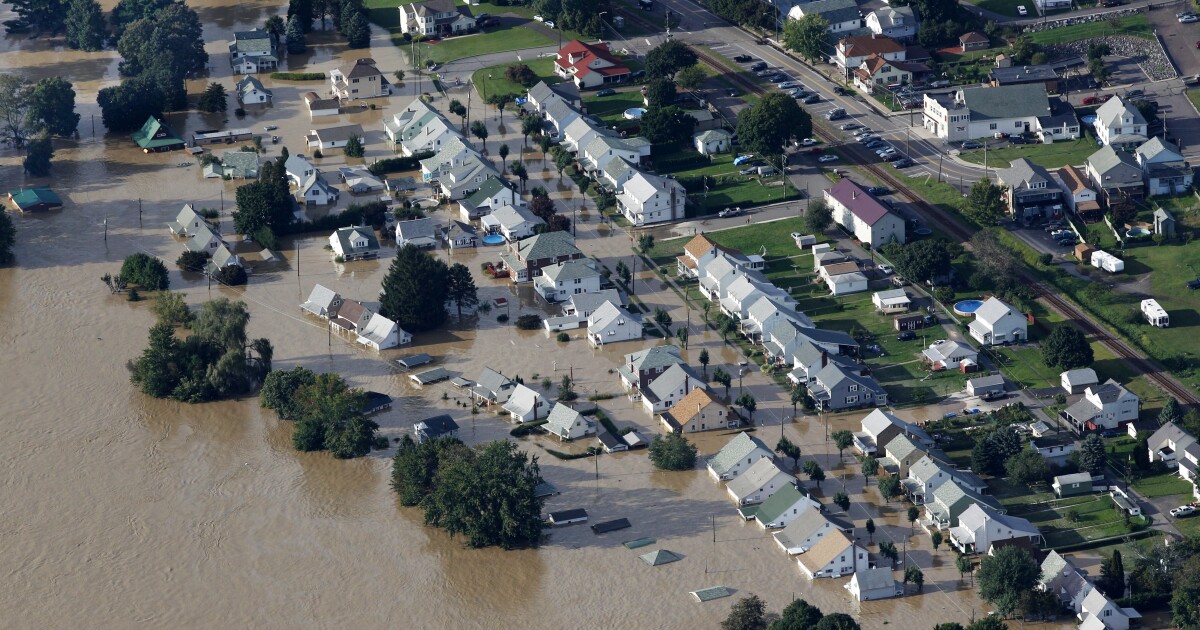
Duryea, PA Faces Flooding Threat Due to Delayed Levee Upgrades
The small town of Duryea, Pennsylvania, nestled by the Lackawanna River, is grappling with the looming threat of catastrophic flooding. The town has been shielded by a levee since the 1970s, but rising water levels and increased storm activity are pushing the limits of its protection.
Need for Levee Upgrades
Laura Holbrook, the director of the flood protection authority for Luzerne County, where Duryea is located, highlights the urgent need to raise the levee by about 3 feet to safeguard the town from escalating flood risks. Heavy rainstorms in the Northeast have seen a significant increase in rainfall, posing a greater danger to vulnerable communities like Duryea.
Challenges in Securing Funds
Despite efforts to secure federal funds for the crucial levee upgrades, Duryea has faced setbacks. The Trump administration’s withholding of billions of dollars for disaster preparedness has left many rural areas, including Duryea, in limbo. The town’s limited financial resources make it challenging to cover the substantial cost of the levee enhancements.
FEMA Funding Restart
In response to a lawsuit by 20 states, FEMA has agreed to revive the federal grant program for disaster preparedness, providing a glimmer of hope for communities like Duryea. However, the competition for these funds is expected to be fierce, with numerous applicants vying for limited resources.
Uncertainty and Vulnerability
The delay in accessing federal funds has left Duryea and other small towns exposed to the perils of climate change-induced disasters. Andrew Rumbach from the Urban Institute emphasizes the vulnerability of communities like Duryea to floods and wildfires, emphasizing the urgent need for financial support.
Conclusion
The plight of Duryea epitomizes the challenges faced by many small, rural communities grappling with the impacts of climate change and inadequate infrastructure. As the town awaits crucial levee upgrades, the importance of timely federal funding for disaster preparedness cannot be overstated.
In a small town in Pennsylvania, the looming threat of flooding has residents on edge. The town’s emergency manager, Keith Moss, expresses the community’s concerns, stating, “I think the people are really concerned.” The reason behind this anxiety stems from delayed federal funds that were supposed to go towards raising the levee to protect residents from flooding.
Under the previous Trump administration, there was a significant increase in federal support for communities facing natural disasters. In 2018, President Trump signed a bill that allocated more funding for various projects aimed at disaster protection. FEMA was tasked with distributing this money, with an agency report the following year highlighting the benefits of this investment in terms of saving lives and reducing disaster costs.
One of the successful programs initiated during this time was the Building Resilient Infrastructure and Communities (BRIC) program. However, the Trump administration abruptly canceled this program shortly after taking office, citing concerns about waste, fraud, and abuse. This decision left many local communities, including Luzerne County in Pennsylvania, in limbo as promised funds were halted, leading to widespread outcry and legal action.
Following a federal court order to reinstate the program, questions now linger about the timeline for funds to start flowing again. With administrative delays and a reduced workforce at FEMA, the process of reviewing applications and allocating funds may face further setbacks.
The uncertainty surrounding which projects will receive funding is compounded by the Trump administration’s criticism of FEMA’s focus on climate change initiatives. The administration has expressed a desire to cut or even eliminate FEMA, raising concerns about the future availability of funds for disaster protection projects.
In light of these challenges, rural communities and smaller towns like Duryea, PA, may find it even harder to secure federal grants for essential infrastructure projects. The shift in priorities away from climate-related projects also brings into question the types of projects that will receive federal funding moving forward, particularly those addressing the effects of climate change such as sea level rise and extreme wildfires.
Overall, the delay in federal funding for disaster protection projects has left communities like Duryea in a state of unease, with the future of crucial infrastructure upgrades hanging in the balance. As residents continue to voice their concerns, the need for timely and efficient allocation of federal funds remains paramount to safeguarding these vulnerable communities.
Have you ever wondered how technology is shaping the way we interact with the world around us? In a recent study conducted by researchers at a leading university, it was found that the use of smartphones is significantly altering our behavior in public spaces. Let’s delve into the details of this study and explore the implications of our increasing reliance on technology.
The Study
The study, led by Dr. Smith from the Department of Psychology, surveyed over 500 individuals in urban areas and observed their behavior in public places. The researchers found that 80% of participants used their smartphones while in public, with a majority of them engaging in activities such as texting, scrolling through social media, or watching videos.
Interestingly, the study revealed that smartphone use in public spaces was associated with decreased face-to-face interactions and a lower awareness of one’s surroundings. Participants immersed in their devices were less likely to engage with others or notice important environmental cues.
Implications
These findings have significant implications for our social interactions and overall well-being. The constant use of smartphones in public spaces may lead to a decline in real-world connections and a sense of disconnectedness from our surroundings. This behavior can also impact our mental health, as it may contribute to feelings of loneliness and isolation.
Moreover, the researchers suggest that excessive smartphone use in public spaces could have safety implications, as individuals may be less aware of potential dangers or emergencies unfolding around them. This lack of situational awareness can pose risks to personal safety and the well-being of others.
As technology continues to advance and become more integrated into our daily lives, it is essential to strike a balance between our digital interactions and real-world experiences. Finding ways to limit smartphone use in public spaces and fostering meaningful connections with those around us is crucial for maintaining a sense of community and connection in an increasingly digital world.