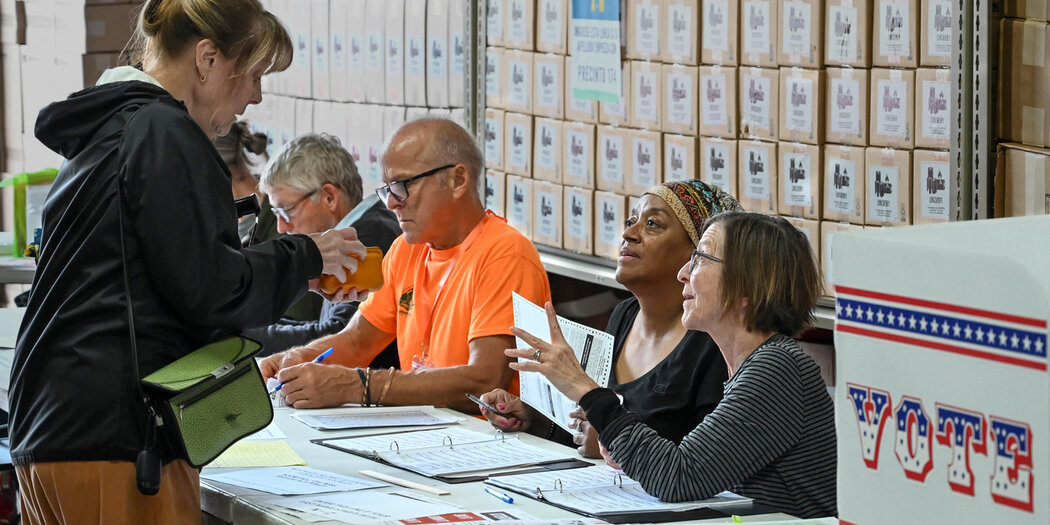
In an era of evolving election challenges, local election officials face the uphill task of safeguarding democracy with dwindling federal support. The increasing complexity of their roles, marked by cybersecurity threats, misinformation, and safety risks, underscores the need for robust backing. Yet, the reduction in federal resources has sparked significant concern among those tasked with ensuring the integrity of the electoral process.
A recent survey by the Brennan Center reveals a prevalent apprehension among election officials regarding the cuts in federal election support. A staggering 87% emphasized the importance of state and local governments stepping in to fill the void created by these federal cutbacks. Political interference also looms large, with many officials wary of investigations potentially undermining their duties.
Challenges from Federal Rollbacks
For years, the federal government has played a pivotal role in aiding local election offices, especially after the Department of Homeland Security classified election systems as critical infrastructure in 2017. CISA, the agency coordinating cybersecurity efforts with states, has been instrumental in providing necessary resources like threat intelligence briefings and security assessments. However, this support faced a freeze under the Trump administration, which also halted CISA’s election security advisory services and reduced funding for essential networks facilitating security information sharing.
The survey indicates a strong concern among election officials about these federal cutbacks. While 60% express significant concern, this figure rises to 90% among those well-informed about the cuts. Additionally, 61% are worried about potential changes in CISA’s services to election officials.
Despite these challenges, local officials are not standing still. An overwhelming 94% have collaborated with state or local agencies to ensure a secure election process in 2024, with 80% engaging with law enforcement. The number of offices working with local law enforcement increased to 84% from 65% in the previous year, highlighting a proactive approach to security.
Political Interference and Threats
Political pressures add another layer of complexity for election officials. Recent actions, such as President Trump’s executive order against Christopher Krebs, have heightened concerns about politically motivated investigations. Around 46% of officials express unease over such investigations, while 59% are wary of political leaders meddling in their duties.
These fears are compounded by reports, such as one from the New York Times, that indicate potential criminal charges from the Department of Justice against election officials for inadequate system safeguards. The DOJ has also initiated lawsuits, such as the one against Orange County, California, for voter information. Amidst these challenges, 81% of officials express concern about misinformation spreading through social media.
Dealing with Threats and Exploring AI
Threats and harassment remain a persistent issue, with 36% of officials experiencing such incidents and 16% facing direct threats. A significant portion of these threats occur in person, predominantly at the workplace. Concerns about the safety of colleagues and family members are prevalent, affecting over half of the officials surveyed.
Meanwhile, the potential of artificial intelligence in election administration is emerging. Although only 8% of officials currently use AI for tasks like social media content creation, interest is growing. Vendors are increasingly approaching officials with AI solutions, and there is a rising demand for guidance from government agencies on AI usage, as indicated by the increase from 31% in 2024 to 40% in 2025.