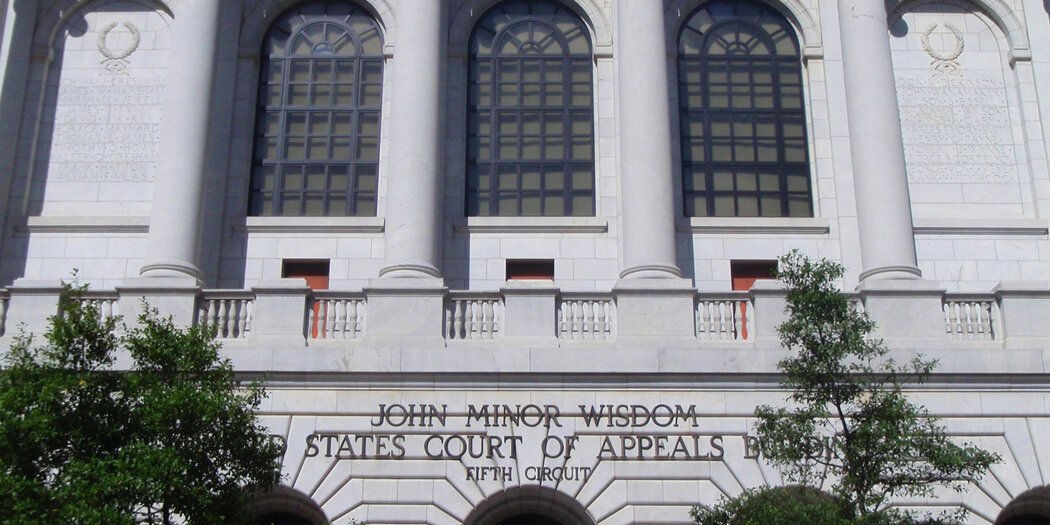
The ongoing legal battle over the invocation of the Alien Enemies Act by the Trump administration has reached a significant milestone. Recently, the Fifth Circuit Court considered arguments in W.M.M. v. Trump, a case that questions the extent of executive power under this 1798 law originally designed for wartime scenarios.
The Alien Enemies Act grants the president authority over noncitizens from hostile nations, including powers of detention and deportation, under certain conditions like a declared invasion. Earlier this year, President Trump classified the actions of the Venezuelan gang Tren de Aragua as an “invasion” due to their involvement in illegal migration and drug trafficking, attributing these activities to Venezuela, which he dubbed a “hybrid criminal state”. This move has sparked debate over its alignment with the law’s intended use.
Critics argue that the situation does not constitute an invasion, a sentiment echoed by top officials like the CIA Director and the Chairman of the Joint Chiefs, who have informed Congress of their disagreement with the administration’s stance. Despite this, the government argues that judicial bodies must defer to the president’s judgment in such politically charged matters, invoking doctrines like the “political question doctrine” that often limit judicial intervention in issues of foreign policy and national security.
During the proceedings, the Fifth Circuit judges grappled with the scope of judicial review allowed in these circumstances. Judge Oldham questioned whether any Supreme Court ruling supports the judiciary’s ability to override the president’s determinations related to armed conflict or insurrections. In response, Lee Gelernt of the ACLU highlighted past Supreme Court decisions affirming the judiciary’s role in assessing the proper invocation of the Alien Enemies Act, drawing parallels with cases involving detainees at Guantanamo Bay.
Historical precedents such as Sterling v. Constantin, a 1932 case where the Supreme Court limited executive power by rejecting a Texas governor’s use of martial law, serve as significant reference points. This case, among others, underscores the judiciary’s capacity to act as a check on executive power, even in sensitive matters of national security.
The invocation of the Alien Enemies Act brings to mind its use during World War II, when it was employed to intern thousands of noncitizens from Axis nations. The subsequent issuance of Executive Order 9066, which led to the incarceration of Japanese Americans, was later challenged in cases like Schueller v. Drum and Ebel v. Drum. These decisions rejected claims of military necessity and prevented similar measures against German Americans, emphasizing the judiciary’s role in safeguarding civil liberties.
These historical cases, alongside others like Ex parte Milligan, illustrate the judiciary’s potential to counteract “manifestly unauthorized exercises of power,” as discussed in an amicus brief submitted to the Fifth Circuit by organizations including the Brennan Center and the Cato Institute.
The current case’s outcome could redefine the boundaries of executive power in peacetime, especially given the Alien Enemies Act’s controversial history. A Department of Justice memorandum hints at extreme measures such as warrantless raids and deportations without due process. As the courts deliberate, the implications for civil liberties and executive authority remain a critical concern.