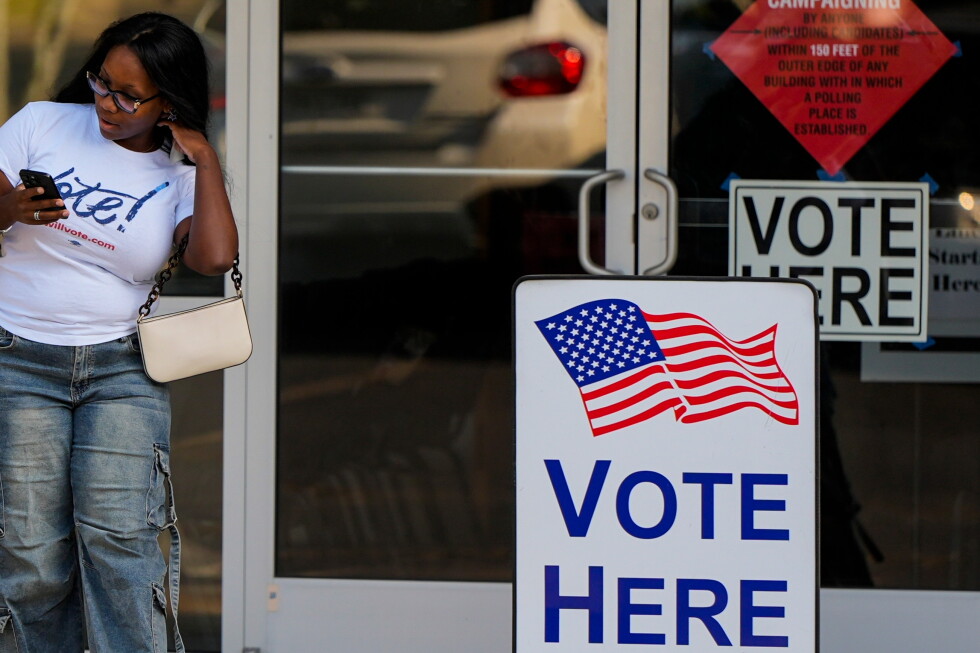
Across the United States, the political landscape is poised for a shift as redistricting efforts intensify. These changes could have far-reaching effects on a range of issues, from tax policies to education funding and infrastructure development. Georgia is at the forefront of this movement, with its Republican-led Legislature set to convene June 17 for a special session dedicated to redistricting ahead of the 2028 elections.
The special session in Georgia will address the redrawing of voting districts for Congress as well as the state House and Senate, and possibly the state’s utility regulatory commission. This will be the first attempt by a state legislature to redraw its districts since a U.S. Supreme Court ruling that weakened protections for minority voters. Similar redistricting efforts might be pursued by Republicans in Mississippi and Democrats in New York before their 2027 and 2028 elections, respectively.
The potential for widespread redistricting could impact various local governing bodies, including county commissions, city councils, and school boards, affecting decisions that touch on everyday life. As Joe Kennedy III, founder of the Groundwork Project, noted, “The stakes here are not political, they are deeply human.”
Drivers Behind the Redistricting Surge
Redistricting typically occurs once every ten years following the U.S. census. However, former President Donald Trump advocated for Texas Republicans to redraw congressional districts to gain seats in the midterm elections, sparking a wave of partisan gerrymandering in other states. A pivotal 6-3 Supreme Court decision in April further propelled the redistricting efforts by striking down a majority-Black congressional district in Louisiana, providing a precedent for Republicans to reshape districts with significant minority populations.
Georgia’s Redistricting Initiative
In 2023, a federal judge determined that certain districts in Georgia were racially discriminatory. The state Legislature swiftly approved revised maps, creating more majority-Black districts, though these changes did little to alter Republican majorities in the upcoming elections. Governor Brian Kemp has since called a special session to reconsider district maps in response to the Supreme Court’s decision, potentially reversing previous court-ordered modifications and redrawing Democratic-held minority districts to favor the GOP.
While the Republicans have yet to disclose their redistricting plans, Democratic state Rep. Tanya Miller criticized the initiative, labeling it as an effort to “rig maps to maintain power.”
The Stakes and Potential Impact
Prior to the Supreme Court ruling, a report by Fair Fight Action and Black Voters Matter warned that Republicans in ten Southern states could eliminate 191 Democratic-held seats, including 140 districts with Black or Hispanic majorities. “If anything, our report was an understatement,” stated Cliff Albright, co-founder of Black Voters Matter. Analysts predict the Supreme Court’s decision will influence redistricting across various states.
“We’re going to potentially see a lot of frenzied efforts at every level, including at the local level, to try out undoing district maps and configurations that have performed quite well in providing improved representation for communities of color,” said Kareem Crayton from the Brennan Center for Justice.
Legal Challenges and Obstacles
The recent Supreme Court ruling is already impacting several states. For example, Alabama is permitted to use a state Senate map approved by Republican lawmakers, following the decision. The ruling has also prompted the Supreme Court to remand redistricting cases involving Black and Native American voters in Mississippi and North Dakota to lower courts for further review.
Approximately half of the states have constitutional restrictions on mid-decade redistricting of state legislative seats, according to Justin Levitt, a law professor at Loyola Marymount University. Even in states where it is permissible, there may be limited incentives for lawmakers to redraw their districts as many state legislatures are already dominated by one party.
Local Governments and Redistricting
The Supreme Court’s decision may influence local government redistricting, though many local offices remain officially nonpartisan. Over the last four decades, the majority of lawsuits under Section 2 of the Voting Rights Act have involved cities, counties, and school boards. However, the weakened Voting Rights Act could allow for redistricting driven by partisan goals, although it remains uncertain how many local governments will pursue such changes.