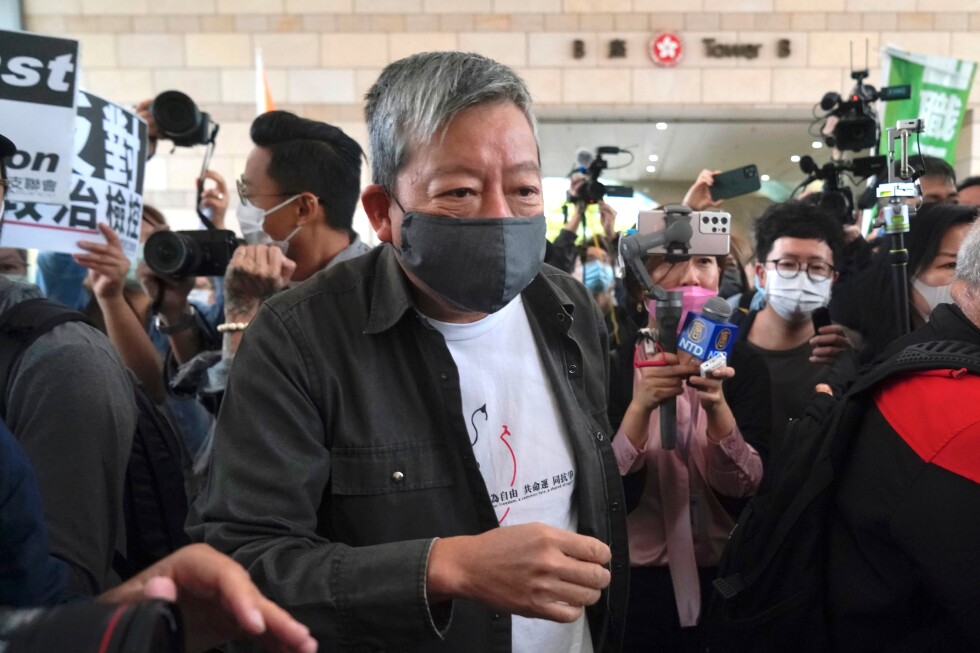
In a significant legal proceeding, a Hong Kong court commenced final arguments on Monday in a high-profile national security case involving two individuals who organized vigils to commemorate the 1989 Tiananmen Square crackdown. These vigils, once a unique feature of Hong Kong’s civil liberties landscape, have come under scrutiny since their ban in 2020.
Hong Kong was the sole place in China where such large-scale public commemorations of the crackdown took place, but the vigils were banned in 2020. This led to the 2021 charges against two former organizers, accusing them of inciting subversion under a national security law implemented by Beijing, which has significantly curbed the pro-democracy movement in the city.
Chow Hang-tung and Lee Cheuk-yan, who were key figures in the Hong Kong Alliance in Support of Patriotic Democratic Movements of China, have denied the charges. A guilty verdict could result in a prison sentence of up to a decade.
The prosecution’s case has drawn attention as a reflection of the erosion of Western-style civil liberties in the region, despite Beijing’s assurance in 1997 to preserve these freedoms for half a century. However, both the Beijing and Hong Kong governments argue that the security law is crucial for maintaining stability.
Prosecution’s Stand on Freedom of Speech
The prosecution’s argument centers on the alliance’s call to “end one-party rule,” which they claim was a call to incite unlawful actions against China’s ruling Communist Party. Prosecutor Ned Lai emphasized that freedoms of speech, assembly, and association are not absolute, criticizing the defendants for conflating human rights with unlawful activities.
“The freedoms of speech, association and assembly mentioned by D2 and D4 are not ‘trump cards’ that can override the law,” Lai stated, referring to the defendants by their numbers.
Defense Highlights Lack of Evidence
Erik Shum, representing Lee, challenged the prosecution’s inability to substantiate claims of illegal activities promoted by the alliance. Shum maintained that the alliance had never advocated for illegal methods over its three decades of existence, questioning, “It can’t even say that?”
Shum further insisted that the court must genuinely address human rights concerns and not merely give them superficial consideration.
The trial is set to continue, with Lee previously defending that “ending one-party rule” was about advancing democracy rather than dismantling the Communist Party.
Chow, defending herself, argued that her writings aimed to deepen Hong Kongers’ understanding of mainland China and were not designed to incite hatred or action.
Their co-defendant, Albert Ho, pled guilty at the trial’s start in January, potentially qualifying for a reduced sentence. The trial is expected to conclude sooner than its 75-day schedule, though no verdict date has been announced.
Chow Criticizes the Trial
Sarah Brooks from Amnesty International criticized the charges as relying on overly broad definitions of subversion, advocating for the charges against Chow and Lee to be dismissed. Chow herself characterized the trial as “absurd,” noting that despite the charges, the court allows for public scrutiny and the preservation of evidence.
Hong Kong’s annual Tiananmen vigils, which attracted tens of thousands until the 2020 ban, were replaced by pro-Beijing events after COVID-19 restrictions were lifted. Some individuals attempting to commemorate the event near the original vigil site on the crackdown’s anniversary were detained.
The 1989 Tiananmen Square crackdown marked a violent end to student-led protests, resulting in hundreds, possibly thousands, of deaths, including soldiers, as military forces used live ammunition against the demonstrators.