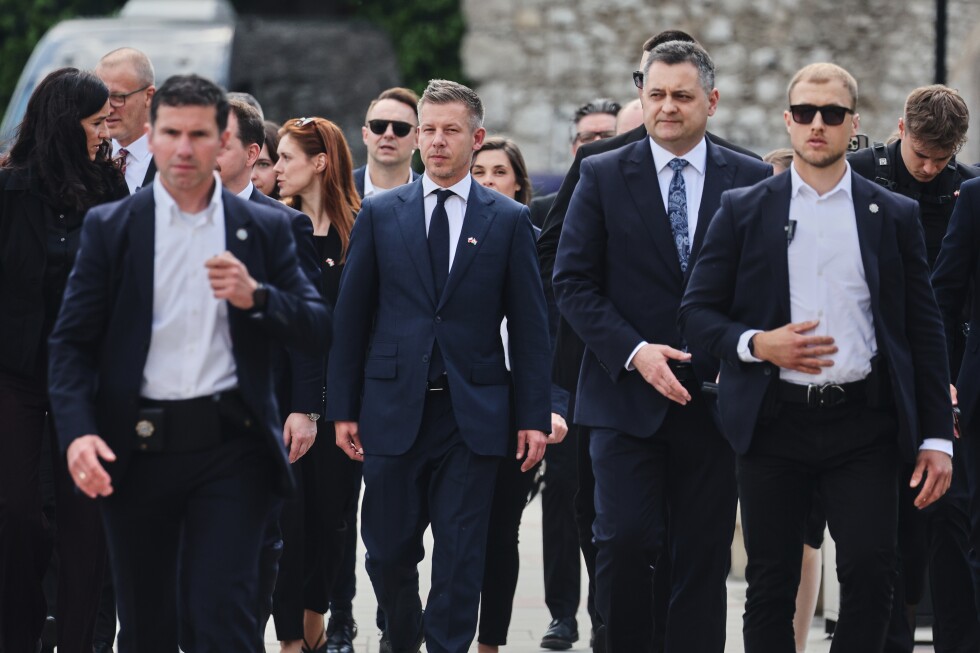
In a pivotal move for Hungarian politics, newly appointed Prime Minister Péter Magyar embarked on his inaugural foreign visit to Poland, a country whose recent political shifts may hold the key to reversing Hungary’s authoritarian trajectory. Magyar’s trip underscores the historic synergy between the two Central European nations and his resolve to guide Hungary back to a democratic path aligned with European values.
Following his center-right Tisza party’s victory over far-right leader Viktor Orbán in what has been described as an “earthquake election,” Magyar’s visit commenced in Krakow and will proceed to Warsaw. There, he will engage in discussions with Polish Prime Minister Donald Tusk and President Karol Nawrocki, focusing on mending relations strained by Orbán’s contentious policies toward Ukraine and close ties with Russia.
Magyar’s Bold Steps Toward Reform
Magyar’s administration is swiftly attempting to restore democratic institutions weakened during Orbán’s governance, with plans to unlock frozen EU funds and reestablish rule-of-law principles. His decisive actions have included advocating for the removal of key Orbán appointees, leveraging a parliamentary majority to push through constitutional amendments. Key figures he seeks to replace include Hungary’s President Tamás Sulyok and the heads of the constitutional and supreme courts, whom he has criticized as “Orbán’s puppets.” According to Andrzej Sadecki of the Center for Eastern Studies, Magyar’s parliamentary majority could facilitate the implementation of significant reforms.
Media and Judicial Reformation
Magyar is also targeting Hungary’s media landscape, which under Orbán became a tool for political propaganda. He has announced plans to suspend public broadcasters until impartiality is restored, echoing similar measures taken by Tusk’s government in Poland. József Péter Martin from Transparency International Hungary emphasized the necessity of rebuilding public media to adhere to rule-of-law standards.
The challenges also extend to judicial independence, with Magyar facing hurdles similar to those experienced in Poland. Efforts to dismantle Orbán’s influence over the judiciary will likely encounter resistance, given the entrenched positions of Orbán allies like Sulyok and Constitutional Court head Péter Polt.
Accountability and Future Prospects
Magyar is under pressure to hold Orbán’s former allies accountable for alleged abuses of power. He has pledged to establish the National Asset Recovery and Protection Office to investigate and recover misappropriated public funds. Joining the European Public Prosecutor’s Office is also on the agenda, which Martin argues would enhance Hungary’s capacity to prosecute past corruption.
The journey toward reform in Hungary is fraught with challenges, yet Magyar’s proactive initiatives signal a potential turning point in the country’s political landscape.