In a surprising twist of events in New Orleans, a man who had been wrongfully convicted and later exonerated found himself briefly at the helm of the criminal court, only to have that position snatched away within hours. This unfolding legal drama has captured the attention of both the public and the judiciary.
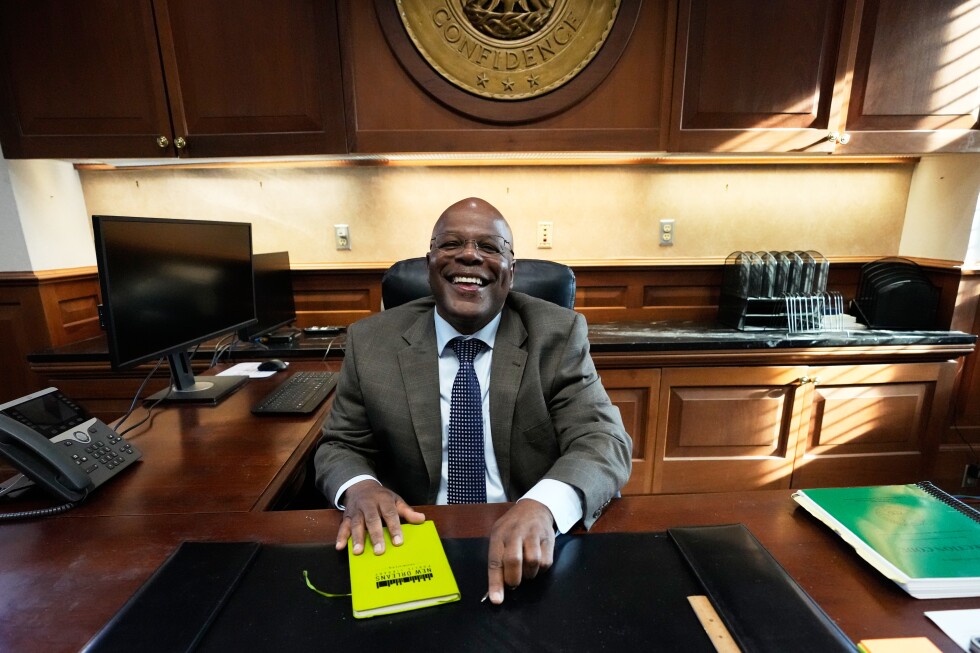
Calvin Duncan, who was elected with a strong 68% majority to serve as Orleans Parish criminal court clerk, saw his first day in office disrupted when a higher court halted his appointment. This came after a U.S. District Judge, John deGravelles, ruled that a newly passed state law eliminating Duncan’s position was unconstitutional. The law, pushed through by the Republican-controlled state Legislature and endorsed by Governor Jeff Landry, sought to consolidate the duties of Duncan’s role with another official.
Judge deGravelles stated, “The Court is not ruling that the state lacks the authority to abolish an agency or office writ large,” emphasizing that the state’s approach infringed upon Duncan’s constitutional rights. However, the state quickly appealed, arguing that the restraining order only contributed to disorder. The 5th U.S. Circuit Court of Appeals then issued a stay, effectively pausing Duncan’s brief tenure.
Despite the legal setback, Duncan maintained confidence in his position. “I am the clerk of the criminal district court, that will never change,” he told The Associated Press. Nonetheless, Duncan’s spokesperson, Emily Ratner, confirmed that he had ceased acting as clerk to adhere to the court’s latest decision.
Alanah Odoms of the American Civil Liberties Union of Louisiana argued that under the state’s constitution, Duncan’s term, which commenced at midnight, could not be prematurely ended. She indicated that the ACLU was ready to take the fight to higher courts if necessary, claiming, “The state moved too slow.”
Critics of the legislation, which was enacted just days before Duncan was to assume office, argue that it undermines the electoral will of New Orleans voters, a predominantly Black Democratic constituency in a largely Republican state. They warn that this move could signal broader efforts to disenfranchise minority voters, especially after the Supreme Court weakened a significant element of the Voting Rights Act.
While the governor’s office claims that merging the clerk roles enhances efficiency and aligns with state practices, local New Orleans leaders were neither consulted nor in favor of the change. According to the legislative auditor’s office, the consolidation might save the state around $27,300, although the long-term financial implications remain uncertain. The legislation also reallocated approximately $1.1 million in expenditures to Orleans Parish.
Duncan’s journey from a wrongfully convicted prisoner to a licensed attorney and elected official has resonated with many voters, particularly due to his commitment to improving court record accessibility. Despite the litigation, he assures that the office’s functions, including case processing and election oversight, will continue seamlessly, irrespective of who holds the title.
For more information on the unfolding legal proceedings and Duncan’s background, visit the AP News article.