OpenAI’s Path to an IPO Unaffected by Legal Battle with Musk
In a recent legal showdown between tech titans, OpenAI has emerged victorious, maintaining its trajectory towards a potentially record-breaking initial public offering (IPO). The company, known for developing ChatGPT and valued at an impressive $852 billion, faced off against Elon Musk in a high-profile court case in Oakland, California.
Elon Musk, one of OpenAI’s co-founders, sought to remove CEO Sam Altman, but the trial spotlighted not just internal discord but also broader concerns about the influence of a few billionaires on artificial intelligence (AI) development. The case underscored the strained relationships among the powerful figures shaping AI’s future, a sentiment echoed by Sarah Kreps of Cornell University’s Tech Policy Institute, who noted the trial highlighted “a broader disconnect between the people building these systems and many of the people increasingly expected to live and work alongside them.”
The crux of Musk’s argument was the deviation of OpenAI, Altman, and Greg Brockman from a shared vision of guiding AI development for global benefit. Altman, however, argued Musk aimed to benefit his own AI initiatives. Despite Musk’s efforts, the court ruled against him, noting he had missed the filing deadline, leading to a swift jury verdict that took less than two hours to decide.
Musk expressed his dissatisfaction publicly, vowing to appeal and criticizing Judge Yvonne Gonzalez Rogers, alleging bias and accusing her of setting a precedent that undermines charitable initiatives. This marks Musk’s second courtroom defeat in recent months.
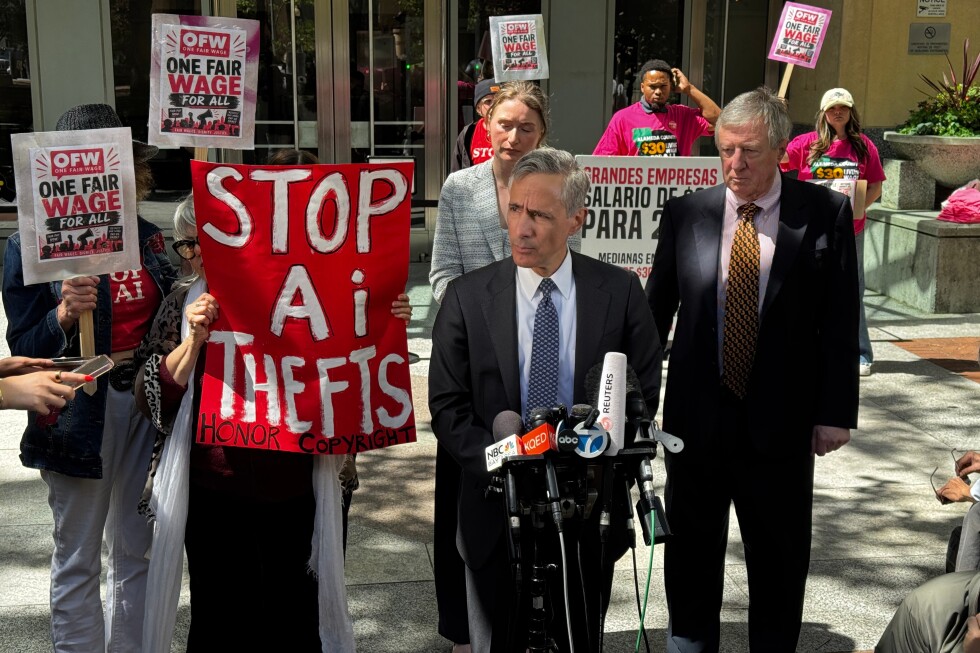
While the courtroom drama unfolded, outside, protesters voiced their concerns about the concentration of AI development in the hands of a few wealthy individuals, highlighting the societal implications of this technological advancement. “This is a funny microcosm of this moment where we have this hugely important technology that’s being developed by for-profit corporations,” commented Columbia Law School professor Dorothy Lund.
During the trial, court proceedings revealed internal communications, including emails and text messages, that provided an unflattering glimpse into Silicon Valley’s inner workings. These disclosures, particularly involving Altman’s brief removal from OpenAI’s board in 2023, fueled skepticism about his integrity, as testified by former board members Helen Toner and Tasha McCauley.
Despite Musk’s accusations, OpenAI dismissed them as attempts to hinder its progress and bolster Musk’s AI ventures, such as xAI, integrated with SpaceX. Meanwhile, both OpenAI and SpaceX are eyeing significant IPOs, alongside Anthropic, a company founded by ex-OpenAI members.
University of Richmond Law School professor Carl Tobias reflected on the potential impact of the trial’s revelations, noting, “It’s a lot of dirty laundry that doesn’t look very appealing, I suppose… But you know, AI is likely to come forward and continue even if it isn’t OpenAI.”