Unprecedented Military Involvement in Drug Raid Raises Legal Concerns
Federalized National Guard troops, initially deployed in Los Angeles to address protests against Immigration and Customs Enforcement (ICE) raids, recently participated in a significant counter-drug operation far from the city. This involvement signals an unexpected use of military personnel in domestic law enforcement, sparking legal and public debate.
Details of the Controversial Operation
Approximately 315 National Guard members were called upon to assist the Drug Enforcement Administration (DEA) in executing a federal search warrant targeting three extensive marijuana cultivation sites in the eastern Coachella Valley. This operation, spanning 787 acres and conducted in temperatures soaring to 112 degrees, also involved multiple federal agencies, including the FBI, Customs and Border Protection, ICE, and others. During the raid, ICE apprehended 70 to 75 workers suspected of lacking proper documentation. Additionally, one U.S. citizen faced arrest for obstructing law enforcement activities.
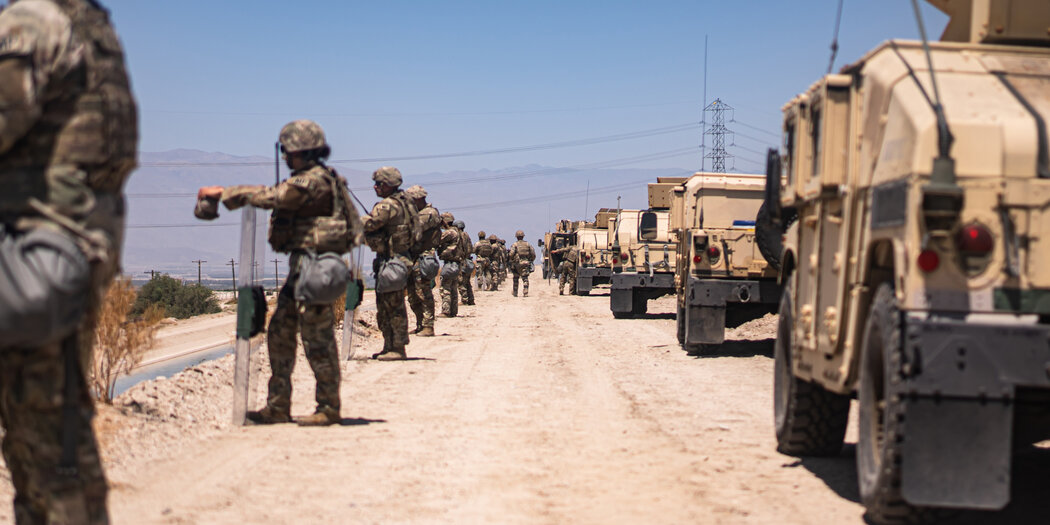
A NORTHCOM official confirmed the National Guard’s role as providing protection for federal personnel involved in the operation. The DEA emphasized the necessity of the Guard’s support, citing the scale and complexity of the operation. However, specific activities authorized for the Guard remain undisclosed. Available images depict soldiers establishing security perimeters with riot shields, hinting at their active involvement in maintaining order during the raid.
Legal Justifications and Challenges
The legality of using National Guard troops in such operations has been questioned. The deployment was purportedly a continuation of actions authorized by a June 7 presidential memorandum. However, this memorandum primarily permits deployments in areas with ongoing or anticipated protests against federal functions, a condition not evidently met in the Coachella Valley operation.
Federalization of the National Guard usually requires statutory authority, such as that provided under 10 U.S.C. § 12406, which allows for federalization in specific scenarios like invasions or rebellions. The Ninth Circuit previously found justification under this statute due to violent protests in Los Angeles, but no such justification exists for the Coachella Valley raid. The absence of protest activity in the area further complicates the legal rationale for the National Guard’s presence.
Posse Comitatus Act and Its Implications
The Posse Comitatus Act restricts military involvement in civilian law enforcement without explicit congressional or constitutional authorization. The Act is typically interpreted to prohibit direct military engagement in law enforcement, although indirect support may be permissible. The National Guard’s creation of security perimeters during the raid could potentially breach this Act, depending on the nature of their interactions with civilians.
If evidence surfaces indicating that Guard members conducted detentions or searches, the legality of their involvement could be directly challenged under the Posse Comitatus Act. The significant number of military personnel compared to civilian agents also raises questions about the balance of authority during the operation.
Broader Implications and Concerns
This incident marks a significant expansion of military involvement in routine law enforcement, a shift from previous deployments justified by claims of urgent crises, such as those in Los Angeles. The lack of a compelling justification for using military forces in the Coachella Valley operation highlights concerns about the militarization of law enforcement and the potential erosion of civilian oversight.
The Department of Justice has noted that the Posse Comitatus Act aims to prevent military coercion in civilian legal proceedings. The deployment of troops for routine law enforcement activities, such as drug raids, could pave the way for broader military involvement in domestic affairs, raising alarms about the potential for a police state scenario.