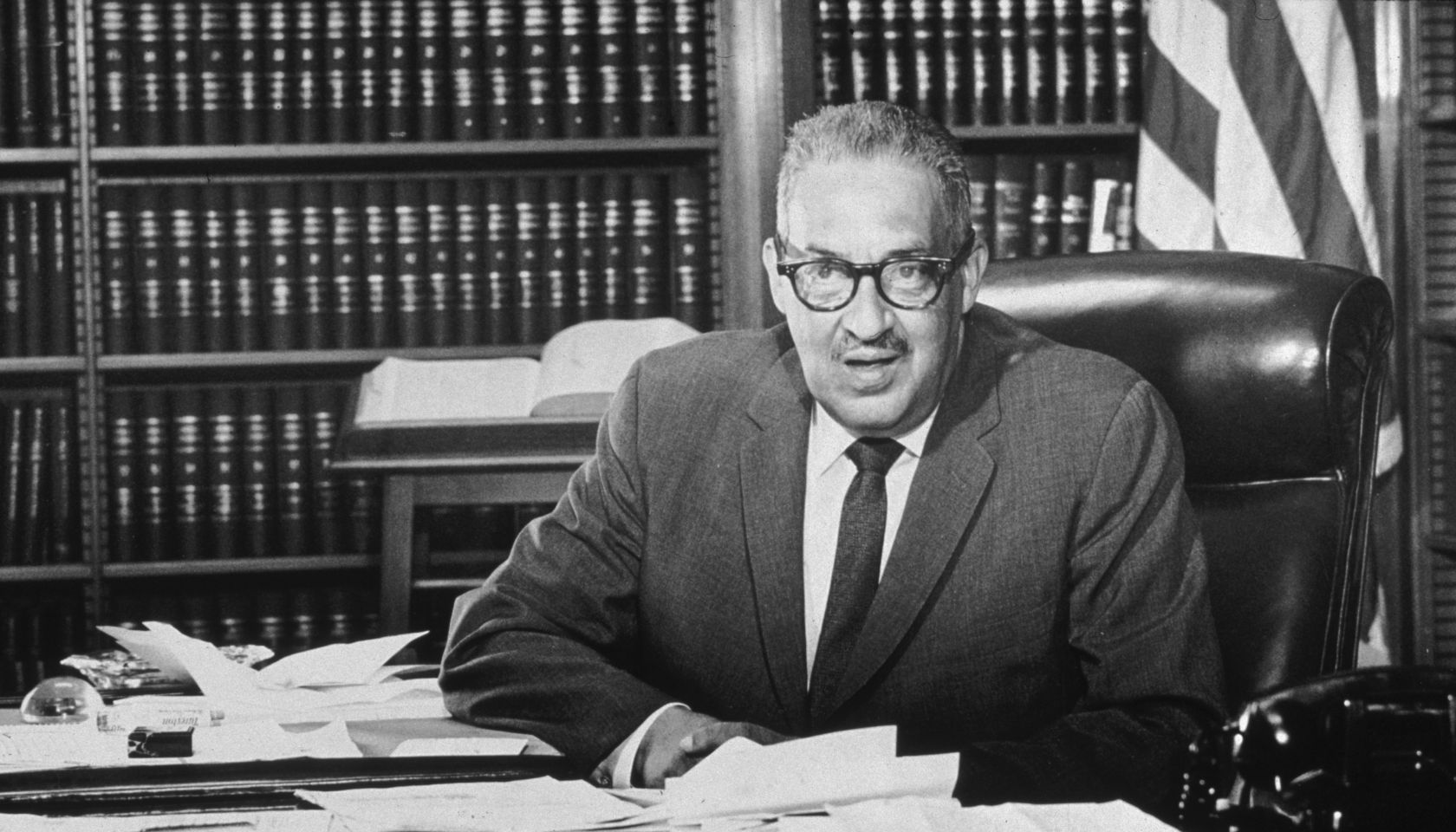
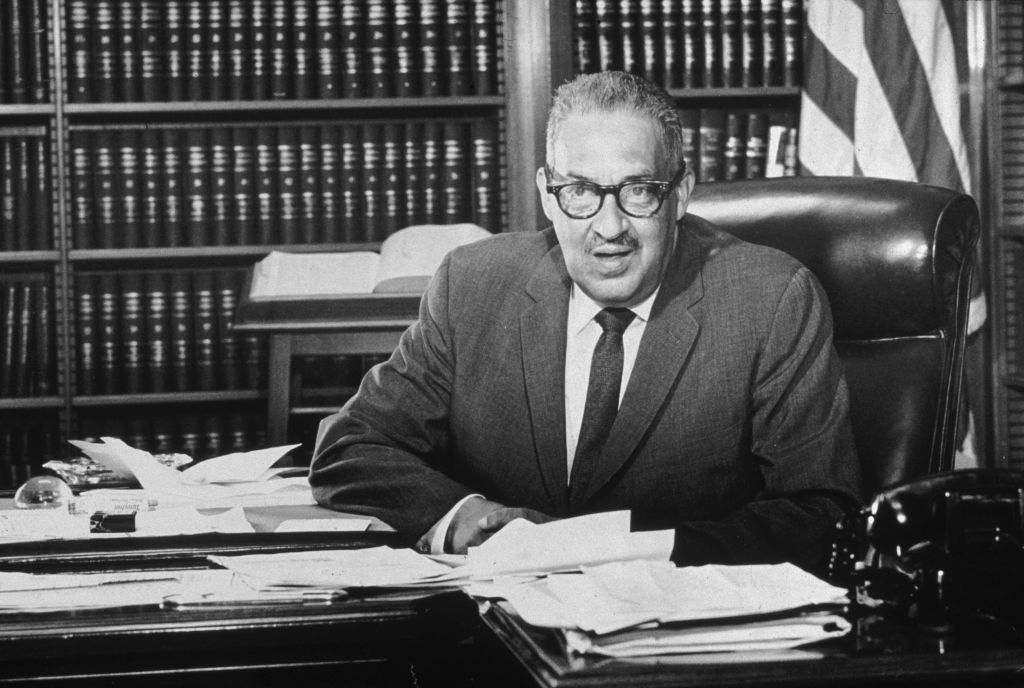
On September 9th, viewers will be offered a unique glimpse into the life of Thurgood Marshall, the groundbreaking first African American Supreme Court justice, who made history in 1967 by joining the nation’s highest court.
The PBS documentary Becoming Thurgood: America’s Social Architect will guide audiences through Justice Marshall’s life, starting from his early days in Baltimore, Maryland. It will highlight his educational journey at Lincoln and Howard universities—two significant Historically Black Colleges and Universities (HBCUs)—and his significant contributions as a civil rights lawyer and jurist. The program will delve into his efforts to dismantle school segregation and his landmark appointment to the U.S. Supreme Court.
This documentary promises to be a treasure trove for history enthusiasts, featuring Justice Marshall recounting his own story through rare footage from an extensive eight-hour oral history, as noted by the Chicago Defender. [source]
“For the first time, audiences will hear Thurgood Marshall tell his own story — in his own words,” said Alexis Aggrey, the documentary’s director, in an interview with the Chicago Defender on July 2. “This film is the first to center Marshall’s own voice, drawn from a rare eight-hour oral history. It’s not just a documentary; it’s a conversation with a man whose legal mind reshaped the nation and whose legacy still echoes through our justice system today.”
Thurgood Marshall’s incredible life.
Renowned as “Mr. Civil Rights,” Thurgood Marshall committed his life to protecting the constitutional rights of all Americans. His journey to justice began after being denied entry to the University of Maryland School of Law due to racial discrimination. Instead, he attended Howard University School of Law, where he excelled as a student under the guidance of Charles Hamilton Houston, a prominent civil rights strategist.
During his time at Howard, Marshall was convinced that the “separate but equal” doctrine from Plessy v. Ferguson was inherently unjust. He believed education was the key to equality and was deeply concerned by the unequal educational opportunities for African Americans. Marshall and Houston initiated a legal battle against segregation, marking the beginning of their campaign with cases like Murray v. Maryland (1936) and Missouri ex rel. Gaines v. Canada (1938).
After Houston returned to private practice in 1938, Marshall led the NAACP Legal Defense and Educational Fund. He successfully argued significant cases such as Sweatt v. Painter and McLaurin v. Oklahoma in 1950, paving the way for the historic Brown v. Board of Education (1954), which deemed school segregation unconstitutional.
Marshall’s relentless pursuit of justice led to his appointment as U.S. Solicitor General in 1965 by President Lyndon Johnson, making him the Justice Department’s third-highest-ranking official. In 1967, he was nominated to the U.S. Supreme Court, where he served until his retirement in 1991. He passed away in 1993.
Stanley Nelson, the executive producer of the documentary, expressed his admiration for Justice Marshall, saying it was “an honor” to highlight his impactful life. “It was an honor to work on this film about an American titan whose legacy continues to expand and endure in these turbulent times,” he told the Chicago Defender.
Becoming Thurgood: America’s Social Architect is set to air on September 9 at 10 p.m. ET on PBS, PBS.org, and the PBS app.
SEE ALSO:
What Was Malcolm X Working On When He Was Assassinated?
Civil Rights Activist Medgar Evers’ Quest For Racial Equality Still Resonates