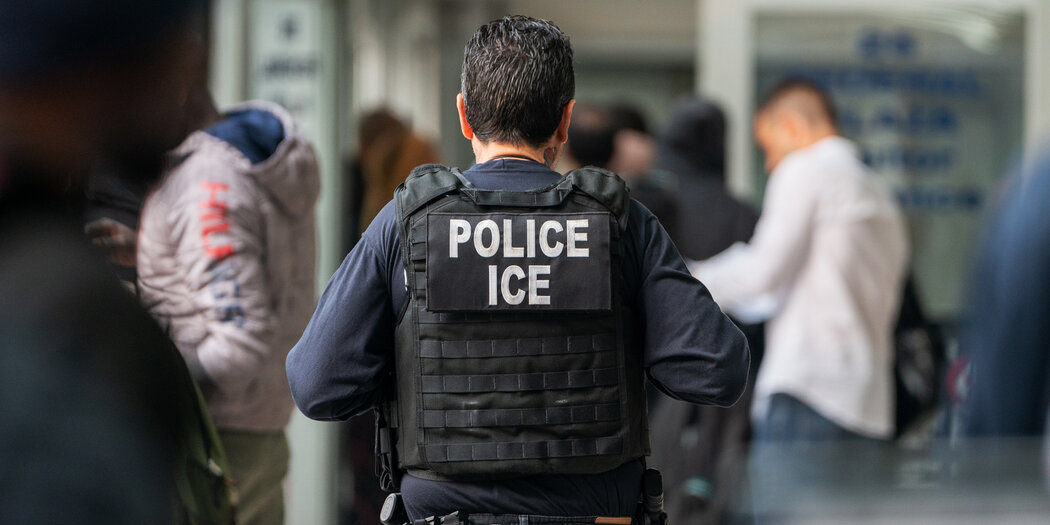
Trump’s Budget Bill: Transforming U.S. Immigration Enforcement
The latest budget bill proposed by President Trump is set to bring sweeping changes to the United States’ immigration system. By significantly expanding immigration enforcement and detention capacities, the bill aims to institutionalize much of Trump’s immigration agenda, raising concerns about future dismantling efforts. Despite increased funding, congressional oversight of detention practices is being challenged, alongside a surge in harsh treatment of undocumented immigrants.
Under the proposed legislation, U.S. Customs and Immigration Enforcement (ICE) will become the largest federal law enforcement agency, receiving an impressive $45 billion for new detention centers and $14 billion for deportation operations. Additionally, $3.5 billion is allocated to reimburse state and local governments for immigration enforcement and detention costs.
The bill proposes to double the capacity for immigrant detention, potentially increasing from 56,000 to over 100,000 detention beds. This expansion is set to benefit private prison companies like CoreCivic and GEO Group, which currently manage nearly 90% of ICE’s detainees. As CoreCivic’s CEO stated, “Never in our 42-year company history have we had so much activity and demand for our services as we are seeing right now.”
Preempting the new budget, the administration has already initiated lucrative contracts with these firms without competitive bidding, citing a “compelling urgency” to expand detention capacity. Notable contracts include the 2,400-bed Dilley Immigration Processing Center in Texas and potential reactivations like the Leavenworth facility in Kansas and Delaney Hall in New Jersey.
President Trump has justified these actions with misleading claims about immigrants and crime, despite research showing immigrants commit fewer crimes than native-born citizens. In fact, 72% of those in ICE custody have no criminal record, with many others having minor offenses.
The bill also introduces unprecedented immigration fees, such as $550 for Temporary Protected Status, $100 for asylum applications, and $250 for unaccompanied minors seeking protection. Appeals fees will rise from $110 to $900, creating a financial barrier to due process and participation in the immigration system.
Controversially, a makeshift detention center known as “Alligator Alcatraz” has been constructed in the Florida Everglades, raising serious concerns about detainees’ access to essential services and oversight. Florida Attorney General James Uthmeier notes that the remote location’s wildlife provides a natural security measure, and the state plans to seek reimbursement from FEMA for construction costs.
With DHS obstructing oversight and reports of deteriorating conditions, the expansion of detention facilities raises alarm. At least 10 detainees have died this year, a rate three times that of the past four years, according to reports.
Moreover, the administration has displayed defiance toward congressional oversight. ICE has denied members of Congress access to facilities and instituted a 72-hour notice policy for visits, contradicting federal law allowing unannounced oversight visits.
This comes amid the dismantling of critical oversight offices, raising concerns over humane detention practices amidst unprecedented immigration enforcement funding.