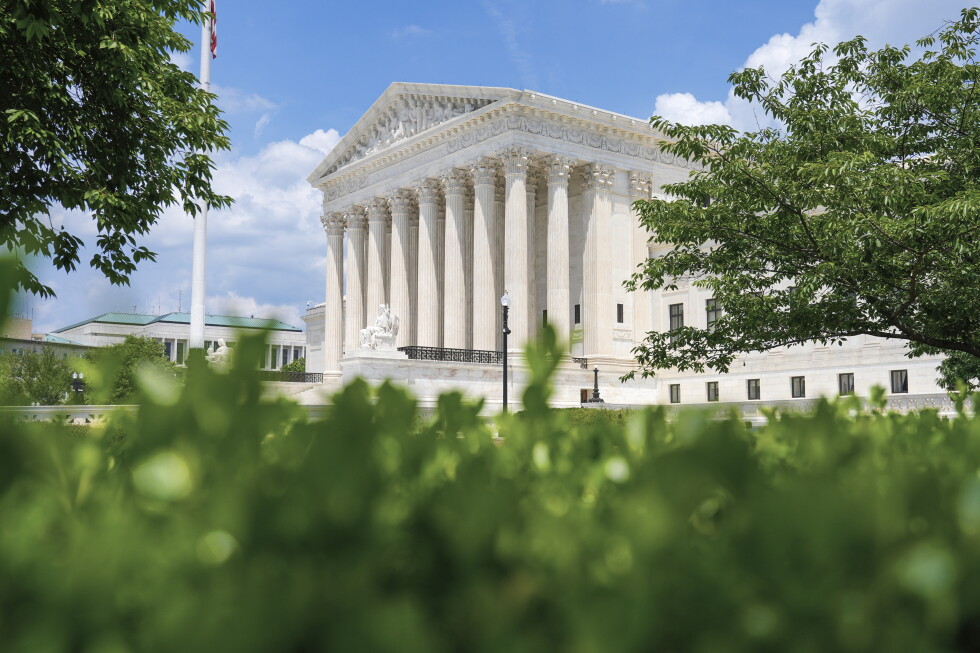
The U.S. Supreme Court has made a significant decision regarding the handling of tax foreclosure sales, impacting homeowners nationwide. In a unanimous ruling, the court determined that homeowners cannot claim the fair market value of their properties when such properties are auctioned to cover unpaid taxes.
The case arose from a Michigan family’s challenge after their home was sold for less than half its market value to settle a tax debt slightly exceeding $2,000. The family contended that their rights were violated as the property could have sold for nearly $200,000 on the open market.
Justice Samuel Alito, writing for the court, asserted that auctions are intended to efficiently recover unpaid taxes and do not require properties to meet their hypothetical fair market value. He noted, “The traditional rule, under which the taxpayer receives only the difference between the auction sale price and unpaid taxes, is ‘just.’” However, Alito emphasized that these sales must be conducted fairly, returning the case to lower courts to review the processes employed by Isabella County.
Larry Salzman from the Pacific Legal Foundation, which represents the family, remarked, “The case isn’t over. The Pungs won the right to continue their fight in the lower courts.”
Isabella County argued that auction prices are typically lower than those in regular real estate sales, partly because auctions require immediate cash payment rather than financing options like mortgages. The county maintained that forcing auctions to match market prices could hinder the ability to collect unpaid taxes efficiently.
This ruling follows a previous Supreme Court decision from three years earlier, which addressed a similar foreclosure issue. In that case, the court ruled against counties retaining surplus proceeds from tax sales, involving a 94-year-old woman from Minnesota whose county kept $40,000 after her condo was auctioned to resolve a $2,300 tax debt. For more details, see the related case.