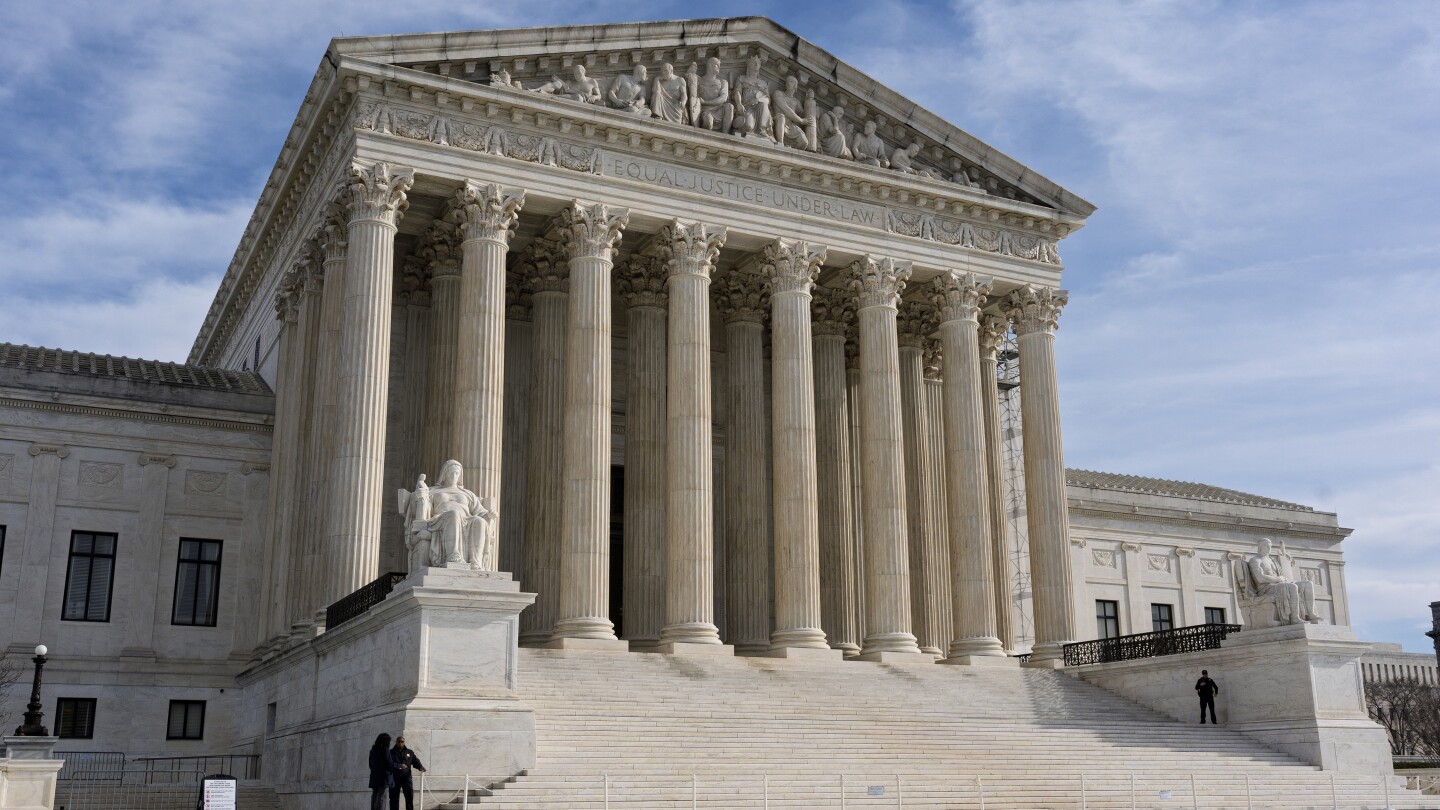
The ongoing national debate over the participation of transgender athletes in school sports has reached a new level. The U.S. Supreme Court has decided to hear a case involving state-level restrictions on transgender students’ involvement in school sports, signaling a significant moment in this contentious issue.
Recently, the Supreme Court upheld a ban related to gender-affirming care for transgender youth, and it will now review previous court decisions that favored transgender athletes in Idaho and West Virginia. This case is scheduled for the fall.
The question of whether transgender girls can compete on girls’ sports teams has been a polarizing issue at both state and federal levels. More than two dozen states have enacted laws prohibiting transgender women and girls from participating in specific sports, although some of these laws have faced legal challenges.
The Trump administration has been particularly active, filing lawsuits and launching investigations into school policies that permit transgender athletes to compete. This week, the University of Pennsylvania altered records set by transgender swimmer Lia Thomas and stated it would apologize to female athletes affected by her participation.
Meanwhile, a recent poll by The Associated Press-NORC Center for Public Affairs Research indicates that approximately 70% of U.S. adults believe transgender female athletes should not compete in girls’ and women’s sports. This viewpoint is held by about 90% of Republicans and around 50% of Democrats.
In West Virginia, a lower court ruling in favor of Becky Pepper-Jackson, a transgender girl wishing to compete on girls’ sports teams, is being appealed. Pepper-Jackson, who takes puberty blockers and identifies as female, has been involved in legal action after being barred from participating in sports teams in middle school. She recently qualified for the state track meet, securing third in discus and eighth in shot put.
The 4th U.S. Circuit Court of Appeals ruled in Pepper-Jackson’s favor based on the Constitution’s equal protection clause and Title IX, a law prohibiting sex discrimination in education. West Virginia Attorney General John McCuskey expressed support for the state’s legislation, stating, “The people of West Virginia know that it’s unfair to let male athletes compete against women.”
On the other side, Pepper-Jackson’s legal representatives, including the ACLU and Lambda Legal, argue for inclusivity, emphasizing that sports should be accessible to all students, regardless of their gender identity. Joshua Block of the ACLU stated, “Trans kids play sports for the same reasons their peers do–to learn perseverance, dedication, teamwork, and to simply have fun with their friends.”
Idaho was the first state to enact a ban on transgender women and girls participating in women’s sports teams at public educational institutions in 2020. The ACLU and Legal Voice have challenged this law on behalf of Lindsay Hecox, a transgender athlete, and another Boise-area athlete concerned about gender verification tests.
The Supreme Court has yet to address a similar case from Arizona, which remains pending.