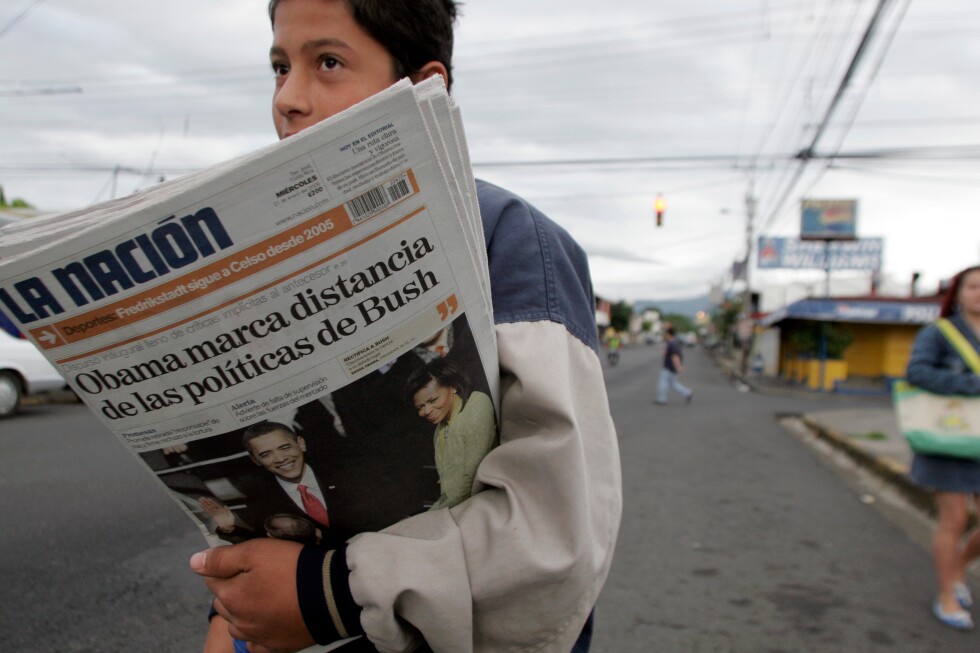
In a recent development that has stirred the political waters in Costa Rica, several board executives of La Nación, a prominent newspaper, have had their U.S. visas revoked. This action has prompted allegations that the United States, in collaboration with Costa Rica’s government, is targeting critics and political adversaries by withdrawing visas.
La Nación’s board of directors expressed their surprise in a front-page statement, noting they first learned of the visa revocations through pro-government media outlets. The newspaper has been a persistent critic of outgoing Costa Rican President Rodrigo Chaves, a known ally of U.S. President Donald Trump. Chaves has previously criticized the newspaper following its report on allegations of sexual harassment during his 2022 campaign.
No specific reasons were provided by the U.S. for these recent visa cancellations, according to La Nación. The U.S. State Department has remained silent on the issue, not responding to requests for comments.
“We fully recognize that the United States, like any sovereign state, has the power to determine the terms of entry into its territory,” La Nación stated. “However, it is unprecedented in Costa Rica’s recent history for visas to be revoked from members of the board of a general-interest and independent newspaper.”
This incident appears to be part of a broader pattern where the Trump administration uses immigration restrictions to penalize political opponents. This tactic has drawn criticism from Costa Rican political opposition and press freedom groups, who demand clarity from both U.S. and Costa Rican officials.
Costa Rican journalist and former communications minister, Mauricio Herrera, insinuated that the visa revocations were influenced by the Costa Rican government. “The sanction seeks to intimidate those who dare to dissent and exercise their freedom of expression,” Herrera commented to the Associated Press.
Recent months have seen a series of visa cancellations for high-profile Costa Ricans, including former President Óscar Arias and his brother, with accusations that these actions were at the behest of President Chaves.
With Chaves set to leave office shortly, this development has heightened scrutiny over his administration’s record on press freedom and political dissent. The incoming President-elect Laura Fernández will inherit this complex diplomatic landscape.
For more on this story and other Latin America news, visit AP’s Latin America hub.