Arizona’s Tax Code Dispute: Governor Hobbs Rejects GOP’s Proposal
Arizona’s tax landscape faces uncertainty following Governor Katie Hobbs’ decision to veto a Republican-led tax plan. This proposal aimed to synchronize the state’s tax code with recent federal tax reforms introduced by President Trump, which would have significantly reduced state income tax revenue by approximately $441 million. Governor Hobbs, however, opposed the legislation, citing concerns that it favored special interests over the middle class.
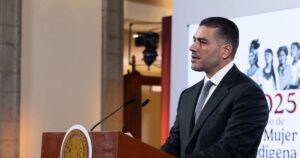
Governor Hobbs articulated her vision for tax reductions, emphasizing the need to prioritize middle-class citizens. “We want a firefighter working overtime to keep his neighbor safe to know that he’ll get a tax break. We want a senior working part-time as a Walmart greeter to get a tax cut. We want a waitress working hard to put food on the table to get a tax cut. The middle class must be our priority,” Hobbs stated.
Governor Hobbs’ own tax plan incorporates elements from the federal bill but proposes a more modest tax cut of around $250 million. However, the Arizona Department of Revenue (ADOR), which reports to the governor, has indicated that the current guidance provided to taxpayers does not align with either the GOP’s or Hobbs’ proposals.
In the event of legislative approval of a tax plan that conflicts with existing guidance, taxpayers could be required to submit amended returns, a situation that would necessitate additional resources and personnel for ADOR. Legislative leaders have expressed concerns about potential confusion among Arizonans as tax filing season approaches without an approved tax code.
Governor Hobbs criticized the GOP plan, stating, “They have no plan to pay for it. Their actions are the height of irresponsible and reckless budgeting. And this morning, I vetoed it.” She also addressed calls for a special legislative session, explaining that it would be unproductive without prior negotiations.
The governor has accused Republicans of not engaging in negotiation attempts, while they claim she is uncooperative. Additionally, Hobbs denied ADOR’s assertion that their guidance does not conform to her plan, asserting, “The DOR forms do conform to my plan, that is what I directed them to do.”
Despite Hobbs’ assurances, her spokesperson, Christian Slater, acknowledged that some taxpayers would have to file amended returns. He noted that while a small segment of the population might need to refile, the majority affected by middle-class tax cuts would not.
Under the federal One Big Beautiful Bill Act, the cap on state and local tax deductions increased from $10,000 to $40,000 for those itemizing deductions. Both Republicans and Hobbs agreed to retain the $10,000 cap, but the increase is included in ADOR’s current guidance. Consequently, taxpayers who file using this guidance and itemize deductions may owe additional taxes if either the GOP or Hobbs’ plans are enacted.
Senator J.D. Mesnard (R-Chandler) advised taxpayers to delay filing until a consensus on state tax policy is reached. Meanwhile, Slater emphasized Hobbs’ willingness to negotiate tax provisions within the broader context of the state budget, where financial matters are typically resolved.
As the state budget is generally passed between late spring and early summer, which is after the April 15 tax filing deadline, Hobbs intends to advance her smaller tax cut package first, leaving room for additional cuts later.