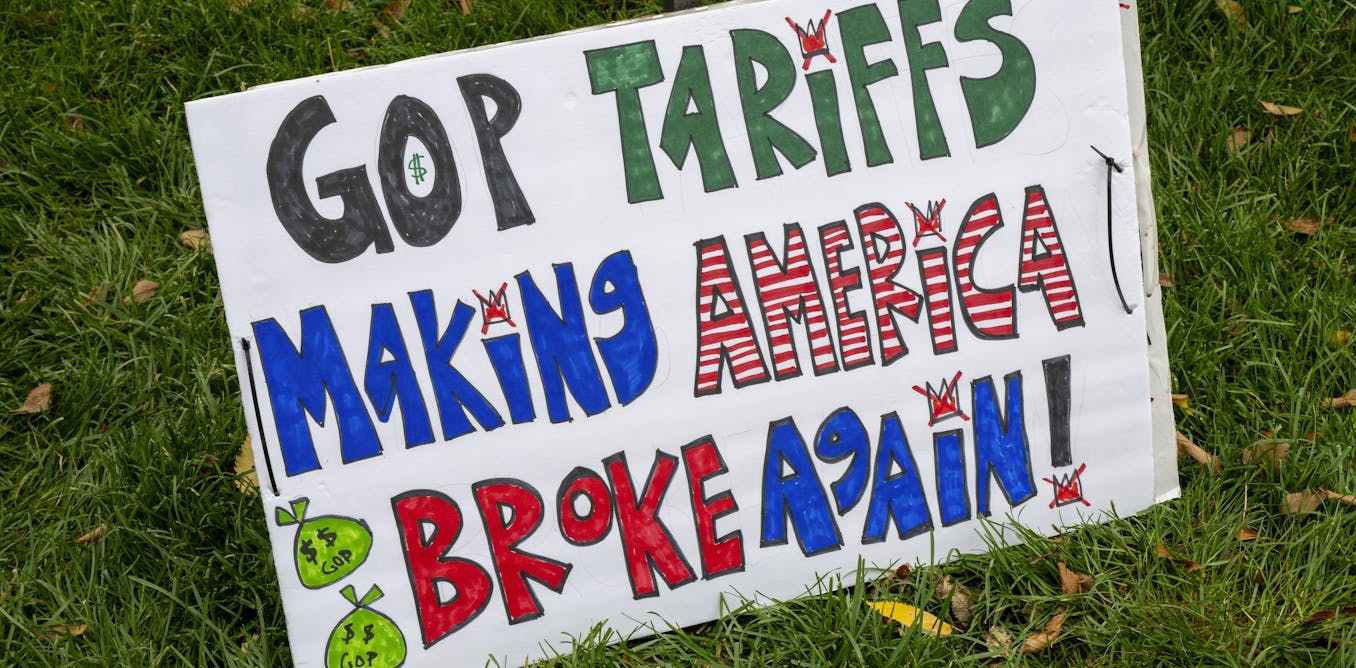
The ongoing debate over tariffs introduced during Donald Trump’s presidency is reaching a critical juncture as the Supreme Court prepares to issue a ruling on their legality. This impending decision could have significant implications for global trade and economic policy in the United States.
While the Supreme Court focuses on the legality of Trump’s tariff policies, another pressing issue is their impact on “economic democracy”—a concept that emphasizes inclusive decision-making processes. Concerns have been raised about how these tariffs may undermine this democratic principle, according to a trade economist.
Historical Context of Economic Democracy
The U.S. Constitution reflects the founders’ intent to promote economic democracy by granting Congress the exclusive authority to impose tariffs and taxes. This decision was made to ensure that such policies would be subject to the approval of elected representatives, thereby preserving a vital link between government actions and voter preferences.
Historically, Congress has occasionally delegated tariff-making authority to the executive branch in emergency situations, as documented in several laws over the past century. These delegations are usually accompanied by constitutional checks and balances.
Current Supreme Court Case
The current Supreme Court case revolves around Trump’s use of the International Emergency Economic Powers Act of 1977. In 2025, Trump invoked this act to justify imposing tariffs on goods from nearly all countries, citing “any unusual and extraordinary threat.”
This interpretation of the act is controversial because it lacks explicit provisions for tariffs and bypasses traditional checks and balances. Trump’s unprecedented use of tariffs in this manner has raised alarms about potential threats to economic democracy and the concentration of power.
Concerns Over Economic Democracy
One major concern is the concentration of power. By circumventing congressional debate, Trump’s tariffs were largely shaped by his own political and ideological preferences, rather than a transparent process that considers diverse viewpoints. This bypasses Congress’s role in ensuring accountability and balance in tariff decisions.
Furthermore, the unpredictability of tariffs imposed under the International Emergency Economic Powers Act has created uncertainty for businesses. While some argue this provides a bargaining advantage, economists warn it undermines investment in U.S. industries, as businesses require stable market conditions to make long-term commitments.
Additionally, bypassing Congress raises the risk of tariffs being used as a “stealth tax.” Importing companies incur additional costs, which are ultimately borne by consumers and businesses. Estimates suggest that Trump’s tariff policies could generate over $2 trillion in government revenue over a decade, effectively taxing domestic stakeholders.
Potential for Corruption
The unilateral and changeable nature of Trump’s tariffs also opens the door to political favoritism and potential corruption. This risk arises from “rent seeking,” where companies or individuals attempt to gain advantages through influence or favoritism.
Instances have been reported where major U.S. companies sought exemptions from tariffs, leading to concerns about unequal treatment and the potential for political contributions in exchange for favorable terms. Moreover, foreign governments have reportedly offered personal gifts to Trump in pursuit of advantageous trade deals, raising ethical concerns.
The historical context of tariff policy in the U.S. underscores the importance of maintaining democratic legitimacy and preventing power concentration. The founders designed a system to safeguard these principles, and any challenge to this system could have far-reaching consequences for both democracy and the economy.