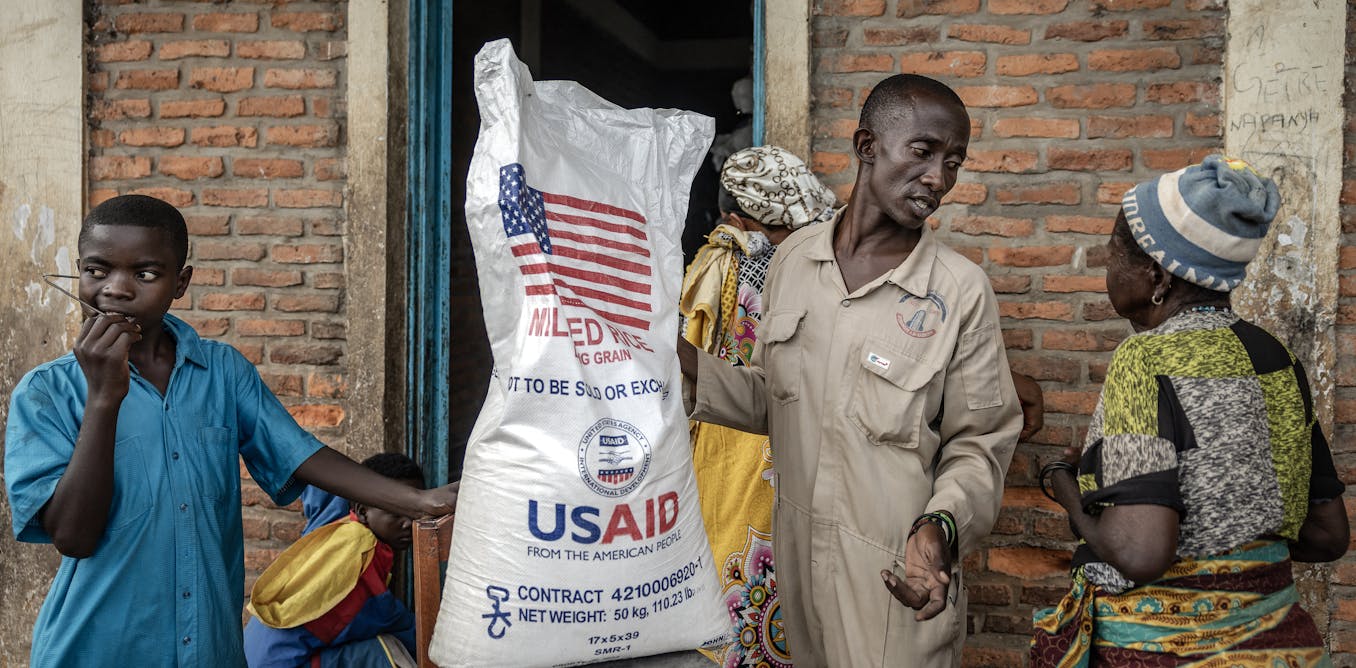
In a sweeping overhaul of U.S. foreign aid policies, President Donald Trump has dramatically reduced America’s financial assistance to global programs since the start of his second term on January 20, 2025. This substantial reduction began with a stop-work order that halted funding for diverse initiatives, ranging from tropical disease treatments in Mali to nutrition projects in Nepal.
By early February 2025, billionaire Elon Musk noted that the U.S. Agency for International Development (USAID) had been effectively “fed into the wood chipper.” By July 1, USAID was dissolved, with 83% of its programs canceled and the rest transferred to the State Department, leaving their future management uncertain. In July, Congress rescinded billions in previously approved aid, as requested by Trump.
These changes have caused significant concern among global nongovernmental organizations (NGOs), which previously received about half of USAID’s funding. Tom Hart, a leader of a coalition of U.S.-based NGOs, remarked, “We’re in a pivot moment, a massive transition, and things aren’t clear.”
Shifting Focus to Government Aid
According to foreignassistance.gov, U.S. foreign aid spending dropped to $32 billion in 2025, down from $68 billion in 2024, encompassing all of USAID’s budget. The Trump administration plans to continue these reductions in its 2026 budget proposal, which includes a $3.8 billion global health budget—a 60% decrease from 2025’s spending.
Conversely, the House of Representatives passed a budget in January 2026 to allocate $50 billion for international diplomacy and foreign aid, including $9.4 billion for global health and $5.5 billion for humanitarian aid.
The Trump administration prefers directing U.S. foreign aid to other governments rather than through NGOs or private entities. This shift suggests future aid will be primarily bilateral.
NGOs Struggling to Adapt
In the face of these challenges, NGOs are employing various strategies to survive. Some, like Save the Children US, have scaled back, with a one-third funding freeze affecting their global operations.
Others, such as Freedom House, have seen 80% of their activities curtailed. Similarly, World Vision has lost 10% of its budget and reduced its workforce as it cuts programs in HIV/AIDS prevention and child health care.
Exploring New Funding Avenues
NGOs are seeking new funding sources, including philanthropy and social entrepreneurship, to bridge financial gaps. Despite rising charitable contributions to international causes, the existing $35 billion in 2024 donations must substantially increase to compensate for reduced government aid.
Social enterprises offer an alternative model, but establishing them requires time and resources. These efforts are part of a broader strategy to reduce reliance on government aid.
Envisioning a New Model for NGOs
Critics like Marco Rubio, appointed as USAID’s acting administrator before its closure, described the previous system as an “NGO industrial complex.” Some experts argue that dependence on government funding can stifle innovation.
The conversation around NGOs is shifting towards localization, empowering local communities in aid delivery, illustrated by Christian Aid’s decision to close its offices and work with local partners.
In this evolving landscape, cooperation is becoming more critical. Save the Children’s CEO, Janti Soeripto, highlighted increased collaboration with organizations like MercyCorps and CARE to enhance disaster response capabilities.
Navigating an Uncertain Future
The transition to a more localized and diversified NGO sector promises long-term benefits but poses immediate challenges. As funding cuts continue to impact global programs, experts estimate significant humanitarian repercussions, including potential increases in mortality rates in vulnerable regions.
NGOs must now forge a new path amid shifting funding landscapes, with experts like Essi Lindstedt noting, “There is a lot of agreement that the ‘old aid’ wasn’t right,” yet a better system has yet to emerge.