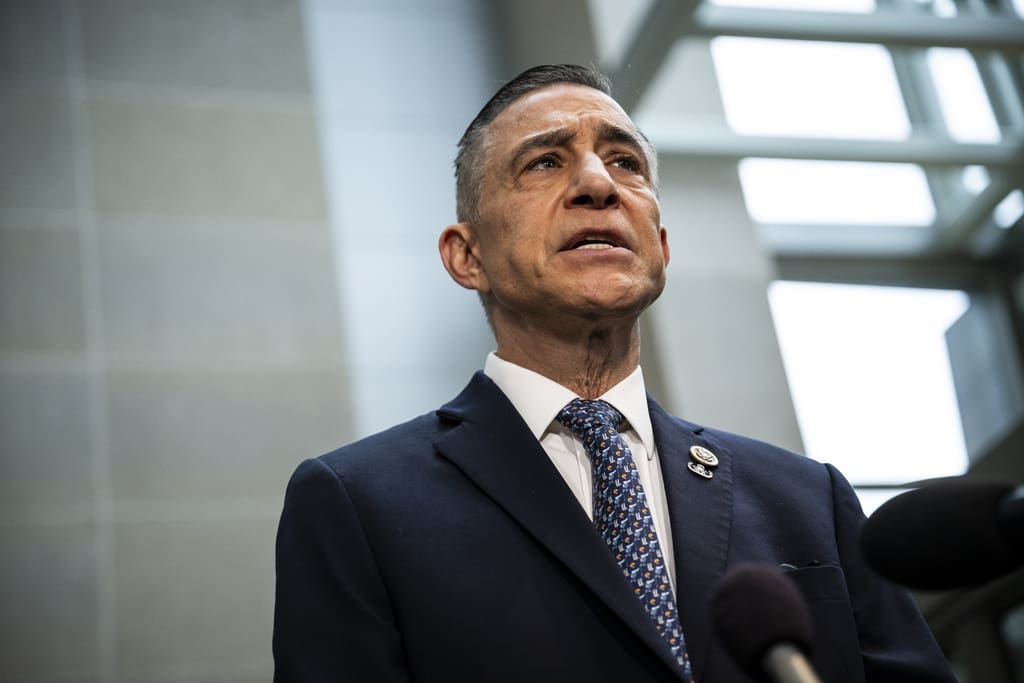
In a dramatic scene reminiscent of past protests, 300 demonstrators gathered in March 2017 outside the field office of California Rep. Darrell Issa, carrying homemade tombstones. Their weekly protests were in response to Issa’s efforts to repeal the Affordable Care Act (ACA), also known as Obamacare, a campaign that ultimately led to his decision not to seek reelection in 2018.
Fast forward to the present, and Issa has returned to Congress with a renewed focus on reducing and potentially dismantling the ACA. Recently, he was among 196 House Republicans who opposed a bipartisan plan to reinstate tax credits integral to the ACA. These credits had previously helped lower insurance costs for around 22 million Americans, including 8,000 constituents from Issa’s district, who have since faced increased premiums following their expiration on January 1.
The defeated proposal sought to revive these credits for an additional three years. While it succeeded in passing through the House, its fate in the Senate remains uncertain.
During discussions on the extension, Issa advocated for an alternative approach aimed at the complete elimination of Obamacare. As he explained in a December 9 interview with Fox Business, “There will be less subsidy, there will be better scrutiny over fraud, and there’s intended to be a real phase out of Obamacare.”
Issa, along with other Republican figures, has argued that Obamacare tax credits are plagued by fraud. However, health policy experts, such as Michael Gusmano from Lehigh University, counter these claims. In a statement to CNBC, Gusmano emphasized, “It really is trivial, the scope of fraud. It’s just a scare tactic to justify the reduction of the federal government’s role in subsidizing health insurance.”
From 2011 to 2017, Issa consistently voted in favor of abolishing the ACA, a stance he maintained during President Donald Trump’s tenure. He notably supported the American Health Care Act (AHCA), a proposal aiming to dismantle parts of the ACA, which a Center for American Progress report suggested would strip nearly 37,000 of his district’s residents of insurance.
Initially hesitant, Issa ultimately cast the decisive vote that pushed the AHCA through the House, although the bill was later rejected by the Senate, notably due to a vote by Republican Sen. John McCain.
Beyond the ACA, Issa has also expressed skepticism towards other federal health initiatives. In the previous year, he supported the One Big Beautiful Bill Act (OBBB), which proposed significant cuts to Medicaid. Democratic analysts from the Joint Economic Committee indicated that such measures could leave over 24,000 district residents without insurance, a figure that could rise to more than 32,000 with the loss of Obamacare tax credits.
Rural hospitals, reliant on Medicaid for financial stability, face potential revenue declines due to OBBB. For instance, hospitals in Murrieta and Temecula anticipate a combined revenue reduction of $14 million.
As Issa seeks another term, he is recognized by the Democratic Congressional Campaign Committee (DCCC) as one of the more vulnerable Republican figures. Having secured nearly 60% of the vote in CA-48 during 2024, Issa’s district may become more competitive following a redistricting process in California.