Revolutionizing Critical Minerals Supply Chains Through Recycling
In today’s interconnected world, the devices we rely on daily, like smartphones and MRI machines, contain essential components known as critical minerals. Unfortunately, China holds a dominant position in the supply chain for these minerals, posing potential risks to national security and economic stability.
The U.S. government has identified sixty critical minerals, with rare earth elements being particularly crucial due to their magnetic properties used in various technologies, from consumer electronics to military equipment. Abigail Hunter from Securing America’s Future Energy highlights the dependency on these minerals for modern advancements and defense capabilities.
Michigan Congresswoman Haley Stevens is advocating for a shift in the critical minerals supply chain to reduce reliance on China. She emphasizes the importance of reshoring production and refining capacities through legislation like the Unearth America’s Future Act, aiming to enhance domestic supply chains.
Stevens also underscores the potential of recycling electronic devices containing critical minerals to alleviate dependence on Chinese imports. While recycling offers promise in reducing reliance, she notes the need for advanced recycling methods to effectively recover these valuable minerals.
The push for recycling critical minerals and reshoring supply chains signifies a strategic effort to secure the nation’s access to essential resources and bolster economic and national security.
**Revolutionizing Recycling: A Closer Look at the Battery Recycling Process**
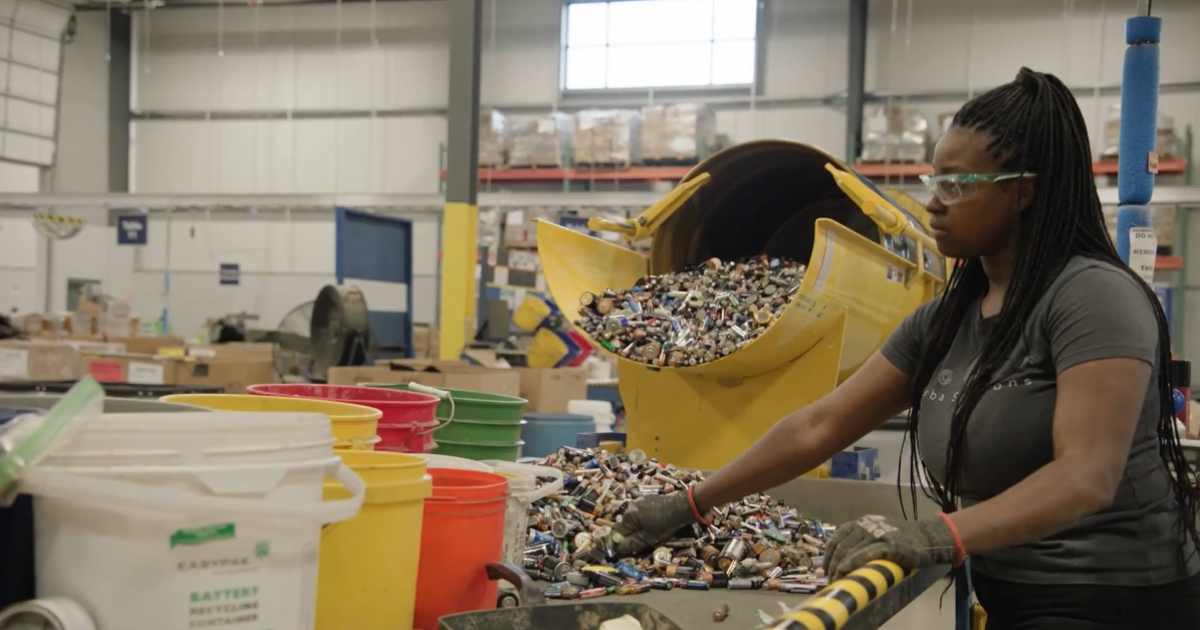
Recycling has become increasingly crucial in the quest for sustainability and resource conservation. Companies like Cirba Solutions are at the forefront of this movement, revolutionizing the way we deal with everyday items like batteries. Cirba’s facility in Wixom is a hive of activity, where workers meticulously sort alkaline batteries, setting the stage for a transformative recycling process.
Cirba Solutions, a company with a 35-year history, has expanded its operations across six states, serving a diverse clientele that includes major automotive OEMs, battery manufacturers, healthcare providers, telecommunications companies, and municipalities. Danielle Spaulding, a spokesperson for Cirba, highlights the intricate process involved in recycling lithium-ion batteries, commonly found in electric vehicles.
The recycling process begins with shredding the batteries, followed by the separation of various components like copper and plastic. A chemical leaching process extracts a substance known as “black mass,” containing critical minerals essential for battery production. Cirba’s pioneering efforts have led to the establishment of the first commercial-scale black mass production facility in the United States in 2015.
While recycling holds promise in reducing the need for new mineral extraction, challenges persist. Rare earth metals, vital for various industries, are often present in minuscule quantities within products, making their extraction a laborious task. Abigail Hunter from SAFE notes the economic and technological barriers hindering the efficient extraction of these valuable materials.
Despite these obstacles, the vision of creating closed-loop supply chains for essential materials remains paramount. Spaulding emphasizes the importance of reusing materials in products like batteries for data centers, promoting sustainability and reducing dependence on mineral imports. However, the intricate nature of rare earth metal extraction underscores the need for a more robust recycling ecosystem in the United States.
The discussions surrounding these critical recycling issues will take center stage in Washington, D.C., underscoring the importance of sustainable practices in the evolving industrial landscape. As companies like Cirba Solutions continue to innovate and refine their recycling processes, the future of resource conservation appears brighter than ever.