Former Michigan Governors Join Forces to Advocate for Civility in Politics
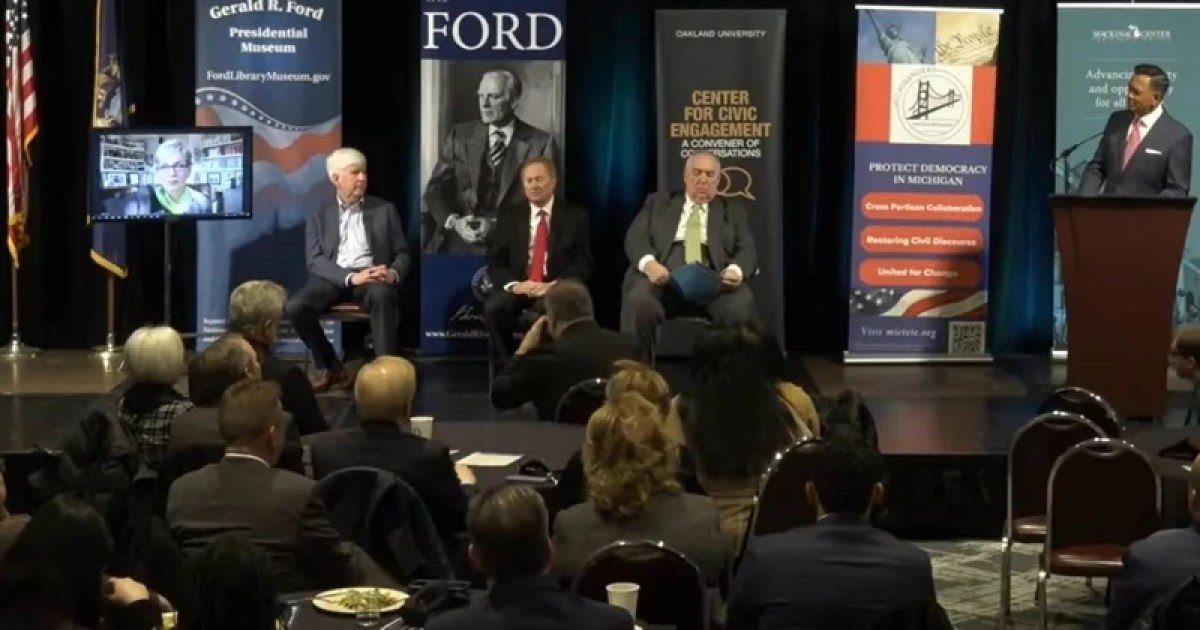
Michigan’s four living former governors recently came together in a rare display of bipartisanship to address the pressing need for increased civility in politics and elections. The group, consisting of two Democrats and two Republicans with gubernatorial terms dating back to the 1980s, emphasized the importance of fostering an atmosphere of respect and decency in political discourse.
Former Governor Rick Snyder, a Republican and the most recent addition to the retired governors group, highlighted a concerning shift towards hostility and aggression in politics since his departure from office in January 2019. Snyder questioned the acceptability of such behavior in other aspects of life, urging individuals to reflect on whether they would tolerate similar conduct in their workplaces or family environments.
Former Governor Jim Blanchard, a Democrat and the elder statesman of the group, attributed much of the current political climate’s tone to President Donald Trump’s leadership. Blanchard underscored the impact of social media and the internet on shaping public opinion, noting the prevalence of misinformation and conspiracy theories that thrive in online spaces.
Former Governor Jennifer Granholm, a Democrat who served as Energy Secretary under President Joe Biden, echoed concerns about the divisive nature of online platforms that incentivize conflict. Granholm emphasized the divergence of realities and facts among individuals based on their information sources, pointing to the polarizing influence of extreme content creators.
Former Governor John Engler, who succeeded Blanchard in 1990, emphasized the media’s role in fostering a more civil political environment. Engler proposed televised debates hosted by major TV networks as a means to promote transparency and public engagement in the electoral process.
The event, organized as the launch of the Michigan Civility Coalition, marks the beginning of a year-long campaign focused on promoting civility in conjunction with the upcoming 2026 elections, which include critical gubernatorial and U.S. Senate races. The coalition aims to restore trust and respect in election outcomes, fostering a more cooperative and respectful political landscape.
Political science professor David Dulio from Oakland University played a key role in coordinating the event, underscoring the importance of fostering a civil and constructive political dialogue in Michigan.
In today’s fast-paced digital age, the impact of social media on our society is undeniable. With the prevalence of algorithms shaping what we see and how we interact online, concerns about the influence of these platforms have grown. Recently, a coalition led by political science professor John Dulio has emerged with a mission to promote civility in online discourse. Dulio emphasized the importance of this effort, acknowledging that changing American culture in relation to social media algorithms is a daunting task.
Dulio highlighted that the coalition’s primary focus is on setting clear goals rather than outlining specific plans to achieve them. He stated, “Right now the goals are clearer than plans to achieve them.” This approach reflects an understanding of the complexities involved in addressing the societal impact of social media algorithms. Dulio also acknowledged the long-term nature of this endeavor, noting that significant changes may not occur immediately, if ever.
One key aspect of the coalition’s strategy is the sponsorship of events aimed at promoting civility in online interactions. Dulio emphasized the importance of taking proactive steps to address the issue, rather than passively waiting for political crises to resolve themselves. By fostering a culture of respect and constructive dialogue, the coalition hopes to counteract the negative effects of social media algorithms on society.
As concerns about the influence of social media continue to grow, initiatives like the one led by John Dulio’s coalition play a crucial role in addressing these challenges. By emphasizing clear goals and promoting civility in online discourse, the coalition aims to spark positive change in how we engage with social media platforms. While the road ahead may be long and complex, the commitment to fostering a more respectful online environment is a step in the right direction.