In a decisive naval confrontation in the late 1980s, the United States sought to reassert its military prowess in the Middle East after a series of setbacks. This moment came as a response to persistent provocations and culminated in a significant naval battle that would alter the course of U.S.-Iranian relations.
The Prelude to Conflict
Throughout the 1980s, the United States faced numerous challenges in the Middle East, beginning with the hostage crisis in Iran in 1979. The decade saw additional incidents such as the failed Desert One rescue mission, the tragic bombing of the Marine barracks in Beirut, and an attack on the USS Stark by an Iraqi jet. These events contributed to Iran’s dismissal of the U.S. as a “paper tiger.”
However, on April 18, 1988, the U.S. Navy launched a potent counterattack, targeting Iranian oil platforms and naval vessels, marking a strategic shift in the region.
The USS Samuel B. Roberts
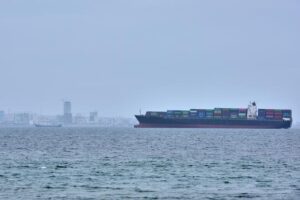
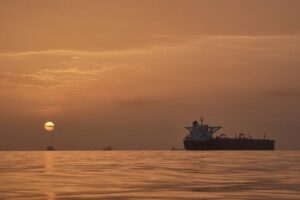
The late 1980s saw the continuation of the Iran-Iraq War, a conflict characterized by extensive trench warfare and significant casualties. A notable aspect of this war was the Tanker War, where both nations attacked oil tankers in the Persian Gulf. During this period, the USS Samuel B. Roberts, part of Operation Earnest Will, was tasked with protecting oil tankers from Iranian and Iraqi aggression.
On April 14, 1988, the Samuel B. Roberts struck an Iranian mine, suffering significant damage. Despite the severe impact, the crew’s rigorous training enabled them to save the ship.
A Decisive Response
In retaliation, the U.S. military launched Operation Praying Mantis, targeting Iranian military assets. Admiral William Crowe ordered a multifaceted operation involving several Surface Action Groups and the aircraft carrier USS Enterprise. This operation commenced at 8 a.m. on April 18, resulting in the destruction of key Iranian military installations and vessels.
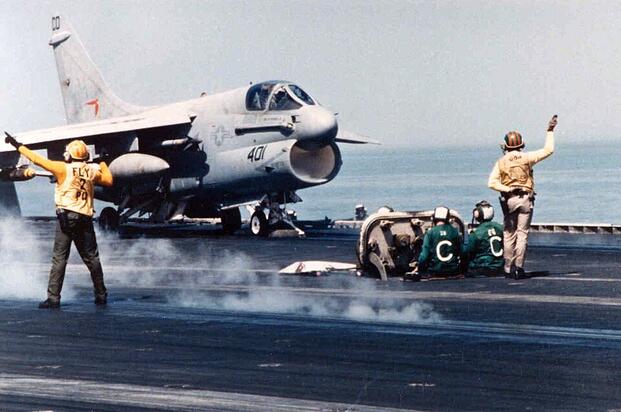
American forces targeted oil platforms and faced resistance from Iranian speedboats armed with machine guns and rocket-propelled grenades. The U.S. responded with air strikes, employing attack aircraft to neutralize threats.
Naval Engagements
The confrontation escalated when the Iranian missile boat Joshan engaged U.S. forces, resulting in a historic missile duel. The USS Wainwright, Simpson, and Bagley responded with coordinated missile and gunfire, ultimately sinking the Joshan.
Further engagements included Iranian F-4 Phantoms attempting to challenge U.S. ships, but they were successfully repelled by American defense systems.
Strikes on Iranian Frigates
Later that day, Iranian frigates Sahand and Sabalan attempted to engage U.S. forces. The Sahand was attacked by U.S. aircraft and sunk after a series of strikes. The Sabalan was severely damaged but spared further attacks following a direct order from President Reagan.
Operational Aftermath
The operation resulted in significant losses for Iran, including the destruction of naval vessels and oil platforms. While the U.S. suffered minimal losses, the operation reasserted American military strength and deterred further Iranian aggression in the region.
Operation Praying Mantis marked a turning point in U.S.-Iranian relations, showcasing the U.S. Navy’s capabilities in a large-scale surface engagement. The operation’s success is often viewed as a moment of redemption for the United States after a decade of regional challenges.