İZMİR — In a significant diplomatic move, Turkish President Recep Tayyip Erdoğan embarked on a tour to Saudi Arabia and Egypt, signaling a renewed push to strengthen ties with key regional players. This initiative has paved the way for potential defense collaborations, spotlighting Turkey’s ambitions in the defense sector.
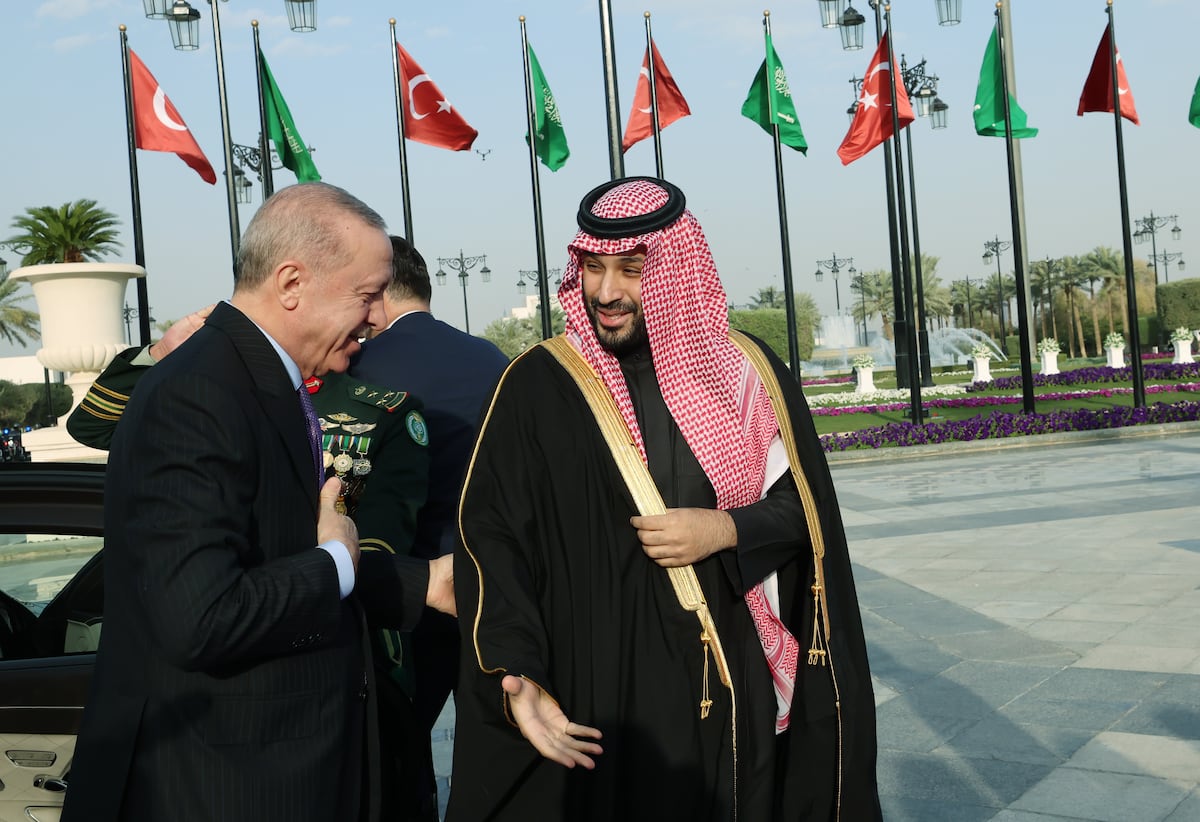
Erdoğan’s visit began in Riyadh, where discussions with Crown Prince Mohammed bin Salman centered on defense cooperation. Both nations conveyed intentions to enhance military and security partnerships, with a focus on existing agreements.
Upon his return to Turkey, Erdoğan spoke to the press, highlighting the burgeoning defense-industrial relationship between Ankara and Riyadh. Notably, he mentioned the possibility of Saudi investment in Turkey’s KAAN fifth-generation fighter project, an endeavor he described as a testament to Turkey’s strategic self-reliance.
The collaboration on the KAAN fighter jet aligns with the strategic goals of both countries. Retired Turkish Air Force Brig. Gen. Hüseyin Fazla, who heads the Center for Strategic Research and Analysis (STRASAM) in Ankara, noted the transformative potential of Saudi involvement for the project’s economic and export dimensions.
According to Fazla, “A large Saudi order would slash unit costs, accelerate production, and turn KAAN into a serious global competitor.” This partnership offers Riyadh a strategic alternative to its current reliance on Western arms, complementing its Vision 2030 objectives to cultivate a domestic defense industry.
Following the Saudi visit, Erdoğan proceeded to Cairo for the second meeting of the High-Level Strategic Cooperation Council with Egyptian President Abdel Fattah El-Sisi. During this meeting, the two nations formalized an expanded defense and security collaboration through a Military Framework Agreement, signed by Turkish Defense Minister Yaşar Güler and Egyptian Gen. Abdel Megeed Saqr.
Serhat Süha Çubukçuoğlu, a senior fellow at TRENDS Research and Advisory, emphasized the pragmatic nature of this development, stating, “This is not a strategic realignment — it is strategic-economic normalization driven by pragmatism on both sides.”
Beyond the political dialogue, Turkey’s MKE concluded a $350 million defense export and industrial cooperation package with Egypt. This deal includes Egypt’s acquisition of the MKE TOLGA Close-In Air Defense System for approximately $130 million, as well as plans to establish production facilities for artillery ammunition and small-caliber ammunition in Egypt.
The establishment of a joint company to manage these facilities marks a shift towards sustained industrial cooperation. Çubukçuoğlu remarked, “While Egypt is deliberately diversifying away from Western arms suppliers constrained by political conditions, Turkey is strengthening its role as a regional defense exporter and technology partner.”