A small Japanese island closer to Taiwan than to Tokyo is about to become the stage for one of the most significant U.S.-Japan military exercises in years. For the first time, the U.S. Marine Corps will bring its most advanced ground-based anti-ship and air-defense systems to Yonaguni Island — a move that underscores just how seriously American and Japanese defense planners are taking the security situation in the western Pacific.
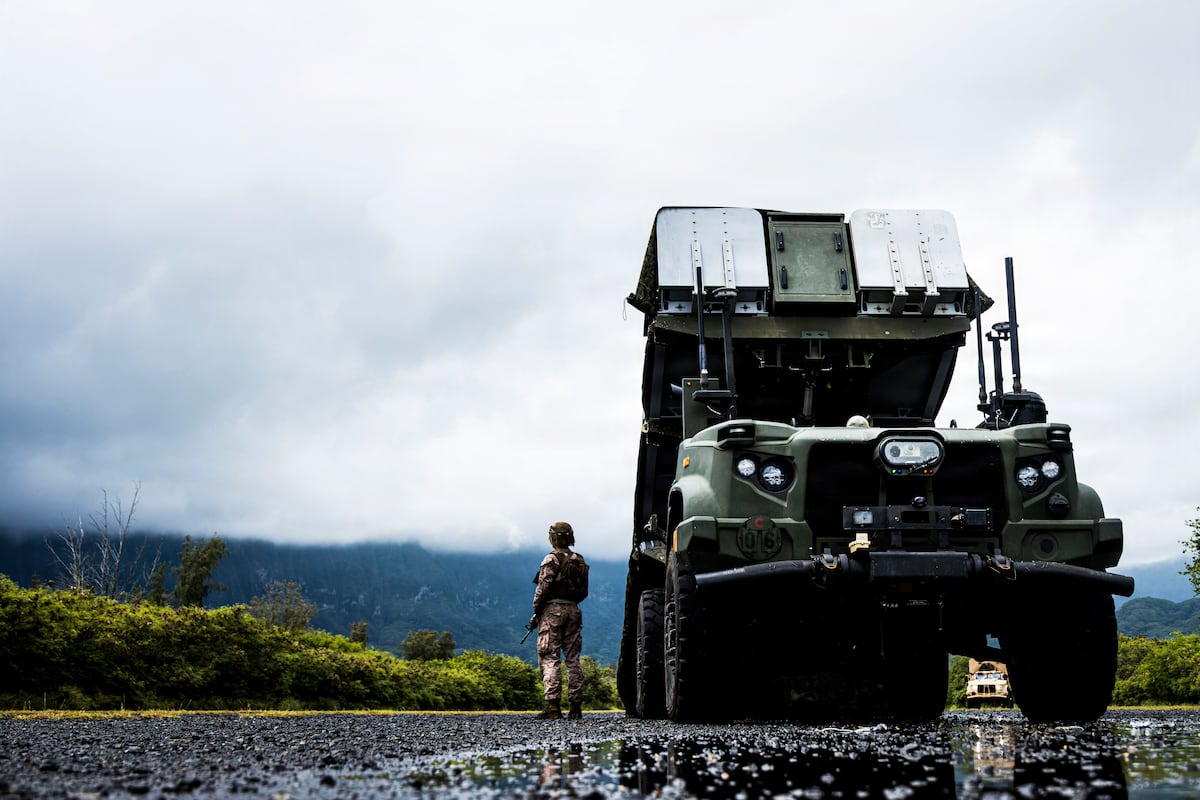
The exercise, known as Keen Sword, is the largest biennial joint military drill between the United States and Japan. This year’s iteration, running October 19–29, will feature two cutting-edge Marine Corps systems: the NMESIS (Navy-Marine Expeditionary Ship Interdiction System), a ground-based anti-ship missile launcher, and the MADIS (Marine Air Defense Integrated System), designed to counter aerial threats. Both are being deployed to Yonaguni for the first time.
Yonaguni sits just 110 kilometers from Taiwan — making its strategic value hard to overstate. The island is the westernmost inhabited point in Japan’s Nansei island chain, a string of islands that defense analysts have increasingly described as a potential flashpoint amid growing tensions in the region. Japan’s Ground Self-Defense Force established a radar and surveillance post on the island back in 2016 specifically to close what officials called a “surveillance vacuum” in the waters between Japan and Taiwan.
What These Systems Can Do
NMESIS is capable of striking naval targets at a range of approximately 115 miles, meaning ships operating in waters near Taiwan could fall within its reach. MADIS complements that capability with integrated air defense. Together, these platforms represent the heart of the Marine Corps’ ongoing force redesign — a shift away from heavy armored vehicles toward lighter, faster, island-capable units that can deny enemy forces access to key waterways.
The two systems arrived with the Okinawa-based 12th Marine Littoral Regiment, 3rd Marine Division in June and were previously deployed to the Philippines’ northern Batanes Islands and Laoag province during the Balikatan exercises. The deployment to Yonaguni marks their first appearance in Japan’s southwestern island chain.
The reported deployment has drawn criticism from Chinese military experts, even as China’s People’s Liberation Army Navy and coast guard vessels have stepped up activity around Taiwan. In June of this year, Japanese authorities reported Chinese Coast Guard ships encroaching on Japan’s exclusive economic zone between Yonaguni and Taiwan. In 2022, Chinese ballistic missiles landed just 80 kilometers from the island.
A Broader Shift in Strategy
Keen Sword 2026 signals a clear strategic pivot. Rather than centering the exercise around a carrier strike group — the USS George Washington, which participated in past iterations, was redirected to the Arabian Sea in August — this year’s drill emphasizes a distributed, land-based network of mobile missile and air-defense systems spread across multiple islands.
According to Japan’s Ministry of Defense, 45,000 Japanese Self-Defense Forces personnel will take part, joined by troops from nine countries including Australia and France. On the American side, the U.S. Army will deploy HIMARS (High Mobility Artillery Rocket Systems) to Camp Ishigaki, roughly 80 miles from Yonaguni. The Army’s Typhon mid-range missile launcher is also expected to move to Okinawa mid-month, though officials have not confirmed whether it will be used in the exercise itself.
Japan’s Ground Self-Defense Force will also showcase three of its own anti-ship missile systems during the exercise. That includes the newly fielded Type-25 surface-to-ship guided missile — formerly known as the upgraded Type-12 — which was deployed across the Nansei Islands in late March and has a strike range of 1,000 kilometers. The Type-88 ground-to-ship missile and the upgraded Type 03 Chu-SAM Kai medium-range air defense missile round out the Japanese lineup.
Local Concerns on a Small Island
Not everyone on Yonaguni is on board with the increased military footprint. Local officials have raised concerns about the exercise’s impact on civilian infrastructure — including roads, ports, and airspace. Heavy equipment for the exercise will arrive by sea through Kubura Port, and residents have been asked to stay off certain roads during equipment movements.
Safety concerns are also part of the conversation. During the 2024 iteration of Keen Sword, a Japan Self-Defense Forces V-22 Osprey was involved in a ground-strike incident, which prompted then-Defense Minister Gen Nakatani to ground Japan’s entire fleet of 17 Osprey aircraft. This year, the V-22 Osprey will not participate in the exercise, Yonaguni Mayor Tsuneo Uechi confirmed to Mainichi Shimbun on October 2.
Mayor Uechi has been clear that while the island recognizes the need for military preparedness, there are limits to what the community can absorb. The local government remains opposed to exercises at this scale and continues to negotiate directly with Japan’s defense ministry. Yonaguni’s local government disclosed the current deployment plans on Friday, a day after the Okinawa Defense Bureau shared them on October 1. Officials also noted that Keen Sword was originally planned to be even larger before local opposition prompted the ministry to scale it back.
For more defense and military news, visit Navy Times. You can also read about veterans battling over for-profit claims processing, nearly 500,000 veterans receiving a break on life insurance premiums, the outgoing AAFES director’s legacy, and a new presidential commission focused on military spouse quality of life. The U.S. Coast Guard Academy’s 150th anniversary is also being recognized with a new Forever stamp from the U.S. Postal Service.