The National Archives: A Silent Witness to America’s Political Journey
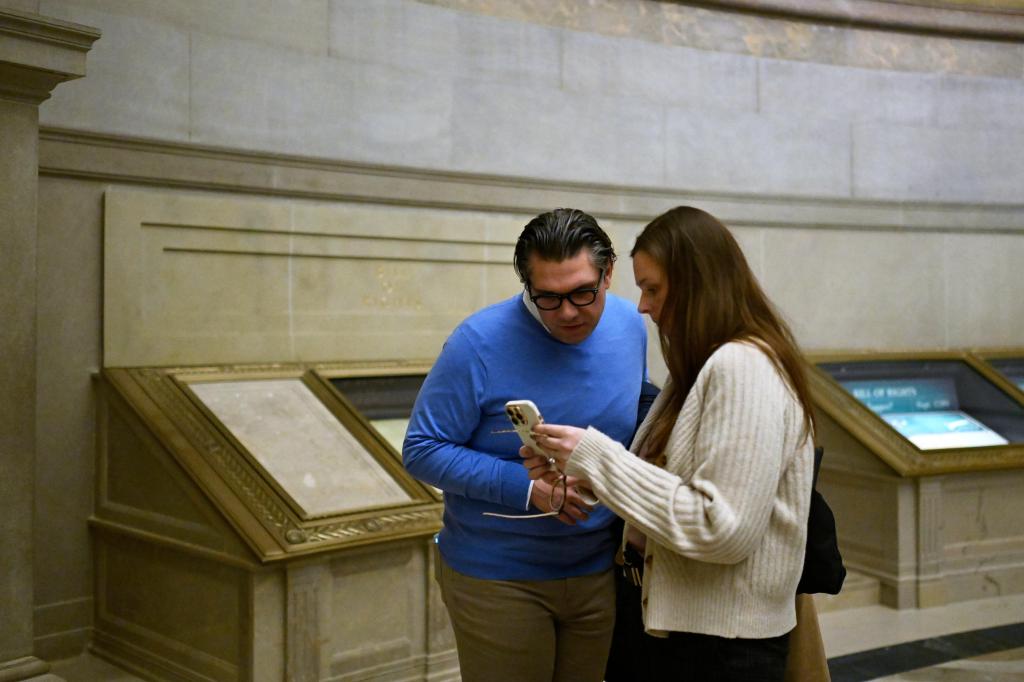
As the United States approaches its 250th birthday, the nation finds itself grappling with intense political divisions. While political disagreements seem pervasive, one place where such divisions are momentarily set aside is the rotunda of the National Archives in Washington, D.C. Here, the founding documents of the nation, including the Declaration of Independence, are preserved and displayed, serving as symbols of democratic ideals.
Visitors from across the country and around the world brave the chill of Washington’s winter to witness these historic artifacts. The atmosphere in the room is one of silent reverence, as individuals reflect on the enduring legacy of the nation’s founding principles. Despite the ongoing national debate over policies, such as those related to immigration under President Donald Trump, many visitors express hope that the nation will continue to strive toward the ideals enshrined in these documents.
A Nation Divided Yet Hopeful
Ryan O’Neil, visiting from Michigan, acknowledges the political “tribalism” in the U.S. today but draws hope from the historical documents, which have guided the nation for centuries. “We’ve not yet lived up to everything that we had hoped to, but we are continuing to progress and get closer to that,” he shared.
The National Archives’ exhibit, “The American Story,” commemorates the nation’s complex history by juxtaposing its achievements with its darker moments. O’Neil believes that despite the challenges, the political pendulum in the U.S. has always swung back, allowing the nation to regroup and move forward.
Reflecting on the Founders’ Vision
Kevin Sullivan of Milwaukee, in town for a family event, observed that while the nation faces divisive issues, this is not unique in its history. He suggests that meaningful dialogue, away from media scrutiny, is crucial for resolving partisan disputes. Reflecting on the founders’ era, Sullivan mused that the presence of modern media might have hindered the discussions that led to the creation of the Declaration of Independence.
An International Perspective: Observations from Abroad
The Rev. Michael Stokes from the Church of England visited the Magna Carta before viewing America’s founding documents. He noted that while the U.S.’s diverse society is admired worldwide, the current administration’s actions have led to global confusion about America’s commitment to its constitutional principles.
Continuous Pursuit of American Ideals
Morgan Whitman, a visitor from Miami, expressed mixed emotions after seeing the documents. She remarked on the lofty ideals they represent but also noted the historical hypocrisies, such as the exclusion of a passage opposing slavery. Whitman voiced concern over current threats to civil liberties, citing recent incidents involving federal agents.
The Legacy of 1776 and Modern Challenges
Jerry Curl from Illinois, a supporter of President Trump, expressed satisfaction with the administration’s direction but has distanced himself from negative media coverage. He emphasized the importance of understanding and dialogue in preserving democracy. Curl wondered if the collaborative spirit of the founding fathers could be revived to address today’s challenges.
Associated Press video journalist River Zhang contributed to this report.