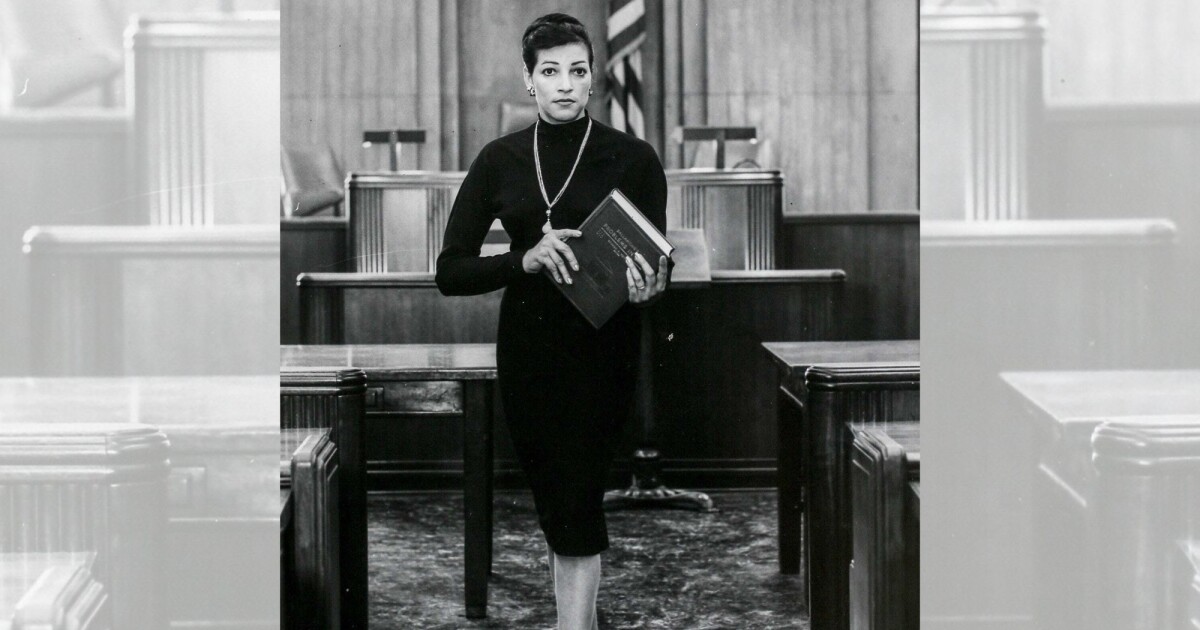
Breaking Barriers: Lucile A. Watts, Michigan’s Trailblazing Judge
February marks Black History Month, a time to celebrate the achievements of African Americans who have made significant contributions to various fields. In 1980, Lucile A. Watts shattered glass ceilings by becoming the first African-American woman elected to a circuit court in Michigan. Serving on the Third Circuit Court in Wayne County for 14 years, Judge Watts left an indelible mark on the Michigan court system, paving the way for future generations of African Americans and women in the legal profession.
Tragically, Judge Watts passed away in 2018 at the age of 97, leaving behind a legacy of courage and resilience. To honor her groundbreaking career, Michigan Public Morning Edition host Doug Tribou recently sat down with another esteemed Michigan jurist, Judge Cynthia Stephens. Judge Stephens, who served on the Third Circuit Court alongside Judge Watts for approximately 25 years before her retirement in 2022, shared insights into the remarkable life and career of her colleague.
Reflecting on her initial encounters with Judge Watts, Judge Stephens highlighted the latter’s unwavering dedication to community service and provision of free legal aid through the Mary McLeod Bethune Association. As a fellow member of Delta Sigma Theta sorority, Judge Stephens admired Judge Watts not only for her legal prowess but also for her commitment to uplifting marginalized communities.
When discussing the challenges faced by Judge Watts in the legal profession, particularly during her early years, Judge Stephens underscored the pervasive gender and racial biases that often hindered the progress of Black women attorneys. Despite the daunting obstacles, Judge Watts’s determination and resilience propelled her to establish her own law firm, defying societal norms and forging her path to success.
During the tumultuous period of the Detroit Uprising in 1967, Judge Watts fearlessly continued her legal practice, specializing in divorce and real estate law. Her unwavering dedication to justice and equality, even amidst societal upheaval, exemplifies her steadfast commitment to serving her community and advocating for the marginalized.
As we commemorate Black History Month, it is imperative to honor trailblazers like Lucile A. Watts, whose pioneering spirit and unwavering courage continue to inspire future generations of legal professionals. Judge Watts’s enduring legacy serves as a testament to the transformative power of perseverance and passion in overcoming adversity and effecting positive change.
In the 1960s, a young Cecelia McDonald, now known as Judge Claudia Morcom Watts, found herself intertwined in efforts to defend Black men who were unjustly detained by police. This pivotal moment in her life set the stage for a career dedicated to justice and equality.
After nearly two decades as a private practice attorney, Judge Watts embarked on a successful campaign in 1978 to secure a position on the Common Pleas Court. Her reputation as a direct and thorough judge, coupled with her role as a mentor to novice legal professionals, solidified her impact on the judicial system.
Reflecting on her early days in the judiciary, Judge Watts highlighted the challenges faced by Black women judges, including being assigned particularly difficult cases to test their resilience. Despite these obstacles, she rose to the occasion, paving the way for future generations of Black women in the legal field.
Throughout her career, Judge Watts not only excelled in her judicial duties but also fostered a sense of community and camaraderie. Known for her entertaining gatherings, she welcomed diverse guests, including the likes of George Clinton, showcasing her broad experiences and open-mindedness.
Today, the legacy of Judge Watts lives on, with an increased presence of Black women judges in the legal system. While challenges persist, the groundwork laid by trailblazers like Judge Watts continues to inspire and empower aspiring Black women in the judiciary. As a beacon of excellence and resilience, Judge Watts exemplified the notion that common sense is indeed uncommon, leaving an indelible mark on the legal landscape.