In the early hours before the sun rises, Raul Piña starts his day by walking his dog, Beau, in Buckeye, Arizona. This routine, familiar and comforting, now includes an unexpected addition: the need to carry his passport card and ID.
Piña is among numerous Arizona residents, many of whom are U.S. citizens, who have adapted to carrying extra identification due to heightened immigration enforcement efforts. “It’s a new practice,” Piña explained. “It’s just as I’m walking out, and it’s something to think about now, right? Do I have a flashlight, do I have my wallet, do I have my phone? It’s a mental checklist.”
MORE: Arizona Republicans push for ICE at polling locations
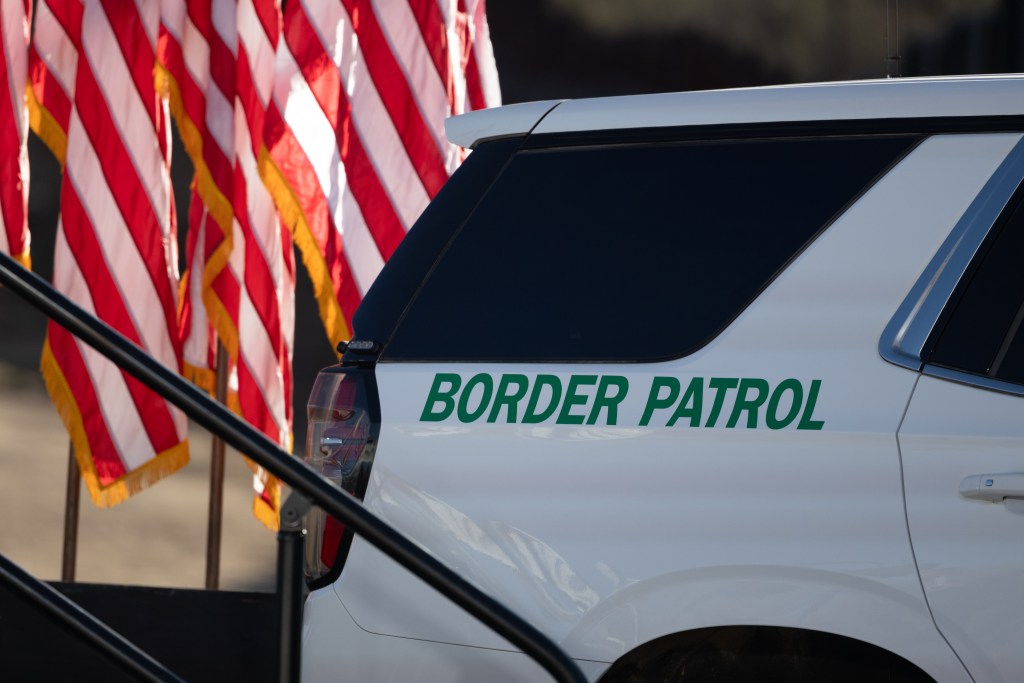
The increased presence of Immigration and Customs Enforcement (ICE) in Phoenix has generated anxiety among residents, prompting them to carry additional identification as a precautionary measure. This shift is driven by the Trump administration’s rigorous immigration policies, which have resulted in more frequent ICE operations and detentions, even of U.S. citizens.
Piña, an Air Force veteran, remarked on his unease, saying, “It’s an odd feeling to carry your passport. And where does it stop? Do I need to carry my DD-214?” The DD-214 is a document issued by the Department of Defense when a service member retires or is discharged from duty.

These developments have resurfaced memories of former Maricopa County Sheriff Joe Arpaio’s controversial practices under Arizona’s State Bill 1070, which allowed law enforcement to demand identification from individuals suspected of being in the country illegally. Although parts of the bill were blocked by the Supreme Court, some provisions remain in effect.
Moreover, the 2025 Supreme Court case Noem v. Vasquez Perdomo cleared the way for ICE to conduct what are known as “Kavanaugh stops,” where race and language use can factor into immigration stops. Justice Brett Kavanaugh noted that “apparent ethnicity alone cannot furnish reasonable suspicion,” but it can be a “relevant factor.”
Community advocates, including Piña, express concern about the potential for racial profiling. Piña, who is involved in the Melendres v. Maricopa County Sheriff’s Office case, hoped the lawsuit would end such practices but now sees them spreading nationwide. “It looks like the opposite has happened,” he said. “These strategies, these tactics have spread to other areas, all over the country now.”
Efforts to reach Phoenix officials and ICE for comments were unsuccessful.
SB 1070-style tactics continue in Arizona, evidenced by recent raids on local restaurants. Jonah Phung, an Arizona resident, notes that ICE’s current methods seem more aggressive, impacting various communities of color. “With SB 1070, it was very targeted and very specific to a group of people,” Phung said. “With this, it seems it does not matter what nationality you are, as long as you are a person of color, it feels like you are being targeted.”
In response, advocacy groups like No More Deaths are organizing Know Your Rights training sessions and forming rapid response teams to support affected communities. Christy Stewart of No More Deaths describes the training as crucial, helping community members understand their rights and providing practical support.
Indigenous nations, including the Navajo Nation, are also affected by these enforcement measures. Todd Middleton, a Navajo Nation citizen, now carries multiple forms of ID after hearing about a fellow Navajo being detained by ICE. He expressed frustration, drawing parallels between current events and historical injustices faced by Indigenous peoples.
Meanwhile, immigrant communities in Arizona are banding together to protect one another. Dana Cardena, whose parents are authorized to work in the U.S. but are not citizens, shared how her community supports each other through group chats and coordinated efforts to ensure safety when outside.
The uncertainty and anxiety surrounding immigration enforcement have prompted many Arizona residents to carry additional documentation, hoping it will protect them against unwarranted detention.