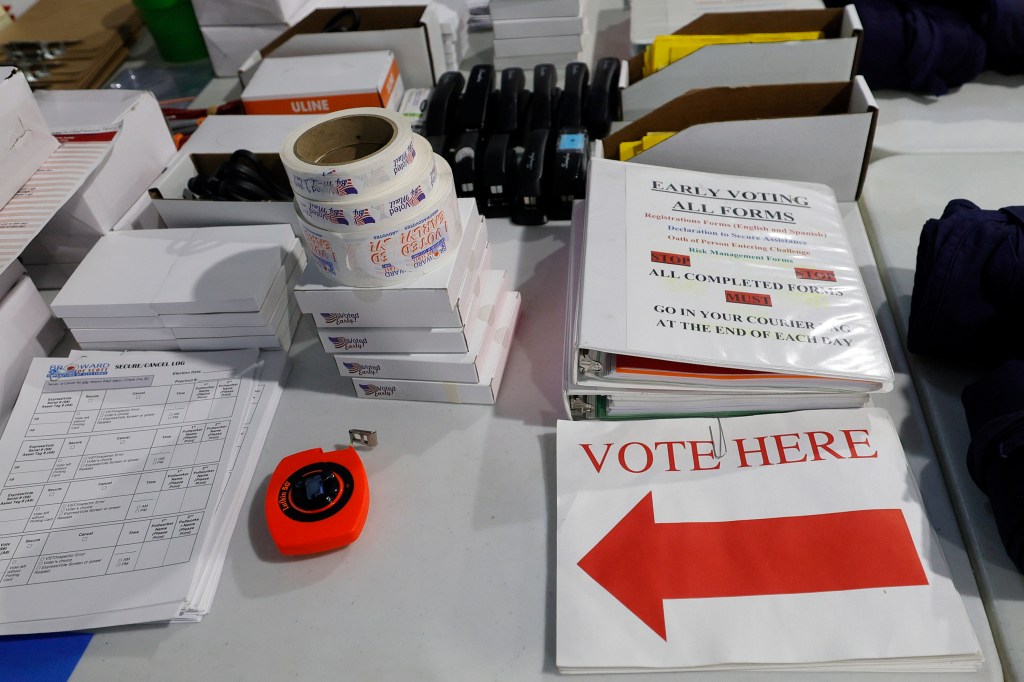

Amid a wave of legislative efforts to address election processes, Florida’s House Republicans have advanced a bill that aligns with President Donald Trump’s national election reform aspirations. This legislation, if enacted, could significantly alter voting practices in the state.
House Bill 991 proposes major changes to Florida’s election laws, particularly emphasizing citizenship verification for voters and revising acceptable forms of identification. Proponents argue these measures will enhance election integrity, while critics warn they may disproportionately affect vulnerable groups such as students, seniors, and women.
Jessica Lowe-Minor, president of the League of Women Voters of Florida, criticized the bill, saying, “By tying the right to vote to possession of costly documents that many citizens don’t have easy access to, it undermines Floridians’ freedom to vote and moves us away from the concept of a free and fair democracy.”
State Rep. Jenna Persons-Mulicka, the bill’s sponsor, referenced Trump’s State of the Union address, asserting, “Floridians want election integrity.” Her colleague, Rep. Dana Trabulsy, dismissed claims of voter suppression, stating, “This bill is not driving us to a dictatorship.”
Despite Democratic opposition during a two-hour debate, the bill passed 83-31, with party-line votes from Broward and Palm Beach county representatives.
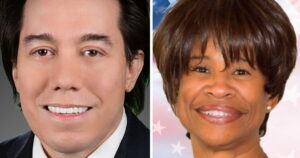
Democrats voiced emotional appeals against the bill. State Rep. Ashley Gantt shared her aunt’s story, a retired federal worker unable to renew her driver’s license due to lacking a birth certificate, highlighting a potential issue with the citizenship verification requirement.
State Rep. RaShon Young emphasized the balance between security and access, warning against “fear mongering and disenfranchisement and voter suppression dressed up as security.”
The Senate’s version, Senate Bill 1334, contains similar elements but requires reconciliation with the House bill before reaching Governor Ron DeSantis.
Citizenship Verification
Although Florida already mandates citizenship for voting, the bill’s sponsors cited scant evidence of non-citizen voting. A state report noted 198 probable non-citizens voting in 2025, a minuscule fraction of the electorate.
Nonetheless, the proposed verification process, supported by Trump, raises concerns among voting rights advocates. The Brennan Center for Justice indicates that 9% of Americans lack immediate access to required documentation, potentially affecting over a million Florida voters.
Voter Identification
Florida’s current law requires voter identification, typically a driver’s license or state ID. The bill seeks to remove alternative IDs, such as student and public assistance IDs, from the list of acceptable forms, raising concerns about disenfranchisement among non-driving populations, including students.
Additional Provisions
House Bill 991 also proposes changes to recount procedures and mandates election audits. Democrats attempted amendments, all rejected, including a suggestion to ban firearms at polling places.
State Rep. Christine Hunschofsky argued against allowing firearms near polling sites, fearing it could deter voters. Her colleague, Rep. Robin Bartleman, supported the amendment, highlighting safety concerns at polling places.