For families of U.S. service members, the arrival of casualty notification teams is a life-altering moment, commonly referred to as “the knock.” This marks a division between the life they once knew and the new reality they must face.
After the initial shock and the formalities of military loss, such as notifications, benefits, and memorial services, the grieving process truly begins. This is where the Tragedy Assistance Program for Survivors (TAPS) steps in, providing ongoing support for over three decades.
The Birth of TAPS
Bonnie Carroll, TAPS’ founder and president, never anticipated starting such an impactful organization. Her journey began with personal tragedy when her husband, Brig. Gen. Tom Carroll, died in a 1992 military aircraft crash in Alaska.
With a background in the Air National Guard, Air Force Reserve, and trauma support, Carroll found herself overwhelmed by her own grief. “At first, I thought I could help others through this terrible tragedy,” she stated. “But then, it became abundantly clear that life had forever changed and I could barely breathe.”
Carroll realized that while the military had systems for notifications and honors, it lacked a community for grieving families to connect with others who understood their experience. “I spent two years searching for the kind of support network I knew existed for other types of loss in our society, but it had never been created for the families of America’s fallen heroes,” she said. Ultimately, she established one herself.
Bridging the Gap
Today, TAPS works nationwide alongside military officers, chaplains, and survivor assistance teams, offering four core services: peer-based emotional support, casework assistance, a 24/7 helpline, and connections to grief and trauma resources.
“When a service member dies, the military begins the solemn responsibility of notifying the family,” Carroll explained. “At TAPS, our role begins almost immediately afterward.” Within the first few days, families face overwhelming decisions amidst their shock. TAPS ensures they have someone to call at any hour, someone who has walked the same path.
General John Shalikashvili, former Chairman of the Joint Chiefs of Staff, once acknowledged the military’s limitations in providing lifelong companionship to grieving families, emphasizing that only other survivors could offer such support.
Beyond the Battlefield
While combat deaths often make headlines, TAPS supports many families grieving losses due to suicide, service-related illnesses, or injuries. In 2021 alone, 9,560 newly bereaved military and veteran survivors sought TAPS’ assistance.
“We’re seeing families whose loved ones were injured years ago and are just now succumbing to those wounds,” Carroll noted. The need for support extends beyond the battlefield, encompassing a range of military-related losses.
The Peer Support Model
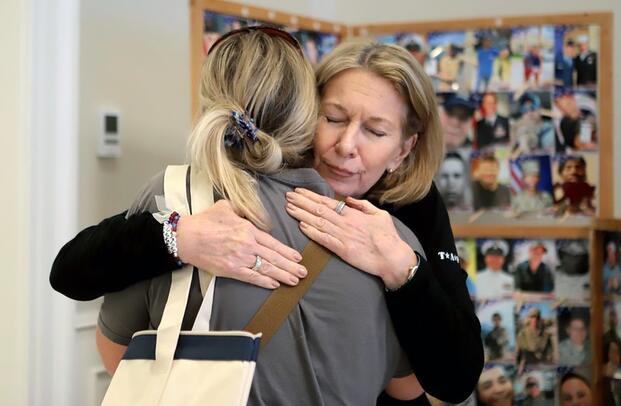
Central to TAPS is the belief that those who have experienced similar losses provide the most powerful support. Carroll describes it as peer-based emotional support, where survivors help each other navigate their grief.
Newly bereaved families are connected with Peer Mentors, survivors further along in their grief journey, offering unique support through shared experience. As Carroll states, “When I tell someone my husband was also killed in the Army, the conversation changes immediately.”
Many who initially sought help from TAPS eventually become mentors themselves, embodying the transformation “from grieving to growth.”
Community and Connection
Every Memorial Day weekend, TAPS hosts the National Military Survivor Seminar and Good Grief Camp, drawing over 2,500 survivors to Washington, D.C.
While grief is a common thread, the event is marked by gratitude, love, and remembrance. For children, the Good Grief Camp offers the powerful realization that they are not alone in their loss, fostering connections through shared experiences.
Support at Any Hour
A critical TAPS service is its 24/7 National Military Survivor Helpline, which provides immediate support to grieving families. Many calls come during the night, with individuals questioning their ability to continue.
“We step into that dark place with them,” Carroll said, emphasizing the importance of presence. These conversations often lead to the first steps of rebuilding life after loss, with many later returning to aid others.
Innovative Outreach
TAPS has partnered with professional sports leagues, such as the NFL, to engage survivors who might avoid traditional grief programs. These events provide a platform for genuine connection, demonstrating that no one is alone in their grief.
A Lifelong Commitment
Over three decades, TAPS has evolved into a nationwide community of survivors. Many who attended Good Grief Camp as children now return as mentors. Carroll emphasizes the transformative journey from grief to service, stating, “Nobody wants to be part of this community, but when tragedy happens, it becomes family.”
For those who have experienced “the knock on the door,” TAPS offers a community for life, reminding survivors that “the dues have already been paid.”
For more information about TAPS, visit their website.