The escalating Middle Eastern conflict has taken a significant turn, with Gulf states experiencing new missile and drone assaults following Iran’s threat to extend its operations. This move comes as Iran demands the evacuation of three major ports in the UAE amid the ongoing war.
After Israel and the United States launched attacks on Iran on February 28, targeting nuclear and military facilities, Iran retaliated with strikes against Israel and nearby Gulf nations. The conflict, now in its third week, is severely impacting global air travel and oil exports, causing worldwide fuel price hikes.
U.S. President Donald Trump expressed hopes that countries dependent on oil and gas exports would deploy warships to secure the Strait of Hormuz. However, by Sunday, no commitments had been made, although some nations indicated they were considering action.
Following Iran’s threats against three UAE ports, Bahrain, Saudi Arabia, and the UAE informed residents of efforts to intercept incoming missiles. This is the first instance of Iran targeting a neighboring nation’s non-U.S. assets. Iran earlier accused the U.S. of attacking Kharg Island from the UAE, a claim denied by the UAE and other Gulf countries hosting U.S. bases.
Since the onset of the war, Iranian strikes have resulted in at least a dozen civilian casualties in Gulf states, primarily among migrant workers. The International Committee for the Red Cross reports over 1,300 fatalities in Iran, including women and children. In Israel, 12 residents have died due to Iranian missile attacks. The U.S. military has also suffered losses, with 13 soldiers killed, including six in a recent plane crash in Iraq.
Lebanon is facing a deepening humanitarian crisis, with more than 820 deaths and 850,000 people displaced following Iran-backed Hezbollah’s assaults on Israel and subsequent Israeli military actions in southern Lebanon.
Iran’s Claims Against the UAE
Iran’s foreign minister, Abbas Araghchi, accused the U.S. of launching attacks on Kharg and Abu Musa islands from the UAE. He emphasized the need for caution to avoid targeting populated areas. The U.S. Central Command did not respond to these allegations, while the UAE dismissed the claims as unfounded.
Throughout the conflict, Iran has launched numerous missile and drone strikes on Gulf nations, asserting these target U.S. facilities. However, civilian sites such as airports and oil fields have also been hit, causing significant damage and economic disruptions in the region.
Araghchi indicated that Iran is open to mediation efforts for a complete cessation of hostilities, though he did not provide details on any progress.
Global Concerns Over Strait of Hormuz
Amid rising concerns over oil prices and supplies, President Trump urged countries like China, France, Japan, South Korea, and the U.K. to deploy warships to ensure the Strait of Hormuz remains operational. These countries rely heavily on oil and gas transported through the strait.
U.K. Energy Secretary Ed Miliband emphasized the importance of reopening the strait, suggesting that ending the conflict is crucial. South Korea’s Foreign Ministry stated it would coordinate with the U.S. and review Trump’s proposal. Araghchi criticized Trump’s plea as “begging” on social media.
Beirut’s Suburbs and Israel Face Strikes
Overnight strikes devastated the suburbs of Beirut, leaving rubble and debris in their wake. More than 800,000 Lebanese have been displaced within ten days as the conflict continues to exacerbate the humanitarian situation.
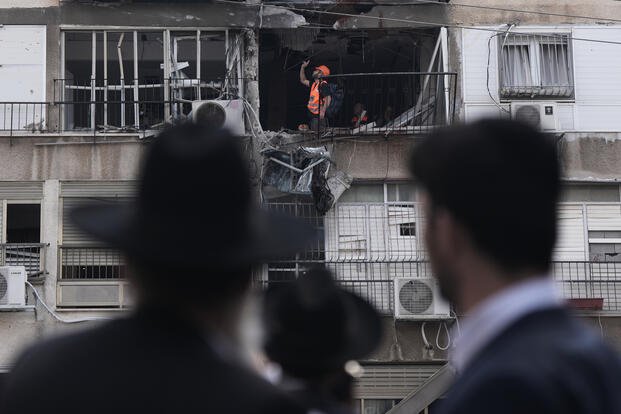
Meanwhile, Iran unleashed a barrage of missiles at Israel, prompting residents to seek shelter. The strikes caused damage in central Israel and the Tel Aviv area, with multiple sites impacted. Israel’s military attributes the widespread damage to Iran’s use of cluster bombs designed to evade air defenses.
___
Reporting contributions by Metz from Ramallah, West Bank, Frankel from Jerusalem, Sally Abou AlJoud from Beirut, and Tia Goldenberg from Washington.
© Copyright 2026 Associated Press. All rights reserved. This material may not be published, broadcast, rewritten, or redistributed.