Michigan Attorney General Challenges DHS Plan for Immigrant Detention Facility
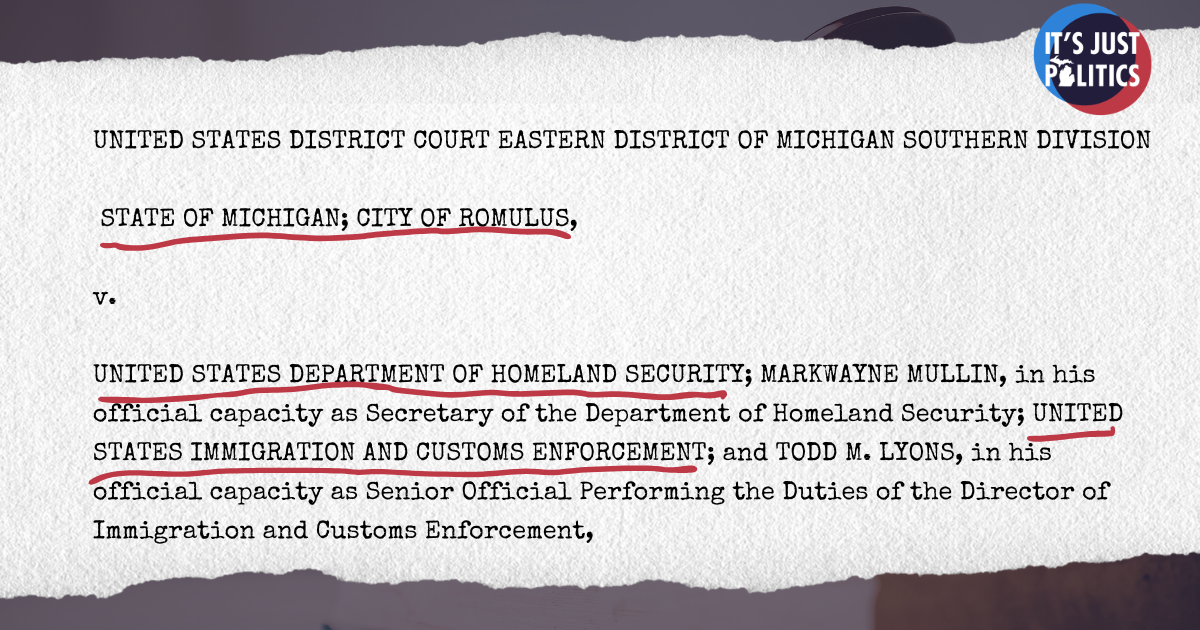
In a recent move, Michigan Attorney General Dana Nessel has taken a stand against the Trump administration’s plans to convert a former warehouse in Romulus into a facility for potential immigrant detainees. Nessel, supported by city officials, filed a federal court challenge to block the U.S. Department of Homeland Security (DHS) from proceeding with this conversion.
The challenge, filed in the U.S. District Court in the Eastern District of Michigan, outlines several key reasons why Nessel believes the warehouse is unsuitable for use as a detention facility. Among the concerns raised are the facility’s lack of adequate space, health and sanitation systems, and infrastructure to accommodate up to 500 detainees. Additionally, the complaint highlights the financial burden that would fall on the city if the project moves forward.
Romulus Mayor Robert McCraight emphasized that DHS did not consult with the city about their plans or address any concerns raised by the local community. He pointed out that the site’s location, which is close to residential areas and schools, raises significant safety and zoning issues.
Despite the legal challenge, DHS has not responded to requests for comment on the matter. This move by Nessel is part of a broader trend where communities and local officials are pushing back against ICE’s efforts to expand their network of detention facilities across the country. Recent examples include a federal judge in Maryland ordering a halt to the construction of an immigration detention center due to environmental concerns and lack of public input.
While the federal government is not bound by local zoning regulations, communities still have legal avenues to challenge ICE’s building plans. This ongoing resistance underscores the complex dynamics surrounding immigration enforcement and the role of local authorities in shaping these policies.
Michigan Politics Update
In other news related to Michigan politics:
No wage on ballot:
Efforts to place a referendum on Michigan’s November ballot to reverse changes to the state’s minimum wage law have stalled. Several campaigns, including those advocating for tax increases on high earners and ranked-choice voting, have also faced challenges in collecting signatures. One Fair Wage, a group seeking a unified minimum wage regardless of tips, has decided to refocus its efforts on future election cycles.
He’s out:
Democratic state Representative Joe Tate, a former Speaker of the House, has announced that he will not seek reelection. Tate, who made history as the first Black person to serve as Speaker of the House in Michigan, reflected on his tenure and legislative accomplishments during his time in office.
Michigan Republicans are gearing up for their party’s endorsement convention this weekend, where key candidates for Secretary of State, Attorney General, and other positions on the November ballot will be endorsed. Unlike most states, Michigan relies on major party delegates to select nominees at conventions rather than through primary elections, a process that has drawn criticism for potentially favoring extreme candidates over moderates.
The upcoming GOP convention in Michigan is set to be a pivotal event as party leaders gather to endorse candidates for important state positions. Unlike many other states that rely on primary elections to determine nominees, Michigan delegates will have the final say in selecting candidates for the upcoming November elections.
According to a report by Bridge Michigan, Michigan is among just three states where major party delegates have the power to choose nominees for significant positions through conventions. This practice has raised concerns among critics who argue that it may disadvantage moderate candidates who could better represent the broader electorate.
The convention is expected to be a platform for Republican activists and party leaders to rally behind their chosen candidates, setting the stage for the November elections. This process allows winning candidates to focus on their general election campaigns and potentially save money by not having to compete in costly primary races.
The involvement of key figures like Karen Whitsett, D-Detroit, who recently aligned with Republicans in protesting a session, adds an interesting dynamic to the convention. Whitsett’s decision to join forces with Republicans has been seen as a significant blow to some of the Democratic legislation that failed to pass in the House, demonstrating the shifting political landscape in Michigan.
As the convention unfolds, it will be crucial to observe how the endorsements shape the political landscape in Michigan and influence the upcoming November elections. Stay tuned for updates on the convention and the candidates vying for crucial state positions.