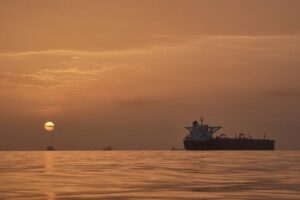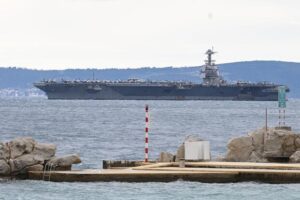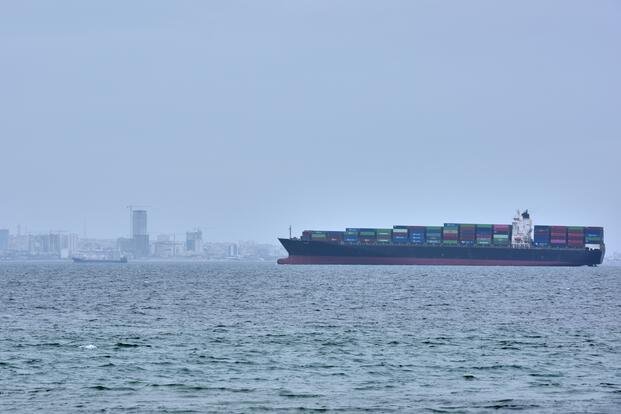
The waters of the Persian Gulf have long been a flashpoint for international conflict, a vital artery for the global oil supply vulnerable to military threats. As tensions simmer, the specter of the past looms large, recalling the “Tanker War” of the 1980s when Iran and Iraq clashed, drawing in the United States to protect crucial shipping lanes.
DUBAI, United Arab Emirates (AP) — The Strait of Hormuz, a strategic chokepoint, sees a fifth of the world’s traded oil and natural gas transit its waters during peace. As tensions rise again between Iran and the U.S., some suggest the American military could adopt strategies reminiscent of the “Tanker War” era. This conflict, part of the broader Iran-Iraq war in the 1980s, saw U.S. warships escort Kuwaiti oil tankers to secure the flow of oil.
Recently, President Donald Trump issued a directive for the U.S. military to “shoot and kill” small Iranian boats if necessary, reflecting a potential escalation in military posture. However, implementing a protection scheme for vessels in the Strait of Hormuz today would face technological and strategic challenges not present in the 80s.
Small Boats, Big Problems
The U.S. Navy is familiar with the Iranian Revolutionary Guard’s use of small boats, a tactic adapted from necessity due to sanctions limiting military resources. These small vessels, often civilian in appearance, are outfitted with heavy weaponry and have been used effectively to shadow larger military ships.
Recently, Iranian forces seized two cargo ships, utilizing small patrol boats to board and take over these massive vessels. Such operations highlight Iran’s capability to disrupt shipping, even under the pressure of a U.S. naval blockade, and their potential to impact the global economy.
The ‘Tanker War’
The “Tanker War” arose amidst the Iran-Iraq conflict, with Iraq initially targeting Iranian maritime assets. Iran retaliated by attacking vessels and laying mines, creating chaos in the Gulf. According to the U.S. Naval Institute, Iraq attacked over 280 ships, while Iran’s efforts, including mine-laying, targeted 168.
In response, the U.S. launched “Operation Earnest Will,” escorting reflagged Kuwaiti oil tankers. Despite incidents such as the Bridgeton supertanker striking a mine and the tragic downing of Iran Air flight 655, the operation managed to escort about 70 convoys safely.
No Easy Way Out
Today’s environment presents new challenges for securing such a strategic waterway. As Torbjorn Soltvedt from Verisk Maplecroft notes, advanced asymmetrical military technologies make securing the Strait more difficult than during the “Tanker War.”
European nations, wary of conflict, have resisted joining U.S.-led escort missions. The Trump administration’s objectives remain unclear, contrasting sharply with the well-defined goals of the Reagan-era operation. “American goals now have been sort of a kaleidoscope,” remarked Tom Duffy, a former U.S. diplomat and naval officer.
While recent U.S. Navy operations in the Red Sea have offered limited protection against threats from Yemen’s Houthi rebels, escalating force in the Strait of Hormuz could lead to significant conflict. The administration’s stance, prioritizing diplomatic solutions over military engagement, marks a departure from historical U.S. policy on maritime freedom.
___
EDITOR’S NOTE — Jon Gambrell, news director for the Gulf and Iran for The Associated Press, has reported from each of the Gulf Cooperation Council countries, Iran and other locations across the Mideast and the wider world since joining AP in 2006.
© Copyright 2026 Associated Press. All rights reserved. This material may not be published, broadcast, rewritten or redistributed.