In a significant milestone for France’s defense capabilities, Safran and MBDA have successfully launched their jointly developed Thundart munition, potentially setting the stage for a new era in long-range artillery systems. The two companies are in the running to supply next-generation rocket-artillery systems to the French Army, with possible deployment by 2029.
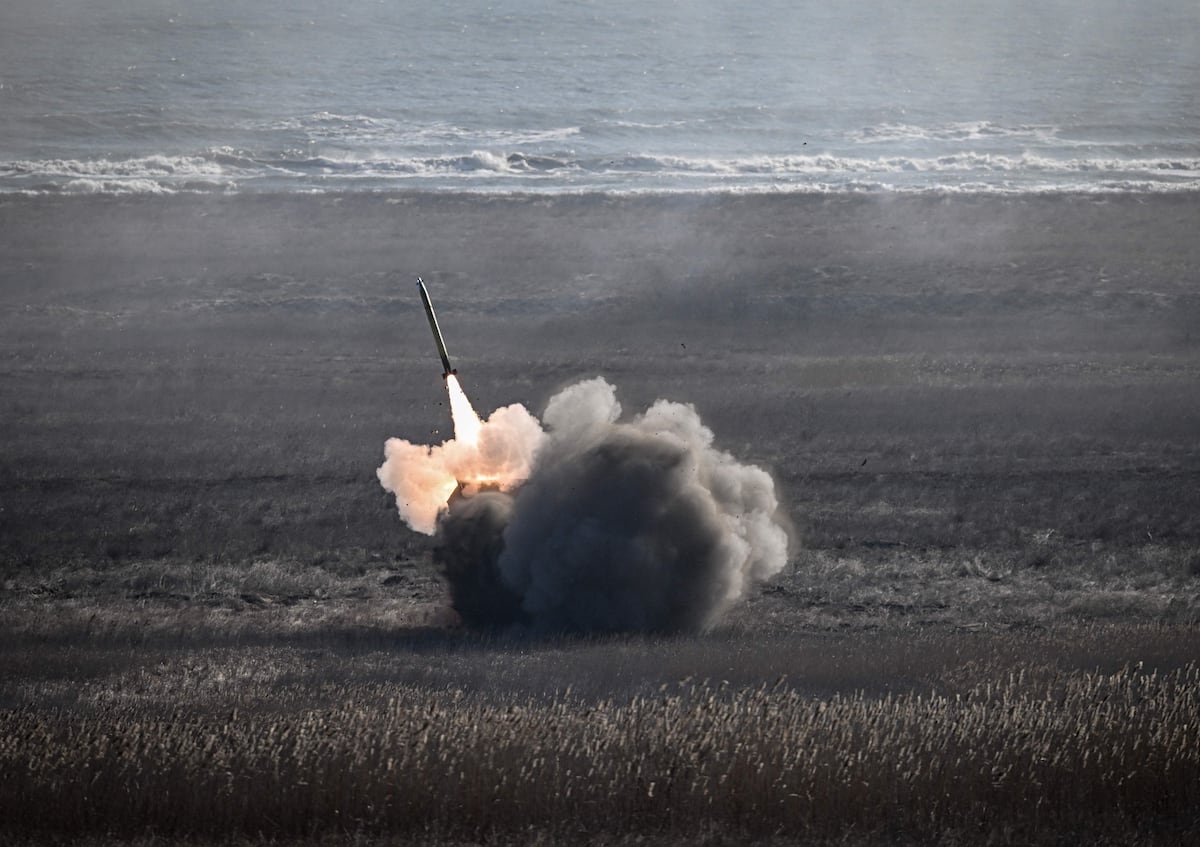
The Thundart, which was test-fired on April 14 at the Île du Levant, is part of France’s Long-Range Land Strike initiative. According to a statement made by the companies, this ground-to-ground rocket boasts a range of 150 kilometers, and development of even longer-range munitions is under consideration.
France is seeking to replace its aging Lance-Roquettes Unitaire systems with newer models by 2030, aiming for at least 13 new systems. Alongside Safran and MBDA, other domestic competitors such as Thales with ArianeGroup are in the running, as well as various international off-the-shelf options, according to Armed Forces Minister Catherine Vautrin.
“Lessons learned from recent conflicts with regards to high-intensity combat demonstrate the need for the ability to fire effectively at long range,” Vautrin stated during a senate hearing. “The successor to the LRU, this is a priority capability and let’s be clear, one that is indispensable for the Army.”
Safran and MBDA have expressed confidence in their ability to meet the 2030 timeline for operational capability, with the potential for earlier deployment by 2029. Approximately 100 employees from both firms are actively engaged in the Thundart’s development.
The Thundart system is entirely designed and produced in France, marking it as the only European sovereign system to exceed the range of the current LRU. It is not subject to the United States International Traffic in Arms Regulations, offering France greater autonomy in its defense capabilities.
Vautrin emphasized the importance of a sovereign solution, stating, “The idea, as far as I’m concerned, is obviously to do everything possible to find a sovereign solution,” while also noting that effectiveness, price, and delivery capabilities will be key evaluation criteria.
Globally, several European nations have opted for the Chunmoo system from South Korea’s Hanwha Aerospace, as well as systems from Israel and the U.S. France is also examining India’s Pinaka rocket system as part of its evaluation process.
France intends to acquire 26 rocket-artillery systems by 2035, equipped with 300 munitions, as stated by Patrick Pailloux, the head of France’s Directorate General for Armament. The systems are expected to be mounted on eight-wheel trucks from Scania France, each capable of holding eight rockets with “shoot and scoot” capability.
The Thundart features propulsion technology from MBDA’s Roxel unit and an adapted AASM guidance kit from Safran, offering high supersonic speed and resistance to electronic warfare. A new AASM seeker, tested in March, will combine inertial navigation, laser, and infra-red guidance, with the first deliveries expected in 2027.
The companies are prepared to scale up production of Thundart, with MBDA planning a 40% increase in missile production by 2026, while Safran aims to quadruple its AASM guidance kit output by 2025 compared to 2022.