Political Setback: Brazil’s Senate Blocks Lula’s Supreme Court Nominee
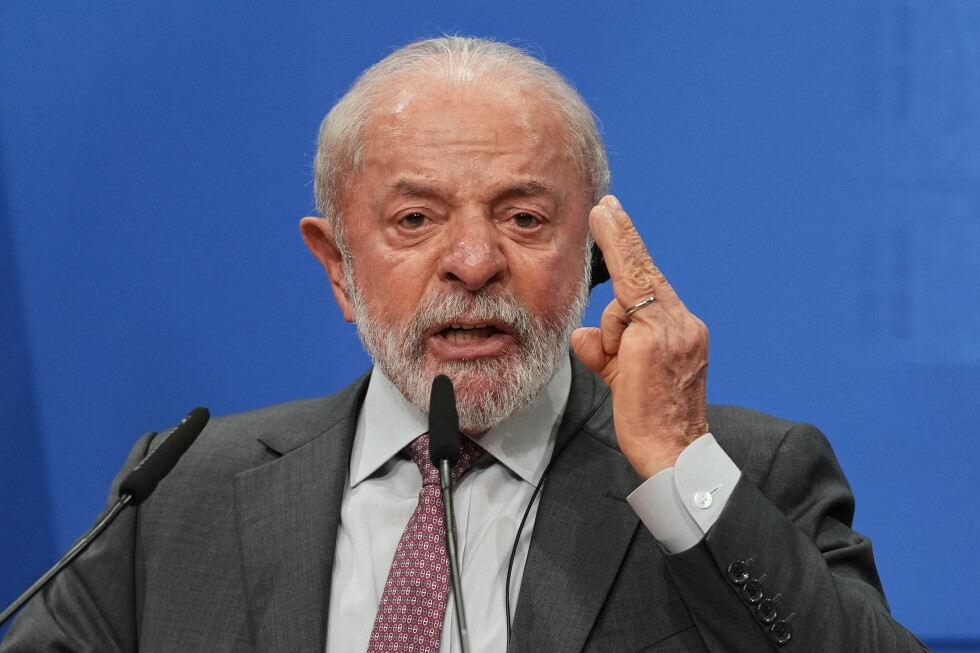
In a historic decision, Brazil’s Senate has rejected President Luiz Inácio Lula da Silva’s Supreme Court nominee, marking the first such refusal in over a century. The move underscores the challenges Lula faces as he seeks reelection, highlighting his strained relations with key lawmakers.
Jorge Messias, the solicitor-general and Lula’s trusted legal advisor since 2023, was turned down by the Senate with a vote of 42 against and only 34 in favor. The rejection was celebrated by several senators, including presidential candidate Sen. Flávio Bolsonaro, who viewed it as a triumph for the opposition.
“I am thankful to each vote I received. I think each of us fulfills a purpose and I fulfilled mine,” Messias expressed in Brasilia following the decision. “That’s life. There’s days of victory, days of defeat. We have to accept it.”
Despite backing from a Senate commission, Messias failed to secure the necessary 41 votes in the secret ballot of the full house. His nomination was Lula’s third attempt to fill the Supreme Court vacancy left by the resignation of Luís Roberto Barroso in November.
Political analyst Creomar de Souza from Dharma Political Risk and Strategy pointed out the difficulties Lula has faced in collaborating with the legislature since his return to office. “This dispute around Messias involved putting him in a difficult position,” de Souza noted. “He was too exposed, there was not an efficient defense of him and the result couldn’t have been different.”
The Senate’s president, Davi Alcolumbre, had openly supported another candidate, further complicating Messias’ path to confirmation. Media reports have suggested ongoing tensions between Alcolumbre and Lula over the latter’s choice of nominee.
Sen. Flávio Bolsonaro remarked that the rejection also served as “an answer to what part of the Supreme Court was doing” in prosecuting lawmakers. His father, former President Jair Bolsonaro, was recently sentenced to 27 years in prison for his involvement in a coup attempt.
Despite support from some court members and attempts by Messias to gain favor with evangelical lawmakers, the Senate’s decision stood. Supreme Court Justice André Mendonca lamented the missed opportunity, stating on social media that “Brazil has lost the opportunity” of having Messias as a colleague.
“He is a man of character, serious and who fulfills the constitutional requirements to be a Supreme Court justice,” Mendonca continued. “Messias, leave this battle with your head up high. You fought a good fight.”
With the Senate’s decision, President Lula must now put forward a new candidate for the Supreme Court, who will undergo the same rigorous evaluation process. The last rejection of a Supreme Court nominee in Brazil occurred in 1894, under the presidency of Floriano Peixoto.
For continued updates on Latin America and the Caribbean, visit AP News Latin America.