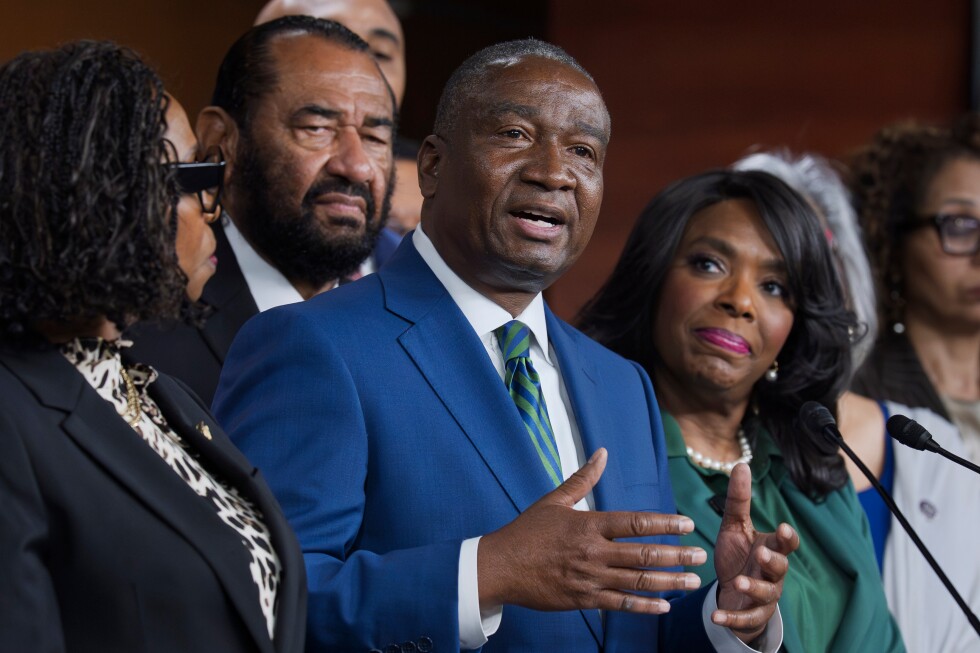
In a significant legal development, the Supreme Court has ruled to dismantle a crucial element of the Voting Rights Act, sparking concerns among Black lawmakers about the future of their political influence. This decision could pave the way for Republican-led states to redraw congressional districts without considering racial demographics, potentially leading to a significant shift in political representation.
Rep. Yvette Clarke, head of the Congressional Black Caucus, expressed strong opposition to the ruling and committed to challenging its consequences. “The Supreme Court has opened the door to a coordinated attack on Black voters across the country,” Clarke stated. “This is an outright power grab.”
Section 2 of the Voting Rights Act previously allowed voters to contest electoral maps that marginalized minority communities. With the court’s recent decision, Republican-dominated states are expected to initiate a wave of redistricting efforts that could significantly reduce the size of the Black Caucus, particularly impacting future elections.
The Uncertain Future of Congressional Districts
Reactions among Black Caucus members, including Democratic House Minority Leader Hakeem Jeffries, varied from anger to determination. Although the full impact of the ruling remains unclear, experts predict that more than a dozen seats currently held by minorities could be jeopardized. Rep. Troy Carter, a Black Democrat from Louisiana, described the decision as “a devastating blow to our democracy, plain and simple.”
In Florida and other Southern states, Republican leaders are already strategizing to implement new maps favoring GOP candidates. Kristen Clarke from the NAACP expressed concerns about the rapid targeting of districts that currently allow Black voters to elect their preferred candidates.
Some Republican officials and Black conservatives have welcomed the ruling, viewing it as a triumph over race-based policy mandates. Linda Lee Tarver from the Project 21 Black Leadership Network remarked that civil rights laws were not meant “to institutionalize racial line-drawing as a default feature of our political system.”
The Legacy of the Voting Rights Act
The Congressional Black Caucus was established in 1971, following the passage of the Voting Rights Act, which significantly increased minority representation in Congress. Initially consisting of nine members, the number of Black representatives grew over the years, with the Caucus becoming known as the “conscience of the Congress” for its advocacy on issues affecting the Black community.
Democratic Sen. Raphael Warnock highlighted the potential impact of the Supreme Court’s decision on the Caucus, warning that the ruling could lead to a significant reduction in its size and influence.
Community Mobilization and Legal Challenges
Thomas Johnson, a New Orleans resident, expressed his concern about the ruling’s implications for Black majority districts. Similarly, Antjuan Seawright, a strategist for the Black Caucus, anticipated legal battles and emphasized the importance of voter turnout in countering the ruling’s effects.
Democratic Rep. Terri Sewell of Alabama underscored the need for community engagement and voting to counteract potential negative outcomes. “Now more than ever, we need communities across this nation to mobilize — in state legislatures, in the courts and at the ballot box,” Sewell said. “We need to vote like we’ve never voted before.”