In a significant move towards enhancing autonomous military logistics, the U.S. Marine Corps is gearing up for an operational demonstration of its largest unmanned logistics aircraft, the Aerial Logistics Connector (ALC), in the Pacific next year. The Marine Corps is preparing to test this sophisticated aircraft with one of its littoral regiments, aiming for a full demonstration by 2027.
Lt. Col. Ben Link, head of vertical takeoff and landing concepts for the Marines’ Cunningham Group, emphasized the importance of ALC at the Modern Day Marine exposition in Washington, D.C. He stated, “ALC’s mission is clear and critical — to provide autonomous airborne logistics to sustain the stand-in force. ALC is a key component to all-domain logistics, which enables [the Department of Defense], ensuring our distributed units remain supplied, lethal and combat-ready.”
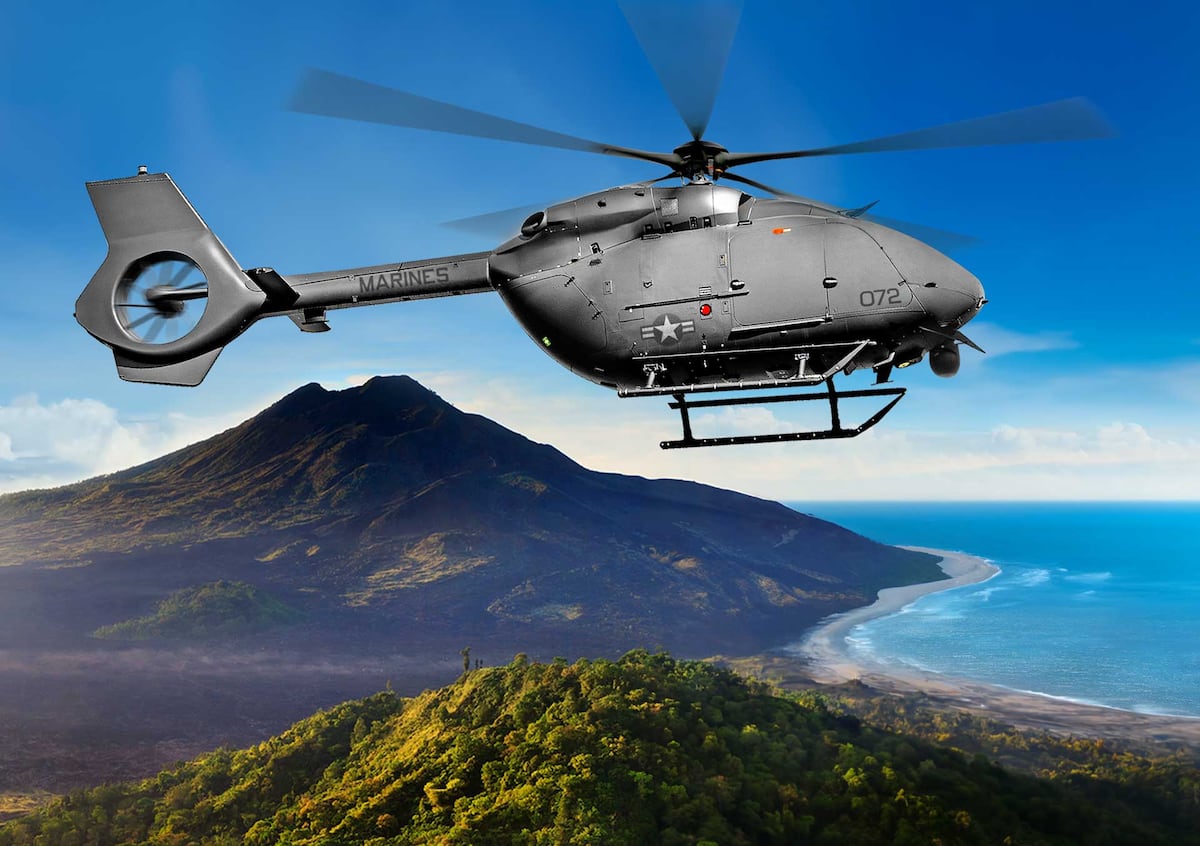
Airbus, in collaboration with Parry Labs, announced a partnership last June to create a drone version of the UH-72 Lakota helicopter for the ALC initiative. Alongside L3Harris Technologies and Shield AI, they have successfully conducted four autonomous flight tests and have also demonstrated these technologies using an Airbus H-145 Multi-Role Light-Twin helicopter.
Meanwhile, Near Earth Autonomy has been contributing to the ALC program, having conducted an autonomous test flight with a Leonardo AW139 helicopter. This highlights the collaborative efforts of various tech companies in advancing the ALC project.
It’s essential to distinguish ALC from the Medium Aerial Resupply Vehicle — Expeditionary Logistics (MARV-EL). While both aircraft share similar functionalities, MARV-EL is intended for ground force use, whereas ALC is designed for broader support to the Marine Air-Ground Task Force.
The Marine Corps persists in refining its aircraft concepts, with Link noting, “They’re very complimentary, very similar requirements, but we’re taking a deep look at where we are today and where that system needs to go.” The Corps is also keen on receiving flying prototypes from both ALC vendors for the upcoming demo.
Highlighting the Corps’ progressive approach, the Okinawa-based 12th Marine Littoral Regiment previously tested an autonomous low-profile vessel (ALPV). This initiative underscores the Marines’ commitment to experimenting with new technologies and integrating them into future operations.
As the Marines move forward with the ALC and other autonomous projects, the service is navigating a complex landscape of emerging technologies. Maj. Michael Zbonack of Future Concepts UAS remarked, “Fast forward a few years, and you look at emerging capabilities, and the lines start to blur … The end result that we’re driving for is a high-low mix of a family of systems delivering a wide range of capabilities to support the MAGTF.”