
Farmers markets across the United States attract a diverse array of shoppers, each with unique motivations for visiting. With over 8,700 markets nationwide, these hubs are not just about purchasing fresh produce but also about community engagement and supporting local farmers. A recent study provides a detailed look into the distinct groups of consumers that frequent these markets.
According to a study published in the British Food Journal, shoppers at farmers markets can be categorized into six primary groups. While all share a common interest in fresh, healthy food and supporting local agriculture, their levels of engagement and reasons for shopping vary significantly.
Nationwide, 81% of U.S. adults reported visiting a farmers market at least once annually, according to survey data from a representative sample of 5,141 U.S. consumers collected in August 2023. The survey, with a margin of error of ±1.8 percentage points, helped identify the motivations behind these visits.
Farmers markets were defined for the study as venues where food is purchased directly from multiple vendors and where most products are locally sourced, either grown within the state or within 250 miles of the consumers’ homes.
Engagement Levels Among Shoppers
Approximately 18% of those surveyed are identified as “highly engaged” shoppers. This group is passionate about food, enjoying not just the purchase but also the preparation and consumption of fresh food. They frequent markets to support local farmers, seek out nutritious food, and immerse themselves in the community atmosphere. A significant portion of these shoppers, about 65%, are women, with diverse backgrounds including 27% Hispanic, 20% Black, and 4% multiracial. Their household incomes tend to be lower, typically ranging from $40,000 to $50,000 annually.
Another 18% fall into the “health-focused” category. These individuals prioritize healthy eating but are less enthusiastic about cooking. They tend to avoid genetically modified foods and quick meal options like frozen dinners. Predominantly women, making up 58%, this group is older with an average age of 57 and is less diverse, with 70% identifying as white.
The “emerging interest” group, comprising 19% of respondents, values both convenience and the educational aspect of food purchasing. With an even gender split and an average age of 44, this group finds farmers markets to be a fun outing.
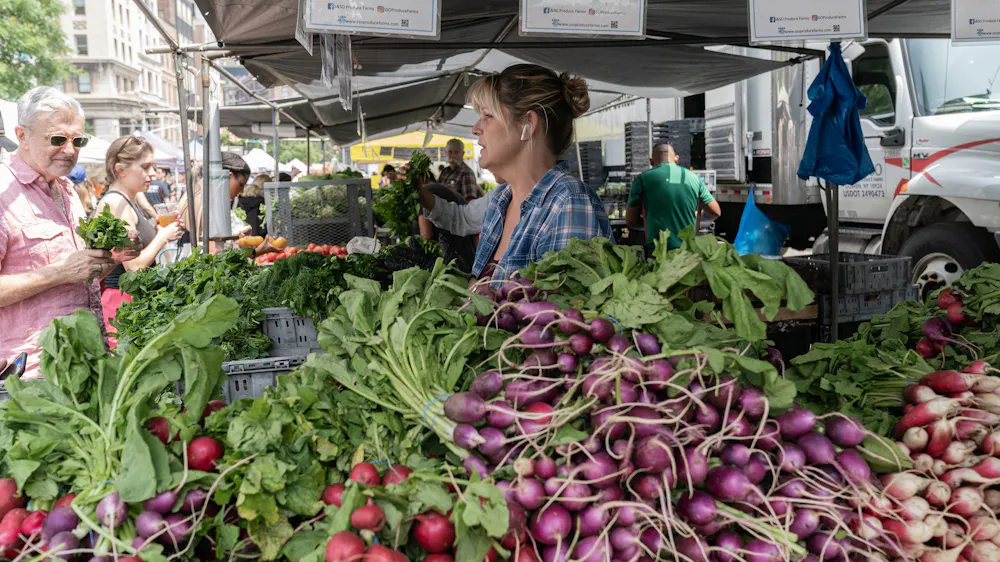
Lev Radin/Pacific Press/LightRocket via Getty Images
Less Engaged Shoppers
Three groups show less interest in farmers markets. The “convenience” shoppers, making up 16%, prefer ready-to-eat meals and seldom cook from scratch, with 43% rarely visiting markets. This group is predominantly male, with 59% men, and 37% are people of color.
The “practical” group, comprising 17%, plans their shopping meticulously and often skips farmers markets, with over half rarely visiting. This group boasts the highest incomes, typically $60,000-$75,000 annually, and is nearly evenly split by gender.
The “uninvolved” group, at 12%, shows minimal interest in food-related activities, with 75% rarely attending markets. Predominantly male and white, this group attends markets more out of happenstance than interest.

Erica Marcus/Newsday RM via Getty Images
Barriers to Market Attendance
Understanding these consumer segments can help farmers markets tailor their offerings and marketing strategies. While motivations vary, a common barrier for all groups is simply forgetting to attend the markets, indicating potential for increasing engagement through reminders or incentives.